


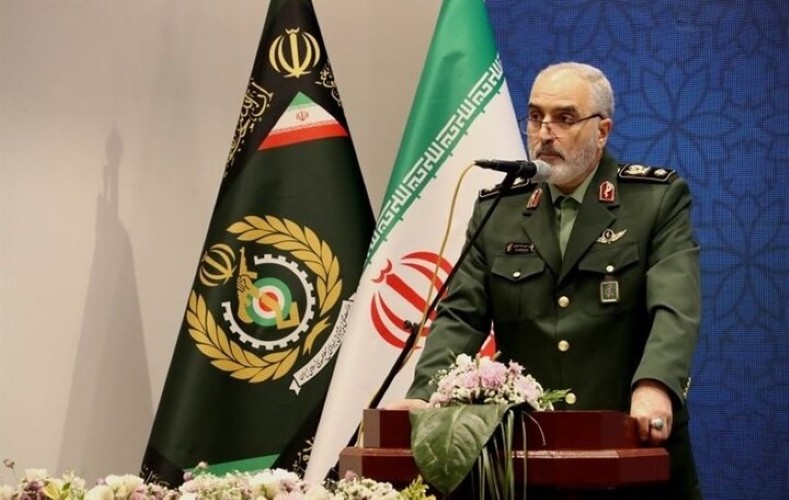

The replacement of Mohammad Reza Naghdi with Hojjatollah Qureshi signals the regime’s bid to tighten control over the IRGC as Iran faces deepening security and economic crises.
In a move highlighting both loyalty and crisis management within the Iranian regime, Supreme Leader Ali Khamenei has promoted one of his most trusted commanders, Hojjatollah Qureshi, to one of the Islamic Revolutionary Guard Corps’ (IRGC) most strategic posts.
According to an official decree signed by Mohammad Pakpour, commander-in-chief of the IRGC, Qureshi has been appointed as the IRGC’s Deputy Coordinator, replacing Mohammad Reza Naghdi. The position is among the most influential within the IRGC’s hierarchy, overseeing coordination among operational, intelligence, and logistical branches.
Naghdi, long considered a close ally of Khamenei, has recently faced controversy following allegations of an Israeli intelligence breach within his office. Though he denied the claims as “absolute lies,” the accusations—reportedly first hinted at by reformist politician Behzad Nabavi—sparked deep mistrust around his leadership.
A Trusted Insider in the Regime’s Security Network
Qureshi, a veteran IRGC commander with decades of service, is known for his influence within Iran’s defense establishment. Having held multiple provincial and national positions in both the IRGC and the Tharallah Headquarters, he was appointed deputy defense minister in February 2024 by then-Defense Minister Mohammad Reza Ashtiani under Ebrahim Raisi’s administration. His focus in that role was on strengthening the regime’s military capabilities and expanding domestic weapons production.
During his tenure, Qureshi made several regional visits, including a trip to Pakistan in November 2024 to discuss enhancing “security, border, and training cooperation” between the two countries. He retained his position even after the transition from Raisi’s government to that of Masoud Pezeshkian, signaling strong confidence from Khamenei’s office and the military elite.
His latest promotion, coming just weeks after the 12-day Iran-Israel conflict, reflects an effort to reinforce the IRGC’s command structure amid escalating regional tensions and fears of foreign infiltration.
From Propaganda to Strategy
Unlike Naghdi, who was known for his highly political and propagandistic presence, Qureshi represents the IRGC’s more technical and strategic faction. He has consistently emphasized “self-sufficiency in defense industries” and the “independence of Iran’s military capabilities from foreign technology.” A vocal proponent of expanding Iran’s missile program, he has repeatedly urged higher defense budgets, viewing military power not merely as a deterrent but as a tool of projection and regional dominance.
His appointment thus sends a clear message: the regime intends to double down on militarization and internal consolidation rather than moderation or reform.
Militarization Amid Economic Collapse
The leadership reshuffle in the IRGC comes at a time when Iran is grappling with one of its most severe economic downturns in decades. Inflation has surged across all sectors, the rial has plummeted in value, and poverty levels have soared as subsidies are cut and state revenues dwindle. Despite these conditions, the regime continues to boost funding for its military and security institutions—a policy that underscores its priorities.
By elevating figures like Qureshi, the Iranian regime leadership demonstrates its determination to preserve and expand its military power at any cost, even as millions of Iranians struggle with daily survival.
The appointment marks more than a personnel change; it represents a strategic pivot by Khamenei and Pakpour to restore internal discipline within the IRGC, rebuild eroded trust, and prepare for intensified confrontation both at home and abroad.
As the regime grows more isolated and economically unstable, the concentration of authority in the hands of hardline military commanders like Qureshi further entrenches Iran’s transformation into a security state.