Remarks by President Pezeshkian’s aide expose regime fragility, failed governance, and dependence on Supreme Leader’s approval in foreign policy.
Admission of Instability
Mehdi Tabatabaei, Deputy for Information in the Office of President Masoud Pezeshkian, has admitted that the clerical regime remains unstable and under constant threat both during and after the war with Israel.
In an interview on August 17, Tabatabaei stated:
“Even after about 50 days since the end of the war, the situation has not stabilized and we are still constantly under threat.”
He conceded that Iran was already in a war-like situation due to “maximum sanctions and threats,” and acknowledged that conditions have not improved since the recent conflict.
These remarks highlight the ongoing vulnerability of the regime and contradict years of official propaganda portraying Iran as resilient in the face of external pressures.
Domestic Hardship and Economic Collapse
Tabatabaei defended the Pezeshkian government by claiming it had managed external threats with “less damage,” but he admitted the reality of a deteriorating economy. “It is true that Iran’s economy has been damaged and is in recession. Society is in shock and unstable, but one should not expect miracles from the government,” he said.
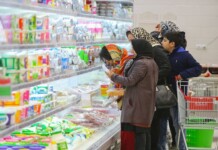
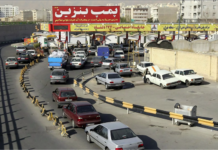
His comments come as ordinary Iranians face crippling inflation, rolling blackouts, water shortages, and environmental degradation. Businesses across the country are being forced to close, while citizens struggle with skyrocketing costs of basic goods and services.
The admission reflects the widening gap between the regime’s rhetoric and the daily suffering of the population.
Negotiations Controlled by Supreme Leader
In the same interview, Tabatabaei acknowledged that foreign policy decisions, including negotiations with Washington, do not lie with the president or government. “Negotiation with Washington has never been solely the decision of the government or the president. All stages are reviewed in the Supreme National Security Council and finalized only with the approval of the Supreme Leader,” he said.
This statement underscores the subservience of Pezeshkian’s administration and highlights that real authority remains concentrated in the hands of Supreme Leader Ali Khamenei.
Tabatabaei noted the possibility of Pezeshkian traveling to New York for the United Nations General Assembly in September but admitted that “at present, conditions for negotiations with the U.S. are not in place… perhaps in 40 days the situation may change.”
Nuclear Crisis and Rising Tensions
The regime’s internal divisions over negotiations come against a backdrop of escalating tensions regarding its nuclear program. Prior to the recent war, five rounds of indirect talks with Washington collapsed over Tehran’s insistence on continuing uranium enrichment.
In recent weeks, speculation has grown about the possibility of renewed confrontation with Israel. While Foreign Minister Abbas Araghchi publicly dismissed the likelihood of another war, Tabatabaei’s warnings reflect growing uncertainty within the regime.
Concerns have been further fueled by U.S. strikes on Iranian nuclear facilities in Natanz, Fordow, and Isfahan in early July. At the same time, a leaked classified letter from the Ministry of Intelligence warned that activation of the UN “snapback” mechanism could halt Iran’s oil sales, trigger severe economic and security crises, increase unemployment, and intensify social unrest.
Tabatabaei’s remarks unintentionally lay bare the regime’s crisis on multiple fronts. Economically, the country faces inflation, power shortages, and environmental devastation. Politically, the government lacks any independence, as strategic decisions remain dictated by the Supreme Leader. Internationally, Tehran is trapped between nuclear escalation, sanctions, and the threat of renewed military conflict.
Far from projecting stability or strength, these admissions reveal a system in deep turmoil, unable to resolve its crises at home or abroad.