



As international efforts for a Gaza ceasefire gain momentum, Tehran’s clerical rulers lash out in panic—exposing a four-decade pattern of survival through conflict, repression, and terror.
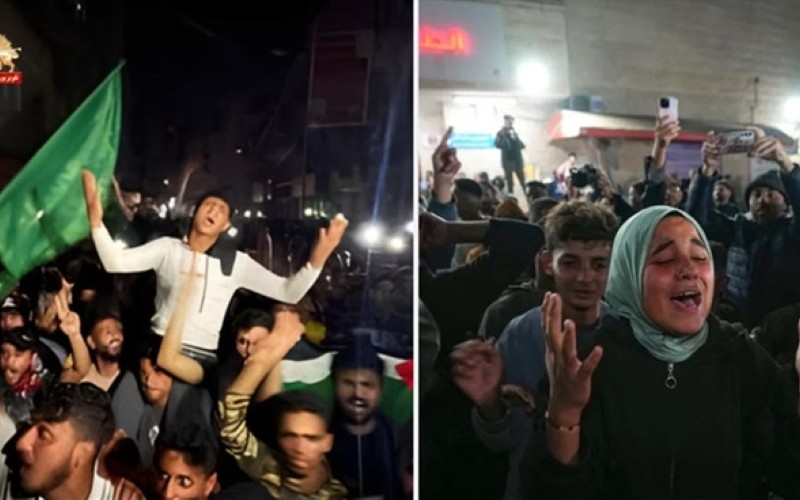
As a U.S.-backed initiative for a Gaza ceasefire gained traction in early October 2025, hopes rose for an end to the devastating conflict. For the first time in months, diplomatic momentum and public optimism pointed toward a path to stop the bloodshed and begin reconstruction. Yet, in Tehran, the response was not relief—but fury.
The regime’s official mouthpieces, Friday prayer leaders, and state media unleashed an aggressive campaign of denunciation. They branded the U.S. President’s peace proposal as a “devilish plan,” warning Palestinians not to trust it, and attacked the very idea of dialogue and compromise. The clerical establishment’s outrage revealed its deepest fear: that peace and regional stability would dismantle the political and ideological foundations upon which the mullahs have ruled for more than four decades.
“Khamenei…will not cease obstructing peace or fueling war and chaos”
In sharp contrast, Mrs. Maryam Rajavi, the President-elect of the National Council Resistance of Iran (NCRI), welcomed the initiative as a vital step toward ending the Gaza war. In her official statement, she declared:
“I welcome the prospect of a ceasefire and an end to the war in Gaza, and I hope for a just and lasting peace. Khamenei, as long as he remains in power, will not cease obstructing peace or fueling war or chaos.”
Mrs. Rajavi underscored that the clerical dictatorship in Iran has been the driving force behind “terrorism, hostage-taking, warmongering, and the obstruction of peace” for decades. She emphasized that repression and massacre at home, exporting terrorism abroad, and pursuing nuclear weapons are the three main pillars of the regime’s survival strategy.
According to Mrs. Rajavi, “The Iranian regime has exploited the issue of Palestine more than any other party over the past 45 years. Through exporting fundamentalism, sowing division, and attempting to assassinate leaders of the Palestine Liberation Organization, it has prolonged and intensified the suffering of the Palestinian people.”
A Path Toward Peace—and Tehran’s Panic
The U.S. President’s plan, which calls for an immediate ceasefire, the exchange of hostages, and urgent humanitarian aid to Gaza, has been welcomed by governments and organizations across the world. It represents a concrete step toward ending the bloodshed and paving the way for a just and lasting peace in the Middle East.
For Tehran’s rulers, however, even the prospect of peace is intolerable. The mullahs’ regime survives on exporting terrorism, fueling conflicts, and sustaining chaos throughout the region. As Mrs. Rajavi stated, “There is no doubt that Khamenei and the ruling religious dictatorship in Iran will continue to obstruct peace and fuel war and chaos for as long as they remain in power.”
The clerical establishment’s hysteria toward any initiative that could end conflict—whether in Gaza, Yemen, Iraq, or Lebanon—exposes its dependence on perpetual war as a means of maintaining influence. Peace threatens to cut off its proxies, dry up its ideological capital, and expose the falsehood of its so-called “resistance” narrative.
Rage from the Pulpits
Regime clerics, acting as Khamenei’s mouthpieces, reacted furiously before Hamas even signaled willingness to discuss the peace plan. Tehran’s Friday prayer leader, Ahmad Khatami, denounced the U.S. proposal as “a devilish plan” and declared:
“Palestinians did not and will not accept this plan. America should know, and Europe should know… for 47 years America could not do a thing, and with this so-called plan, they still won’t be able to.”
Another regime cleric, Ghasem Shahriari in Birjand, warned Gazans that the peace plan was “similar to our own nuclear deal (JCPOA),” claiming that “the West cannot be trusted.” He further ranted that “a new conspiracy is taking place in Gaza with the green light of America and Trump the gambler.”
These outbursts are not spontaneous; they are coordinated expressions of fear from a regime that sees diplomacy and calm as mortal threats. Every ceasefire, every negotiation, and every regional reconciliation deprives Tehran of the chaos it depends upon to project power and justify repression.
Four Decades of Profit from Instability
For more than forty years, the clerical regime has turned instability into strategy. From the eight-year Iran-Iraq war to its proxy interventions across the Middle East, Tehran’s rulers have used conflict to rally domestic support, distract from economic collapse, and suppress dissent. Each confrontation abroad becomes an excuse for deeper repression at home.
The NCRI and the Iranian Resistance have long maintained that this pattern—war abroad, terror exportation, and tyranny within—is not accidental but structural. It is the lifeblood of a system that cannot survive without an external enemy or the constant specter of war.
Conclusion: Peace Is the Regime’s Greatest Threat
The growing momentum for a Gaza ceasefire represents more than a diplomatic achievement—it is a moment of truth. Peace threatens to expose the clerical regime’s dependence on war, terror, and regional chaos. For Khamenei and his apparatus, stability in the Middle East means isolation, accountability, and ultimately, collapse.
As Mrs. Rajavi emphasized, peace and democracy in the region are inseparable from the end of the theocratic dictatorship in Iran. Only when the regime that feeds on bloodshed is removed from power can the people of Iran, Palestine, Israel, and the broader region finally begin to build a future based on freedom, coexistence, and lasting peace.