


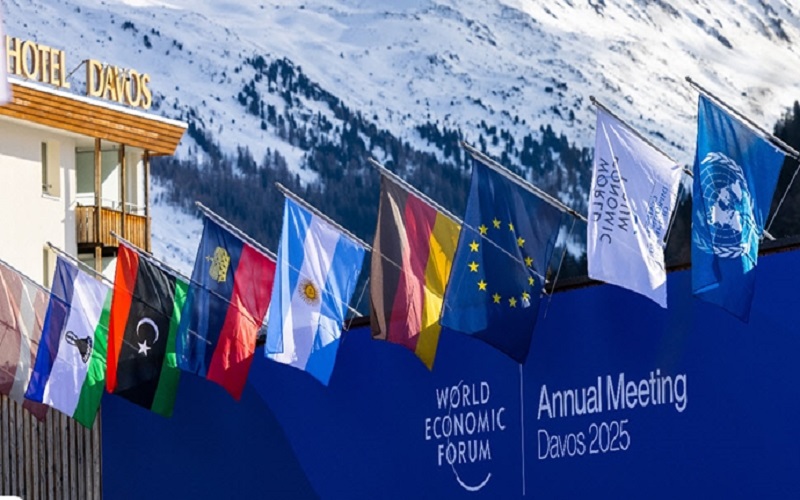

On January 21, 2025, United Against Nuclear Iran (UANI) expressed strong disapproval of the World Economic Forum (WEF) hosting Javad Zarif, Iran’s Vice President for Strategic Affairs. UANI’s CEO, Ambassador Mark D. Wallace, issued a statement highlighting the implications of providing a platform to a figure he described as a “chief propagandist” for the Iranian regime.
Concerns Over Zarif’s Role
Ambassador Wallace criticized WEF for allowing Zarif to speak, citing his history of collaboration with the Islamic Revolutionary Guard Corps (IRGC), which is designated as a terrorist organization by the U.S. government. Wallace emphasized that Zarif has been instrumental in downplaying Iran’s human rights abuses and its support for terrorism. He stated:
“Zarif has long worked together with the Islamic Revolutionary Guard Corps—a U.S.-designated terrorist organization—to whitewash Tehran’s brazen human rights violations, terror sponsorship, and export of violence abroad.”
The timing of Zarif’s invitation was particularly troubling for UANI, occurring shortly after the suspicious death of a Swiss national in Iranian custody. This incident underscores what Wallace described as the Iranian regime’s “disregard for human life.”
Risks for WEF Partners
UANI warned that WEF partners, which include major global companies with significant interests in the U.S., could face reputational risks by associating with Zarif. The organization pointed out that inviting him contradicts WEF’s theme of “collaboration for the intelligent age,” as Zarif represents a regime known for division and abuses.
Insights from UANI’s Letter to WEF
In a letter sent to WEF Chairman Klaus Schwab and President Børge Brende prior to Zarif’s invitation, UANI urged the organizers to reconsider their decision and rescind invitations extended to Iranian officials, including Foreign Minister Abbas Araghchi. The letter detailed several critical points regarding the dangers posed by inviting Iranian officials:
- Affiliation with Terrorism: Abbas Araghchi is closely linked to the IRGC Quds Force, responsible for orchestrating global terrorism. The IRGC supports groups like Hezbollah and Hamas through funding and military assistance, contributing to regional instability.
- Recent Atrocities: The letter referenced the October 7 massacre perpetrated by Hamas, which resulted in widespread violence against civilians. Araghchi has publicly praised terrorists involved in these acts, further indicating his alignment with violent extremism.
- Iran’s Global Destabilization Efforts: UANI highlighted Iran’s support for Houthi rebels and its involvement in disrupting international maritime trade through attacks on commercial vessels. This behavior poses significant risks not just regionally but also to global economic stability.
- Exploitation of Foreign Nationals: The Iranian regime has been accused of using foreign nationals as hostages, undermining diplomatic norms and engaging in extortion.
- Recruitment of Children for Attacks: Alarmingly, Iran has reportedly recruited children to carry out attacks on Jewish and Israeli targets across Europe, showcasing a chilling strategy to spread fear while evading direct accountability.
Ambassador Wallace concluded that inviting Araghchi or any Iranian official would signal tacit acceptance of their actions and embolden a regime that thrives on deceit and destruction. He emphasized that such an invitation would betray those standing against tyranny and terrorism.
Broader Implications
UANI emphasized that allowing Iranian officials to participate in international forums sends a dangerous message to victims of the regime and undermines efforts towards genuine dialogue and trust. The organization called on WEF to uphold its integrity by excluding representatives from a government that actively orchestrates violence and terror.In conclusion, UANI’s stance reflects a broader concern regarding the normalization of relations with regimes accused of severe human rights violations and terrorism. As global discussions continue at platforms like the WEF, organizations like UANI advocate for accountability and ethical considerations in international diplomacy.