


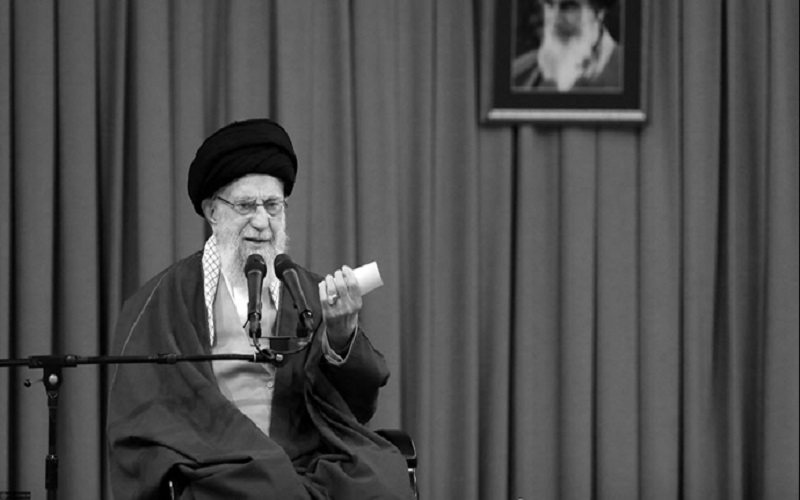

Fear has gripped the Iranian regime in 2025. The return of Donald Trump to power in the United States has created a nightmare scenario for the Iranian regime, leaving Supreme Leader Ali Khamenei with dwindling options. Trump’s stance on Iran remains uncompromising: confront a weakened regime or dismantle it entirely. With the re-imposition of UN sanctions and mounting internal crises, the regime faces an unprecedented challenge.
Mounting Pressures on Multiple Fronts
The Iranian regime’s regional influence has crumbled. The loss of Syria and Lebanon as reliable allies, coupled with its disastrous economic situation, paints a bleak picture. These setbacks coincide with the return of its fiercest adversary, Donald Trump, to the White House, marking a decisive turning point.
Khamenei’s political blindness is evident in his refusal to acknowledge the severity of the regime’s predicament. The erosion of tools like Hezbollah and the Assad regime has cost Iran half its regional allies and much of its credibility in the Middle East.
A Regime in Denial
Despite the regime’s crumbling foundation, decision-making in Iran remains paralyzed, particularly in matters of foreign policy. During the ongoing World Economic Forum in Davos, Mohammad Javad Zarif, the regime’s Vice President for Strategic Affairs, claimed that Iran had no prior knowledge of Hamas’ plans for the October 7 attack on Israel. Zarif also addressed Iran’s nuclear ambitions, asserting, “Iran has never sought nuclear weapons… These weapons are developed in secret laboratories, not through open programs like ours.”
However, these statements contradict reports from U.S. intelligence agencies and the International Atomic Energy Agency (IAEA), which have documented military nuclear activities in Iran until 2003 and suggest recent activities exceed civilian needs.
The Economic Collapse
Iran’s dire economic situation exacerbates the regime’s vulnerability. Over the past eight years, the number of people living below the poverty line has surged from 18 million to 32 million—over a third of the population. Growing poverty and widespread disillusionment have fueled daily demonstrations and strikes by nurses, teachers, oil workers, and retirees. Salaries have plummeted to a fifth of their previous value, and any misstep by the regime risks sparking mass protests.
This economic despair forces the regime to make tactical retreats, such as lifting restrictions on certain social media platforms and delaying the enforcement of a new mandatory hijab law. These concessions reflect its awareness of the explosive potential of public dissatisfaction.
The Specter of Uprising
The specter of uprising looms large in Iran’s alleys and streets. Popular discontent grows alongside the regime’s inability to address economic and social grievances. Despite Khamenei’s fiery rhetoric, the regime’s fear is palpable. The fall of the Assad regime after decades of dominance in Syria serves as a stark reminder that no dictatorship is eternal.
Shifting Power Dynamics in the Middle East
The Iranian regime’s displays of military might, including IRGC exercises, no longer serve as effective deterrents. Power dynamics in the Middle East have shifted against Tehran, and the regime’s willingness to negotiate with Trump underscores its desperation. Zarif’s statements at Davos hint at this growing realization.
A Strategic Gamble
Even before Assad’s fall and Trump’s return, the regime sought negotiations with the United States, particularly in the aftermath of nationwide protests in 2022. Khamenei’s appointment of Masoud Pezeshkian as president reflects this strategy. Pezeshkian’s selection signals Khamenei’s acknowledgment of the necessity to engage with America to ensure the regime’s survival.
Conclusion
The Islamic Republic stands at a crossroads in 2025. With internal dissent growing, regional influence waning, and international pressure mounting, the regime’s future is increasingly uncertain. The return of Donald Trump to the White House may prove to be the final catalyst for a decisive reckoning. Iran’s leaders face a stark choice: adapt and negotiate or risk total collapse.