



Forty-six years of repression, war, and decline under the rule of Velayat-e-Faqih
For those who have always cared deeply about the fate of Iran, a pressing question hangs heavily in the air: What has this regime left for the people of Iran? The answer is both devastating and undeniable.
What it has left behind is a deep-rooted hostility toward social progress, and the constant shadow of war, isolation, and destruction cast by its confrontation with the international community.
A Nation in Ruins
What have these two destructive pillars—repression at home and provocation abroad—yielded for the Iranian people?
They have produced a crippled, backward economy that lags behind even many of its regional neighbors; political tyranny and suffocating control over all aspects of public and private life; a culture of militarism abroad and death at home; corruption embedded in the regime’s very structure and replicated throughout society; and a long, relentless campaign of betrayal against Iran’s national interests.
Above all, the regime has stifled the country’s brightest minds and talents—sacrificed on the altar of preserving the absolute rule of Velayat-e-Faqih (Guardianship of the Islamic Jurist). And what has this rule brought? Misery, injustice, poverty, and devastation.
If one were to condense the suffering of the Iranian people over the past 46 years into a single sentence, it would be this:
All of Iran’s suffering is the result of maintaining clerical rule at any cost—by weaponizing a rigid, unaccountable, medieval interpretation of religion and imposing it on every sphere of governance, society, and justice.
From Khomeini to Khamenei, these so-called “Supreme Leaders” have unleashed decades of war, oppression, and corruption, all while silencing even the faintest voices of dissent. The cost has been paid in blood, poverty, and a generation’s stolen future.
The War That Stripped the Illusion
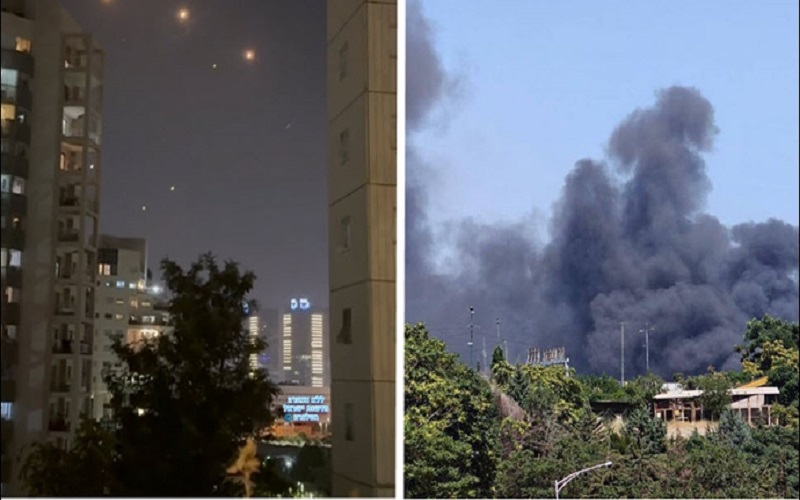
The recent Iran-Israel conflict, brought upon the country by Khamenei’s own strategic miscalculations, has peeled away the regime’s propaganda. It has exposed what many had long feared: that from the Iran-Iraq War to the conflicts in Lebanon, Syria, Iraq, Yemen, and even the West Bank, these wars were never about defending Iran. They were, and remain, tools for the regime’s survival—sacrificing lives and livelihoods to keep power intact.
A Bitter Confession
In its June 29, 2025, edition, the state-affiliated newspaper Setareh-e Sobh published rare, stinging admissions from Masoud Nili, a government affiliated economist. In trying to explain the regime’s descent into political and economic chaos, Nili pointed to the fundamental cause: the regime’s “combative view of the world,” championed by both Khomeini and Khamenei.
“The economy is a hostage of politics—with a belligerent view of the world. The impact of the imbalances in the country is worse and more costly than war,” Nili said.
This war, he argued, has made one thing painfully clear: “Iran’s fate is not determined by ceasefires or confrontations—but by how we view the world and our place in it.”
Nili also criticized the regime’s approach to governance, saying:
“The perspective on welfare, economy, and livelihoods is prescriptive, top-down, and introverted.”
He went on to admit that the economy was meant to serve as the backbone of the country’s resilience. But instead, it has been systematically dismantled in the name of ideological struggle.
These are not just passing observations—they are quiet confessions. Admissions of failure. And they stand as part of the regime’s legacy, now laid bare after just a few days of war.
A Legacy of Loss
After nearly half a century of clerical rule, what remains is a nation burdened by poverty, suppressed by fear, and haunted by wars it never asked for. The dream of a prosperous, free Iran has been repeatedly sacrificed to uphold a regime that demands obedience over progress, and silence over truth.
As the illusions fade, a new reckoning begins—not only with the regime’s crimes, but with the immense human cost of letting this theocracy shape Iran’s destiny for far too long.