


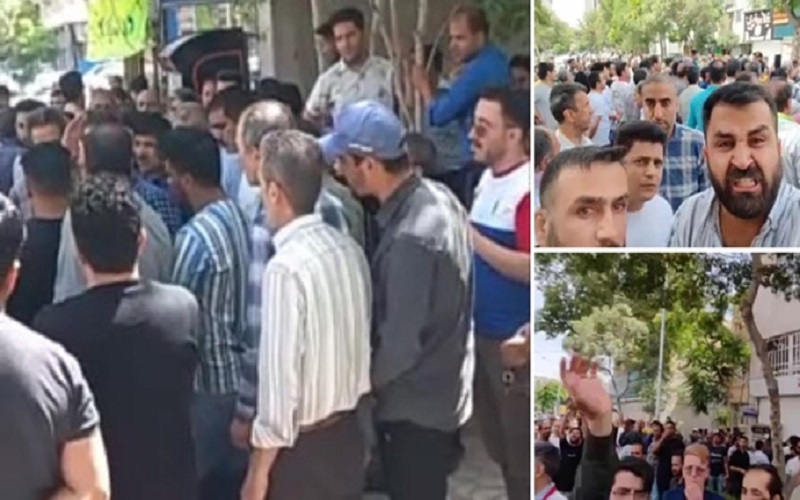

May 24, 2025 — Iran witnessed a powerful and unprecedented wave of protests that swept across the country, from shuttered highways to streets filled with chants of defiance. Truck drivers, bakers, oil workers, farmers, and defrauded citizens united in a striking display of nationwide solidarity, confronting the corruption, mismanagement, and economic ruin inflicted by the ruling regime.
This eruption of protests reveals more than a livelihood crisis—it marks a growing national resolve to challenge a system that has trampled on basic rights for decades.

Silent Roads, Loud Voices: Truckers on Strike
Across more than twenty cities—including Khorramabad, Dezful, Yazd, Sirjan, Mashhad, and Bandar Abbas—Iran’s truckers brought the transportation network to a standstill. These heavy vehicle drivers, essential to the country’s supply chain, are protesting the soaring costs of fuel, parts, and insurance, coupled with stagnant wages and official indifference. For many, working under these conditions no longer makes economic sense—it simply means deeper poverty.

“Until our demands are met, our wheels will not turn,” they declared, voicing a collective frustration that has built up over years of exploitation.
Bakers: Feeding a Nation While Going Hungry
Simultaneously, bakers in cities like Arak, Kerman, Borujerd, Shahinshahr, and Shahrood staged demonstrations outside local government offices and unions. Burdened by the rising costs of raw materials, severe shortages of flour quotas, delayed subsidies, and steep increases in utility and insurance expenses, bakers now face bankruptcy while struggling to feed others.
May 24—Qom, central Iran
Farmers of Seifabad, Qom, on strike.#IranProtestshttps://t.co/EX3jtFsqdL— People's Mojahedin Organization of Iran (PMOI/MEK) (@Mojahedineng) May 24, 2025
In Mashhad, a mass rally of bakers turned into a flashpoint of public anger. “We bake bread, but we are hungry!” one protester shouted—only to be met with tear gas from regime forces. Yet the cry was louder than repression, echoing a broader demand for justice and dignity.
Oil Workers and the Demand for Fairness
In the southern Siri region, official workers of the Offshore Oil Company halted operations, demanding the implementation of Article 10, the full payment of salaries and seniority, the removal of pension caps, and the protection of their pension fund from forced mergers. Their protest is part of a growing wave of labor unrest in vital sectors long neglected by the regime.
May 24—Saveh, northern Iran
Truck drivers in Saveh join the nationwide strikes protesting economic grievances.#IranProtestspic.twitter.com/PCAmGi8nWB— People's Mojahedin Organization of Iran (PMOI/MEK) (@Mojahedineng) May 24, 2025
“We will not resume work until our voices are heard,” the workers insisted—highlighting how even the energy sector, once tightly controlled, is showing signs of fracture.
Protesters Demand Accountability for Fraud and Mismanagement
Meanwhile in Tehran, victims of the Ramak Khodro scandal rallied outside the judiciary after eight years of waiting for court rulings to be enforced. At the same time, frustrated customers of Shahin Saipa protested a six-month delay in car deliveries. These demonstrations reflect a broader outrage at institutionalized corruption and a justice system that routinely fails the people.
Farmers Rise Up in Kazerun
In Kazerun, farmers blocked the main road to the governor’s office, demanding urgent action from officials who have long ignored their pleas. Their protest, symbolic and determined, underscores the plight of agricultural workers pushed to the edge by poor policies, environmental mismanagement, and rising costs.
May 24—Borujerd, western Iran
Bakers protest the non-payment of subsidies, shortages of flour quotas, and economic hardships.#IranProtestspic.twitter.com/PIZsYPmPh3— People's Mojahedin Organization of Iran (PMOI/MEK) (@Mojahedineng) May 24, 2025
A Revolutionary Pulse
These protests are not isolated union actions—they are the heartbeat of a society fed up with repression, economic despair, and institutional rot. From truck drivers and bakers to oil workers and farmers, Iranians from all walks of life are uniting in a shared outcry.
The regime, led by Supreme Leader Ali Khamenei, has responded as expected: with silence, repression, and intimidation. Yet its methods are wearing thin. The Iranian people are no longer afraid, and no longer willing to be ignored.
May 24—Tehran, Iran
Protest by victims of a financial scam involving Ramak Khodro, a state-backed car company, where people have waited eight years for justice without proper action by the government.#IranProtests pic.twitter.com/njuAAi4uLd— People's Mojahedin Organization of Iran (PMOI/MEK) (@Mojahedineng) May 24, 2025
A Nation at a Crossroads
From silent highways to shouting streets, a new chapter is being written in Iran. The people are not just protesting for higher wages or fairer policies—they are demanding a future free from tyranny, corruption, and inequality.
May 24—Fasa, southern Iran
Truck drivers continue strikes and protests over severe price increases in spare parts, fuel shortages, unfair freight rates, high insurance costs, and governmental neglect.#IranProtestspic.twitter.com/yjAJsWUpCv— People's Mojahedin Organization of Iran (PMOI/MEK) (@Mojahedineng) May 24, 2025
This rising tide of defiance is a signal to the world: the future of Iran does not lie in the hands of a decaying regime, but in the determination of a people who chant, “We are hungry, but we will not be silent.”
With growing unity, the Iranian people are not only reclaiming their stolen rights—they are reshaping their nation’s destiny.