



Direct testimonies reveal days of protest, violent repression, and sustained resistance during the January 2026 uprising in southern Iran
During the nationwide uprising of January 2026, the southern port city of Bandar Abbas emerged as one of the key centers of popular resistance against Iran’s ruling theocracy. What follows is an account based on eyewitness testimonies and on-the-ground reports describing how the city’s streets became scenes of mass protests, violent clashes, systematic repression, and determined public defiance.
On Thursday, January 1, 2026, demonstrations and confrontations unfolded in central Bandar Abbas. Protesters chanted slogans such as “Death to the entire regime” and “Honorable Iranians, support, support,” openly rejecting the ruling system and voicing collective anger toward the entirety of the establishment.
By Wednesday, January 7, 2026, large-scale protests took shape along the city’s main thoroughfares. Demonstrators repeatedly chanted “Freedom, freedom, freedom.” Simultaneous gatherings were reported at Falakeh Bargh, major intersections, and in front of the Grand Mosque of Bandar Abbas, where crowds echoed slogans rejecting clerical rule. Additional protests occurred near Iran Insurance, Shekar-e Hormozgan Store, the Siavash Building, and the Dr. Pabarja Pharmacy intersection, where chants of “Death to Khamenei” dominated the atmosphere.
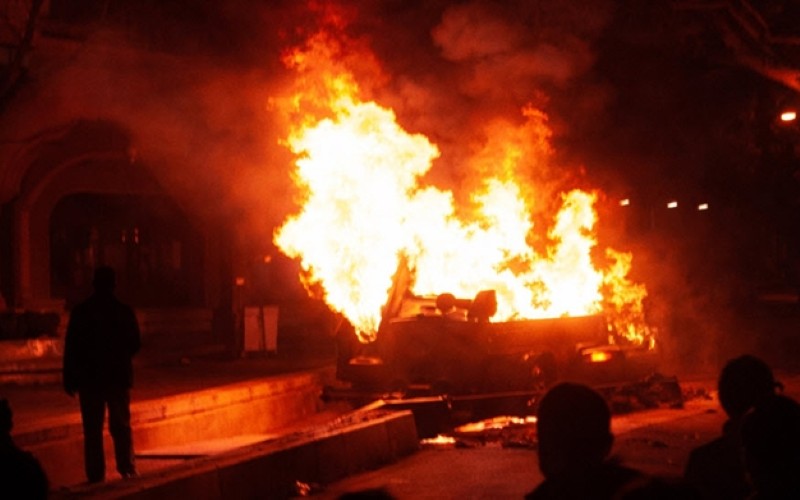
On Thursday, January 8, 2026, nighttime protests escalated. Young protesters took direct action in central Bandar Abbas near auto air-conditioning parts shops. During these confrontations, a police vehicle was overturned in the middle of the street, and several banks were set ablaze.
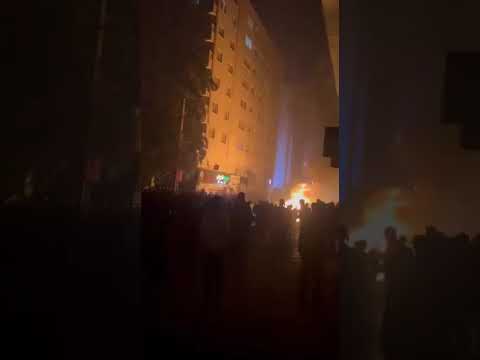
The unrest continued on Friday, January 9, 2026, when protesters lit fires in the streets during nighttime demonstrations and once again chanted “Death to Khamenei.” On Saturday, January 10, 2026, similar protest actions persisted, with youth setting fire to additional banks as acts of defiance against the regime’s financial and security symbols.
On Sunday, January 11, 2026, daytime marches were reported across various parts of the city, including Sepah Bank Intersection, the Independent Currency Exchange Unit of Bandar Abbas, Mobile Online, and a local health station. Across all these gatherings, a unified chant was heard: “This year is the year of blood; Seyed Ali will be overthrown.”
Eyewitness testimonies provide further insight into the dynamics of the uprising. One witness stated:
“We were four people who destroyed Sepah Bank, Oghaf Bank, and surveillance cameras at the intersection and the camera in the middle of the boulevard near Nakhle Sarrah. At first, there weren’t even 20 people, and no one really knew what to do. But within minutes, the crowd grew to around a thousand. I couldn’t believe so many fearless young people appeared out of nowhere. During the operation, everyone followed instructions. Now no one says the uprising is over; they say we are regrouping and will return. People have seen how much this ‘child of the Shah’ betrayed them.”
Another witness recalled the events of January 8:
“We were out as a family. Repressive forces surrounded us and said they wanted to conduct body searches. Families had pepper spray with them.”
A third testimony highlighted the regime’s tactics:
“On January 8 and 9, things were going very well, but as soon as the internet was cut, the killing started. One protester was arrested while setting fire to a bank and a business affiliated with the IRGC. It cost twenty billion rials to secure his release.”
A particularly harrowing account described a civilian killing:
“In one house in Bandar Abbas, across from my uncle’s home, a neighbor just stuck his head out the window to see where the screaming was coming from. They shot him and killed him.”
From January 8 onward, Bandar Abbas effectively entered a state of undeclared martial law. According to eyewitnesses, from around 4 p.m. each day, security forces launched sudden raids in groups of 30 to 40 personnel, while gunfire echoed through the city nightly. Reports indicate that regime forces showed no respect even for the dead. In hospitals, agents allegedly took selfies with the bodies of those killed and told families they would have to pay one billion tomans to retrieve the bodies. There are also reports that in hospitals, even infants as young as one and three years old were shot.
In the nearby island of Qeshm, 17-year-old detainees were reportedly released after several days with shaved heads and visible signs of severe beatings. In Bandar Abbas and surrounding areas, any man suspected of even minimal involvement in protests has been arrested. Witnesses report security agents telling their forces, “If you arrest a man, bring his wife as well.”
A final eyewitness concluded:
“From the day people in Bandar Abbas demonstrated and attacked and burned down the state broadcaster, the regime began firing live ammunition. I personally saw at least 20 people killed.”
These accounts collectively depict Bandar Abbas as a city subjected to extreme repression while simultaneously demonstrating sustained resistance. The events of January 2026 underline both the scale of popular opposition and the regime’s reliance on violence, intimidation, and collective punishment to maintain control.