



How the Slogan “Reformist, Hardliner—The Game Is Over” Redefined Iran’s Political Landscape
After nearly four decades of religious fascism ruling Iran, December 28, 2017 marked a historic rupture in the country’s political trajectory. What unfolded was not merely another protest cycle, but the emergence of a new political reality—one that drew a clear and irreversible line between the Iranian people and their anti-popular rulers.
With one shockwave, the long-running political theater of the regime collapsed. The slogan “Reformist, hardliner—the game is over” did more than express anger; it shut down, once and for all, the illusion of factionalism within Iran’s ruling system and inaugurated a new phase in the struggle for freedom.
The Manufactured Illusion of Choice
For years, the clerical regime—benefiting from international appeasement—cultivated the illusion that Iran possessed competing political factions. According to this narrative, some insiders remained loyal to the system’s reactionary foundations, while others supposedly sought reform and gradual change.
In reality, the so-called reformist–hardliner divide was never ideological. It was, and remains, a struggle over power and resources among ruling clans. The Iranian people and the organized resistance suffered no less under Mohammad Khatami or Hassan Rouhani than they did under Mahmoud Ahmadinejad. Repression, corruption, and exclusion were constants, regardless of which faction occupied the spotlight.
Rouhani and the Collapse of the Reformist Mirage
Hassan Rouhani entered office backed by Akbar Hashemi Rafsanjani, presenting himself as the champion of reform and accountability. He spoke of unlocking four decades of repression and even introduced a so-called “Citizens’ Rights Charter,” as if a new era of freedoms had dawned.
Yet once Rouhani consolidated power, the mask fell. He aligned fully with the regime’s Supreme Leader, presenting himself not as a servant of the people, but as an executor of the will of absolute clerical rule. The promised “key” to reform vanished. Instead, Rouhani sought accommodation with external powers—not to empower society, but to stabilize the very system that oppressed it.
December 28, 2017: Society Delivers Its Verdict
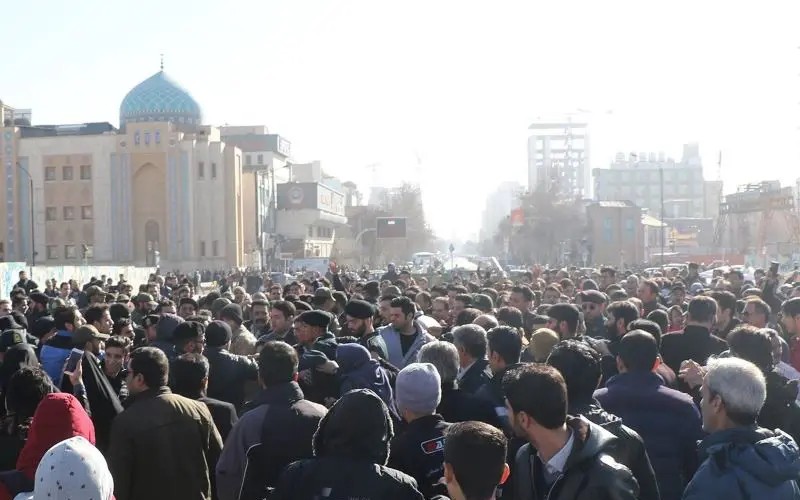
On January 7, 2018, Iranian society delivered its answer to decades of deception. What began in Mashhad as protests against soaring prices quickly transformed into a nationwide uprising questioning the legitimacy of the entire system.
Within hours, demonstrators openly targeted both dominant factions, chanting: “Reformist, hardliner—the game is over.” The uprising spread with stunning speed to more than 160 cities, continuing for over a week and shaking the foundations of the regime Supreme Leader’s power structure.
Repression Fails to Restore Control
The regime responded with brute force. At least 25 young protesters were killed in the streets, seven more died in custody, hundreds were wounded, and over 4,000 were arrested. The Islamic Revolutionary Guard Corps (IRGC) and security forces flooded neighborhoods and homes in a desperate attempt to regain control.
But this time, repression failed to restore the old order. The psychological barrier of fear was broken. More importantly, the fabricated political divisions within the regime were permanently discredited in the eyes of the public.
The Target Named: Absolute Clerical Rule
Chants such as “Death to Khamenei,” “The people beg while the Leader plays god,” and “Seyyed Ali, be ashamed—leave the country” made one reality unmistakable: the conflict was not with individuals or factions, but with the core of the system itself.
Protesters identified the real source of crisis and repression as the doctrine of absolute clerical rule, chanting openly: “Death to the principle of velayat-e faqih.” This was a direct ideological confrontation with the regime’s foundation.
A Spark That Ignited Future Uprisings
Although the December 2017 uprising was violently suppressed, it was not extinguished. Its embers ignited larger revolts, most notably the nationwide uprising of November 2019. From that point forward, the balance of power between society and the state shifted.
Social energies were unleashed. New generations entered the arena of protest and resistance. Across Iran, diverse social movements emerged, signaling that fear had given way to defiance.
Cracks in the Machinery of Repression
One of the most significant outcomes of the December 2017 uprising was the visible fracture within the regime’s repressive apparatus. Confusion, hesitation, and internal dissent began to surface among forces once considered monolithic.
At the same time, seasoned advocates of appeasement abroad were forced to confront reality: their carefully constructed narrative of “moderates” and “reform” had collapsed.
Toward National Solidarity and Inevitable Change
By decisively rejecting all regime factions, the Iranian people clarified the necessity of national solidarity across social classes and generations. This emerging unity represents a dynamic and powerful force—one capable of producing the next decisive social explosion.
That explosion will not seek reform. It will seek the complete dismantling of clerical rule.
A Future Already Taking Shape
As the anniversary of the December 2017 uprising is commemorated, one truth stands firm: Iran will be free. The dawn of liberty will spread its light across a land long denied its rightful future.
The memory of those who gave their lives in the December 2017 uprising endures—not as a symbol of loss, but as a testament to a struggle that continues, with clarity, courage, and purpose.