



From November 2019 to the January 2026 uprising, repeated confrontations with dictatorship have transformed political consciousness, weakened the foundations of fear, and expanded the demand for popular sovereignty and democratic change.
The most important development is not simply that more Iranians have become politically conscious. It is that successive confrontations with dictatorship have changed the way growing sections of society understand the source of their problems and the possibility of resolving them. The January 2026 uprising, following the nationwide protests of 2017–2018, November 2019, and 2022, brought this accumulated transformation into particularly sharp focus.
Under the rule of the mullahs, political disengagement has never been an incidental objective. It has been an essential instrument of maintaining power. An authoritarian system built around absolute religious authority cannot tolerate an independent society that questions the legitimacy of its rulers, challenges their decisions, or demands a meaningful role in determining its future. Consequently, the regime has invested heavily in propaganda, ideological indoctrination, religious coercion, surveillance, imprisonment, and executions to discourage political participation and preserve obedience.
Two interconnected principles underpin this system. First, the population is expected to submit unconditionally to the authority of the supreme leader, whose decisions are presented as beyond ordinary political scrutiny. Second, any independent voice challenging this absolute authority is treated as a threat to the system and subjected to repression, stigmatization, or criminalization.
Yet these very characteristics have produced an increasingly powerful contradiction. A system that demands unquestioning obedience while denying citizens the most basic freedoms inevitably politicizes the grievances it seeks to suppress. When economic hardship, corruption, discrimination, and social restrictions cannot be addressed through meaningful political participation, they become inseparable from the question of who holds power and in whose interests that power is exercised.
This is one of the most consequential unintended outcomes of the mullahs’ rule: the more comprehensively the regime attempts to monopolize political life, the more political the struggle against its monopoly becomes.
From demands for change to rejection of dictatorship
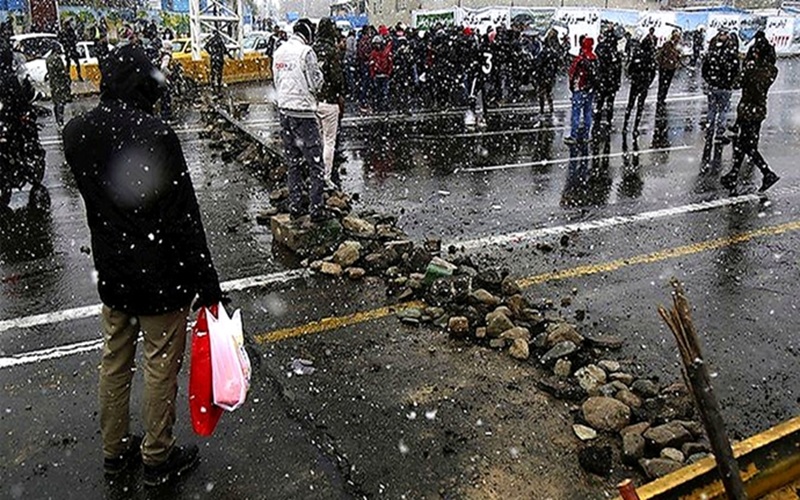
The November 2019 uprising marked a decisive moment in this process. What began with anger over the sudden increase in fuel prices rapidly developed into a nationwide confrontation with the ruling establishment. The scale of the crackdown, including the killing of protesters, exposed the regime’s determination to preserve its authority through violence rather than address the grievances driving public anger.
The subsequent uprisings deepened this transformation. The protests of 2022 demonstrated that the struggle extended far beyond a particular policy or social restriction. It challenged the regime’s attempt to control people’s lives, choices, and fundamental rights. The 2022 uprising went far beyond opposition to a particular social restriction. It challenged the regime’s authority over people’s lives and choices, exposed the incompatibility of religious dictatorship with fundamental freedoms, and strengthened the demand for an end to the entire system of absolute rule.
The December 2025–January 2026 uprising added another chapter to this accumulated experience. Beginning amid economic collapse and the rapid deterioration of living conditions, the protests quickly developed into a nationwide political confrontation. Their geographical and social reach demonstrated that dissatisfaction could no longer be confined to particular economic sectors, generations, or local communities. Demands directed against the regime itself again became central.
These movements were not identical. They emerged under different circumstances, involved different social constituencies, and expressed different immediate grievances. But they shared an increasingly significant political dimension: the recognition that the country’s economic, social, and political crises cannot be resolved while the existing structure of absolute power remains intact.
Repression cannot reverse political transformation
The regime’s response has consistently relied on violence, mass arrests, executions, and intimidation. But repression has not restored the political relationship that existed between society and the ruling establishment before these uprisings.
The continuing execution campaign illustrates this contradiction. On November 16, 2026, Iran Human Rights reported that at least 121 people arrested in connection with the January 2026 protests had been sentenced to death. The organization also documented the executions of 41 protesters since March 18, including 39 arrested during the January uprising. These figures reveal the extent to which the regime continues to regard political dissent as an existential threat.
The weekly No to Execution Tuesdays campaign, supported by prisoners in dozens of prisons, further demonstrates that resistance has not disappeared behind prison walls. Political prisoners, protesters, families of those executed, and activists outside the country continue to challenge the regime’s machinery of repression.
Such resistance is significant not only because it keeps individual cases and demands alive. It also demonstrates that the experience of political struggle is being transmitted across generations and social boundaries. The regime can imprison individuals, execute opponents, and temporarily suppress demonstrations. It cannot simply erase the political awareness and collective experiences that have emerged from these confrontations.
A society moving beyond the politics of submission
This transformation should not be confused with ideological uniformity. Iranian society remains diverse in its political views, cultural identities, generational experiences, and social interests. Nor does every citizen necessarily share the same understanding of what should replace the current system.
But beneath these differences, an increasingly consequential common demand has taken shape: an end to dictatorship and the restoration of the people’s right to determine their own future.
This distinction is essential. The political transformation underway in Iran does not mean that every disagreement has disappeared or that a single political tendency represents the entire population. Rather, it reflects a widening rejection of the principle that any individual, institution, religious authority, or hereditary claim can monopolize the country’s political destiny.
The demand for a democratic republic, the rejection of both the Shah and the mullahs, and the insistence on popular sovereignty address precisely this fundamental question. Iran’s future cannot be determined through the restoration of another form of authoritarian rule. It must be determined by its people through democratic choice, equal citizenship, and the protection of fundamental freedoms.
The implications extend beyond domestic politics. Increasingly, developments inside and outside Iran are assessed by many citizens through the question of whether they advance or obstruct the country’s national interests and the prospect of freedom. Neither foreign military intervention nor dependence on external powers can substitute for the Iranian people’s right to determine their future.
The cumulative cost of dictatorship
The most important legacy of Iran’s successive uprisings may ultimately be the transformation of the relationship between society and political authority. Each uprising has added new experiences to the collective memory, exposed another dimension of the ruling system, and challenged the boundaries of fear and enforced silence.
November 2019 demonstrated the regime’s willingness to massacre protesters to protect its rule. The 2022 uprising challenged its authority over individual freedom and social life. The January 2026 uprising exposed the depth and breadth of the crisis confronting the establishment. Together, these experiences have made it increasingly difficult for the regime to restore the old relationship of unquestioned obedience.
A society does not need to become politically homogeneous to reach a historic turning point. What matters is the emergence of a broad understanding that its fundamental problems are rooted in an authoritarian structure of power and that meaningful change requires transforming that structure.
In this sense, the political awakening of Iranian society is not merely a consequence of individual uprisings. It is the cumulative result of decades of confrontation with dictatorship. The mullahs’ machinery of repression may delay political change, exact enormous human costs, and temporarily silence the streets. But every attempt to preserve absolute authority through violence further exposes the fundamental conflict between the regime and a society increasingly determined to reclaim its right to freedom and self-determination.
Iran today is not the society that existed before November 2019, or even before the 2022 uprising. The January 2026 uprising further demonstrated how far this transformation has advanced. The decisive question is no longer simply whether society has changed, but how this accumulated political consciousness will translate into organized resistance and the establishment of a democratic republic.