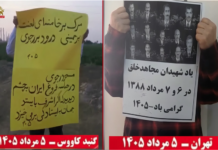
The exploitation of the Iranian people by the ruling regime has reached unprecedented levels, surpassing any period in the country’s modern history. What was once resistance confined to certain social strata has now evolved into a national movement. Widespread discontent, fueled by economic despair, has unified citizens across sectors in collective defiance of an oppressive system.
The Collapse of the Middle Class
At the heart of the crisis is the regime’s economic mismanagement and predatory policies, which have effectively wiped out Iran’s middle class. The implications of this are profound—not only in economic terms but also in the potential for long-term societal instability. As economic conditions deteriorate, protests and strikes are becoming a daily occurrence, drawing participation from a growing number of professions.
Solidarity in Action
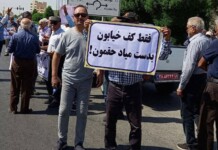
Recent weeks have seen new layers of Iranian society join the protest movement. Taxi drivers from Sabzevar and Arak aligned themselves with striking truck drivers, while the Tehran and Suburbs Bus Company Workers’ Union issued a statement expressing solidarity. The union not only supported the truck drivers’ demands but also condemned the regime’s attempts to suppress them through arrests and threats.
In a statement to Eco Negar, a protesting truck driver in Sabzevar noted the growing momentum:
“Now not only truck drivers, but also tanker and pickup drivers, have joined us. I urge other drivers to stand with us for the sake of their rights and those of their colleagues. We also call on fellow citizens to support us. Only through unity can we overcome these crises.”
A National Strike Expands
The truckers’ strike, which has now lasted eleven days, has spread to at least 155 cities across all 31 provinces. Some reports place the number as high as 163 cities. Its scale and duration underscore the severity of the drivers’ grievances and the strength of their resolve. More than just a labor action, the strike represents an assertion of inalienable rights by some of the country’s most vital workers.
Despite facing widespread repression, intimidation, and threats, the strikers have remained resolute. In their latest statement, they declared:
“The arrest of our colleagues has only strengthened our unity. We demand the immediate and unconditional release of all detained drivers.”
Regime Response: Silence and Hollow Promises
True to form, the regime has failed to respond meaningfully to the truckers’ demands. Instead, it has resorted to its usual tactic of making empty promises, while avoiding any structural reforms or concessions. This response, or lack thereof, is unsurprising. On one hand, the regime is deeply entrenched in a system of theft and corruption. On the other, it now finds itself facing a wave of solidarity among various social classes.
These strikes send a clear message: the regime has consistently failed to address the most basic needs of its people. Over four decades, it has presided over deepening crises and growing despair.
Even State Media Admits Failure
While state-run media typically downplays dissent, portraying the strikes as isolated labor issues, even they have begun to acknowledge the systemic nature of the crisis. On June 1, the daily Ham Mihan wrote:
“The country’s economy has become sick and weak. Naturally, social classes and professional groups, each for their own reasons, are expressing their protest. This calamity is the result of incompetent governments and their disastrous economic policies.”
A Regime Under Pressure
At its core, the truckers’ strike—like many other recent protests—stems from deep-rooted exploitation and economic injustice. The regime is right to fear the growing power of organized resistance. The unity of the striking workers, and the growing support from across society, represent the greatest threat to the regime’s efforts to suppress dissent.
As Iran faces what some are calling a “domino-like crisis,” the determination of its people to stand together will be the key factor in resisting the regime’s attempts to divide and weaken the movement. What is unfolding is not just a labor dispute—it is a national reckoning with decades of injustice.