


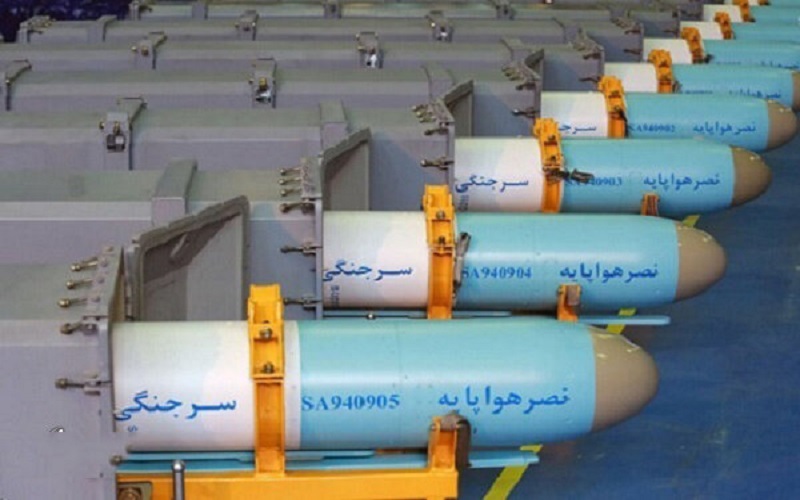

Since the signing of the 2015 Joint Comprehensive Plan of Action (JCPOA), the Iranian regime has dramatically accelerated its development and stockpiling of long-range missiles. This unchecked expansion poses a growing threat to regional and global security.
Any future agreement with Tehran must confront this danger directly by imposing enforceable and verifiable limits on its missile program—something the JCPOA critically failed to do.
A Dangerous Omission in the JCPOA
During the JCPOA negotiations, the United States and its international partners attempted to include limitations on the Iranian regime’s nuclear-capable ballistic missiles.
However, the final agreement focused narrowly on nuclear activities, leaving the regime’s missile program effectively untouched. The hope was that limiting fissile material production would be enough. That gamble has proven gravely misguided.
UN Security Council Resolution 2231, which endorsed the JCPOA, merely called upon Tehran to avoid developing ballistic missiles designed to be capable of delivering nuclear weapons.
The vague language lacked any binding mechanism or enforcement provisions, and these voluntary restrictions expired altogether in October 2023. The result has been an unmonitored and highly advanced missile program with regional and global implications.
Post-JCPOA Expansion and Militarization
In the aftermath of the JCPOA’s implementation, the Iranian regime intensified its missile development, even as some international sanctions remained in place.
It conducted dozens of tests of new or upgraded ballistic missiles, featuring increased range, accuracy, and survivability. Many of these systems could be converted to deliver nuclear warheads with minimal modifications.
The regime has also worked to harden its missile arsenal, constructing fortified underground facilities to safeguard and conceal its weapons.
According to IRGC Aerospace Force Commander Amir Ali Hajizadeh, Iran now operates up to 100 large underground missile bases. This extensive infrastructure enhances the survivability and operational readiness of the regime’s growing arsenal.
A Leading Missile Power in the Middle East
The United States estimates that Iran now possesses the largest ballistic missile arsenal in the Middle East, with over 3,000 missiles, including intermediate-range systems capable of reaching parts of Europe. Short-range missiles, meanwhile, cover the entire Persian Gulf and threaten U.S. forces in the region.
Technological advancements have further increased the regime’s strike capabilities. The development of solid-fuel engines allows for rapid launch, while maneuverable warheads, decoys, and penetration aids complicate interception.
Iran has also expanded its cruise missile capabilities, introducing at least six new long-range models since 2015, with ranges between 700 and 1,650 kilometers.
In 2023, it unveiled a hypersonic cruise missile with a claimed range of 1,500 kilometers, capable of precision strikes once operational.
From Development to Deployment
Since 2017, the Iranian regime has used its missile arsenal in at least nine major military operations, directly launching ballistic and cruise missiles into Syria, Iraq, Pakistan, Israel, and Saudi Arabia.
In parallel, it has provided hundreds of Iranian-made missiles and drones to its regional proxies, including Hezbollah in Lebanon, the Houthis in Yemen, and militias in Iraq and Syria.
More recently, the regime has expanded cooperation with Russia, transferring drones and missile technology for use in the war against Ukraine. These developments underscore the regime’s strategy of using missile proliferation as a tool of regional influence and destabilization.
The Cost of Appeasement
The absence of missile constraints in the JCPOA was not just a technical oversight—it was a political concession rooted in appeasement. Western powers, eager to claim a diplomatic victory, turned a blind eye to the regime’s parallel buildup of missile and drone capabilities.
This same pattern is now visible in mainstream media narratives that downplay the severity of Tehran’s military ambitions in favor of reviving a flawed nuclear deal.
Repeating this mistake would be disastrous. Any new agreement that ignores missile development and delivery systems—while focusing solely on nuclear material and facilities—would leave the door open to continued aggression and eventual nuclear weaponization.
Long-range missiles and unmanned aerial systems lie at the core of the regime’s military doctrine and expansionist strategy. Ignoring them would amount to ignoring the lessons of the past decade.
The Path Forward
To restore credibility to nonproliferation efforts and protect international security, missile restrictions must become a non-negotiable component of any future deal with Tehran. This includes verifiable caps on missile range, production, testing, and deployment, as well as robust mechanisms for enforcement.
The time for symbolic diplomacy and unenforced resolutions is over. The Iranian regime has demonstrated, time and again, that it views missile power as both a strategic necessity and a tool for coercion. Any future agreement must address this threat directly—or risk enabling an even more dangerous and destabilizing future.