As Iran’s nationwide truck drivers’ strike enters its eighth consecutive day, the protest movement has spread to more than 135 cities, triggering a harsh crackdown by the regime’s security forces. Authorities have escalated efforts to suppress and intimidate demonstrators, using both force and propaganda to quell dissent.
On May 29, Tasnim News Agency—closely affiliated with the Islamic Revolutionary Guard Corps (IRGC)—claimed the truckers’ protest was the result of foreign interference. According to the report, “following careful intelligence operations by the Khuzestan Vali Asr Corps,” several individuals were arrested for allegedly filming gatherings at the Imam Khomeini Port cargo terminal and sending the footage to what Tasnim called “hostile networks.”
A video released by Tasnim shows the arrested men dressed in prison uniforms, “confessing” that they were misled into sharing the videos online. While the circumstances surrounding these confessions remain unclear, many human rights organizations have consistently reported that such statements in Iran are typically extracted under duress, including torture.
A Movement Gaining Strength
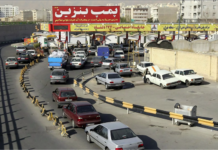
The truckers’ strike has dominated social media and news coverage in recent days, with videos from across the country showing highways unusually devoid of truck traffic—highlighting the scale and coordination of the protest.
By halting their operations, drivers are voicing frustration over rising operational costs, lack of union representation, inadequate social support, and government indifference to their long-standing demands. Many have pledged to continue the strike until their grievances are fully addressed.
Official Response: Mixed Messages and Intimidation
In response, regime officials and affiliated media outlets have taken a dual approach—accusing protesters of fuel smuggling or foreign collusion on one hand, while making vague promises of reform on the other.
On May 28, government spokesperson Fatemeh Mohajerani announced that a report on the truckers’ strike and the Ministry of Roads and Urban Development’s response was presented at a cabinet meeting. “The government has a duty to be accountable to all citizens, to hear their voices, and to respond to their needs,” she stated.
She further quoted the Minister of Oil, who promised that truck drivers using designated routes would be allowed to refuel at previous subsidized rates.
Meanwhile, the chairman of the Drivers’ Association’s board reported a suspension of the controversial three-tier diesel pricing system. He added that a comprehensive review of fuel allocation policies, involving truckers’ representatives, was being planned.
Mohammadreza Rezaei Kochi, head of the Civil Engineering Commission in parliament, also announced a draft bill with “two-starred urgency” to address truck drivers’ concerns. The bill reportedly aims to improve drivers’ insurance, revise fare rates, and secure stable fuel access.
Suppression and Accusations of Sabotage
Despite these promises, intimidation and repression continue. Jalal Mousavi, vice president of the National Association of Truck Drivers, told Payam-e Ma newspaper that “an atmosphere of fear” had been created by those exploiting drivers’ discontent, making it difficult for some to return to work.
State-affiliated outlets such as Jahan News went further, labeling the movement an “anti-Iranian operation” and claiming that security forces had arrested several strike “leaders” who allegedly coerced other drivers through threats and sabotage.
Union Defiance and Expanding Solidarity
In a statement released Wednesday evening, the Union of Truckers and Drivers Organizations of All Iran confirmed that the strike had reached more than 135 cities. “Our voice is now heard across Iran,” the statement declared, adding that the protest had grown beyond a specific group to represent the demands of thousands of working-class Iranians.
The union welcomed the participation of pickup truck drivers from Neyshabur and called on others in different cities to join the movement and “revive its spirit.”
The statement also condemned the arrest of drivers in provinces including Isfahan, Hormozgan, Fars, Kermanshah, Ardabil, and Khuzestan, demanding their immediate and unconditional release. “Neither the police nor the IRGC can break our will,” the union declared.
International Attention
The growing strike has now captured the attention of international media. In a recent report, the Associated Press noted that the movement, which began last Thursday in Bandar Abbas—a key transportation and shipping hub—has spread nationwide. The report highlighted that prominent anti-regime figures have voiced support for the strike, raising concerns that the protests could evolve into a broader challenge to the regime’s authority.