


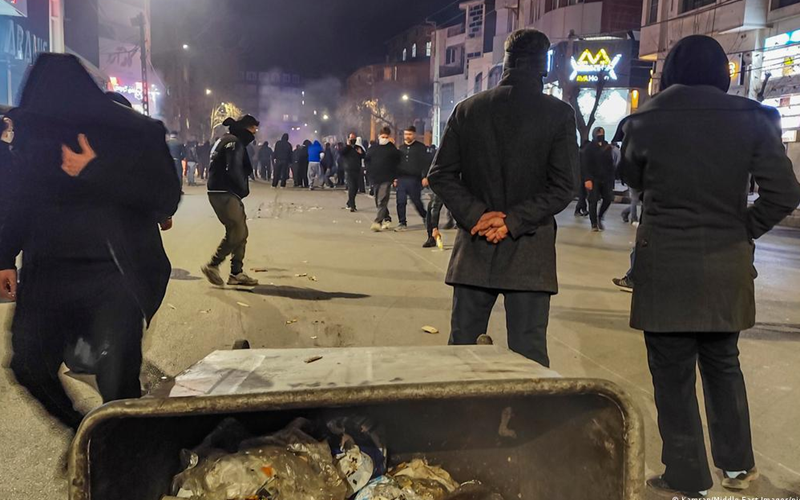

As Iran’s internal crises deepen, regime officials increasingly warn about the growing attraction of young people to the PMOI and Resistance Units.
As Iran’s international isolation and deepening internal crises intensify, an increasingly familiar theme is emerging from the regime’s pulpits, media outlets, and official statements: growing concern over the younger generation’s attraction to the People’s Mojahedin Organization of Iran (PMOI/MEK) and the Resistance Units.
The repeated warnings are significant because they come at a time when economic hardship, political instability, repression, and widespread public anger have created increasingly volatile conditions across Iran.
Regime officials clearly understand that the danger is not simply the existence of an opposition organization. Their concern is the potential combination of a deeply dissatisfied society with an organized resistance capable of mobilizing that discontent.
A Growing Preoccupation Inside the Regime
The latest example came on August 21, when the director-general of a regime foundation in Khorasan Razavi called the need to counter the PMOI’s influence a pressing concern. He stated that “recognizing the true face” of the organization was a necessity for today’s society and generation.
The statement is revealing in its timing. It came as the regime confronts soaring prices, gasoline-related pressures, the consequences of war and sanctions, and growing public dissatisfaction.
The regime’s response has been to intensify its warnings about the opposition and particularly its potential influence among young people.
These concerns are not confined to one official.
Last week, cleric Kazem Seddiqi openly acknowledged the regime’s continuing struggle with the PMOI and Resistance Units. He warned that the organization had connected young people through an organized network and sought to turn them against the ruling system.
In Karaj, cleric Mohammad-Hossein Hosseini-Hamedani similarly warned against assuming that the PMOI had disappeared, insisting that its activity continued and that its influence should not be underestimated.
Such statements amount to repeated acknowledgments from within the regime that its efforts to eliminate the opposition have not produced the results it claims.
Why the Fear Is Growing
The timing of these warnings is particularly important.
The regime is confronting multiple crises simultaneously: economic deterioration, inflation, energy and water shortages, political infighting, international isolation, and widespread social discontent. At the same time, it remains deeply concerned about the possibility of renewed nationwide protests.
Against this backdrop, the Resistance Units represent a different kind of challenge from spontaneous demonstrations.
The regime can attempt to suppress an isolated protest through arrests and force. But an organized network capable of maintaining activity under repression presents a more persistent challenge.
This helps explain the regime’s repeated focus on the younger generation.
Iran’s youth have grown up amid censorship, repression, economic deprivation, and the denial of political freedoms. The regime’s own officials now appear increasingly concerned that these accumulated grievances are creating fertile ground for organized resistance.
The PMOI spokesperson has pointed to the regime’s economic failures, soaring prices, war, and sanctions while arguing that the organization’s history of confronting the regime remains relevant to the present generation.
The significance of these exchanges goes beyond the regime’s propaganda.
The more the regime warns about the PMOI and the Resistance Units, the more clearly it reveals what it fears: that a new generation, confronting an increasingly dysfunctional political system, may transform accumulated anger into organized resistance.
The regime’s anxiety therefore reflects a broader vulnerability. Its problem is not merely that opposition voices exist. It is that, amid deepening crises, it cannot be certain that repression alone will prevent those voices from finding an increasingly receptive audience among Iran’s youth