



Nationwide Protests on Novmeber 19 Expose Expanding Public Outrage Against Injustice and State Suppression
A New Wave of Public Anger Sweeps Across Iran
Iran witnessed a new surge of protests on November 19, as workers, students, defrauded investors, and families from various provinces took to the streets. Their demands—justice, accountability, and basic rights—reflect deepening public frustration with a regime that responds to every crisis with more repression instead of solutions. Reports from across the country indicate widespread deployments of security forces, once again demonstrating that the government’s instinct is not to address grievances, but to crush them.
Workers of Nourabad Mamasani Launch a Renewed Strike
In Nourabad Mamasani, municipal service workers continued their strike after months of withheld wages, wage deductions, threats of dismissal, and exploitative treatment by contractors. Workers accuse the contractor of ruthless and irresponsible behavior. The recurring strikes reveal a complete collapse of trust and a breaking point in the patience of Iran’s workforce—conditions created by the regime’s systematic neglect of labor rights.
Isfahan: Security Forces Block Labor Rally and Make Arrests
Security forces in Isfahan prevented workers of the Zob Ahan Steel Complex from gathering and arrested several participants. Workers protesting unpaid wages and growing economic pressure say that company security units and plainclothes agents blocked any peaceful assembly. Their actions underscore what workers describe as the regime’s “fear of public protest.”
Meanwhile, at Shahid Beheshti University, students protested in front of the central cafeteria after reports of widespread food poisoning, rotten schnitzels, and raw meat being served. Their outrage highlights the regime’s persistent failure to ensure even the most basic standards for students. “Food is a basic right,” students said, blaming contractor corruption and state negligence for jeopardizing their health.
Tehran: Victims of the Cryptoland Scandal Confront the Judiciary
In Tehran, victims of the Cryptoland financial fraud case once again gathered outside the Tehran Prosecutor’s Office. Protesters demanded repayment of at least 60 percent of their frozen assets and chanted slogans against the judiciary controlled by the regime’s supreme leader Ali Khamenei. After three years of legal limbo and the seizure of assets by the IRGC and the courts, this case has become a symbol of entrenched structural injustice under the regime.
Ilam: Assault on a Student Sparks Public Fury
In Ilam, the violent assault of a student by a school deputy triggered an outcry among parents and the local community. Images of the student’s injuries spread quickly, prompting demands for legal action. The incident is widely viewed as a reflection of the normalized culture of violence embedded in the regime’s governing structures.
Bahregan: Offshore Oil Workers Demand Fair Treatment
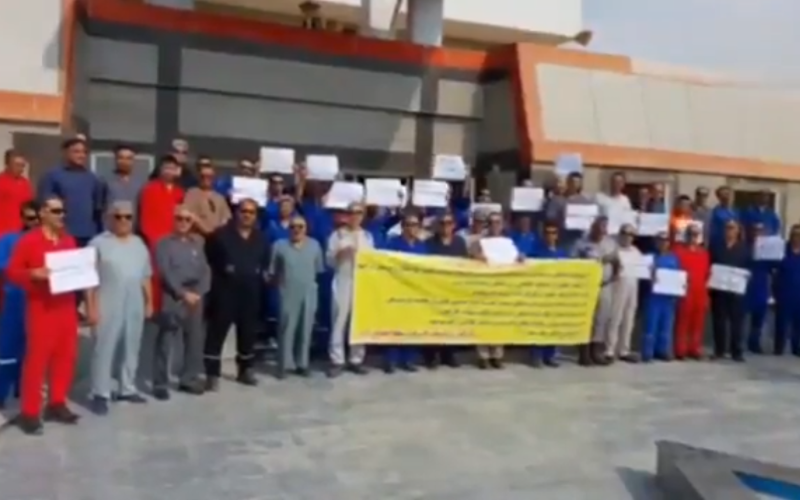
In Bahregan, offshore workers of the Continental Shelf Company held a protest demanding wage correction, removal of the tenure cap, and transparency in tax regulations. They also called for the independence of the retirement fund. Workers say the regime has consistently ignored the rights and conditions of operational staff whose labor sustains critical national infrastructure.
Shahr-e Rey: Students Protest Severe School Mismanagement
In Shahr-e Rey, students at a girls’ school staged a protest over severe administrative negligence. The arrival of ambulances at the school, coupled with official silence, intensified outrage among families and drew attention to the deep dysfunction inside Iran’s educational system.
Kojur: Citizens Protest Industrial Pollution
Residents of Kojur gathered to protest rising industrial pollution and severe environmental degradation. Citizens report years of respiratory problems and condemn the regime for failing to take any meaningful environmental action.
Public Protests Enter a New Phase
Taken together, these protests reveal a decisive shift: Iranians from every sector—workers, students, families, and ordinary citizens—are increasingly unwilling to tolerate injustice, corruption, and repression. Analysts note that the expansion of these demonstrations is the direct result of systemic mismanagement, organized state repression, and the regime’s refusal to address public demands.
The events of November 19 show that the regime’s escalating use of security forces cannot extinguish the growing nationwide call for justice. The protests mark another step in a public movement that is widening despite, and increasingly because of, the regime’s failures.