



New Data Exposes Economic Hardship and Systemic Failures Affecting Women Across Iran
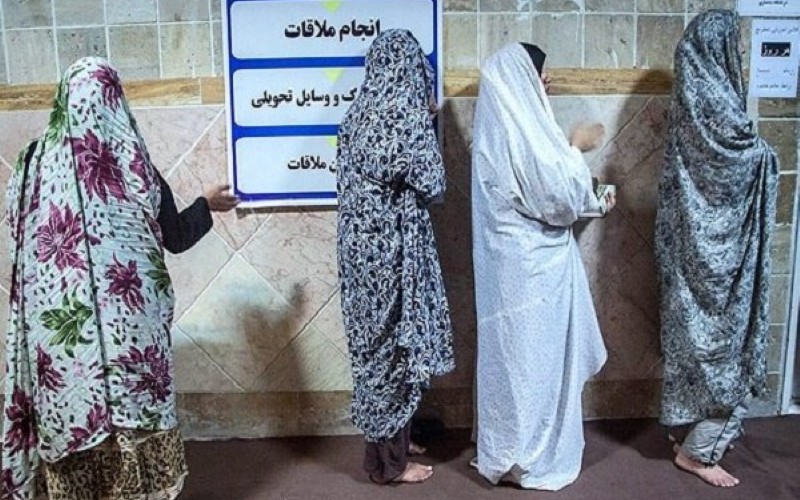
Fresh data from inside Iran reveals that a significant portion of the country’s female prison population consists of educated mothers imprisoned for debt or unintentional financial offenses. This pattern exposes deep structural inequality, the feminization of poverty, and the severe socioeconomic pressures facing women under the current system.
A Crisis Beyond the Stereotypes
According to a report by Arman-e Emrooz, most incarcerated women in Iran are not imprisoned for violent crimes. Instead, they are held over financial debts, unpaid guarantees, or non-intentional financial violations—offenses rooted in economic strain and the absence of protective financial networks.
Tehran has the highest number of female prisoners with 184 cases, followed by Fars with 96 and Mazandaran with 85. In contrast, Sistan and Baluchestan reportedly has almost no women imprisoned for unintentional financial offenses, a disparity that reflects uneven judicial practices and regional inequality.
The newspaper does not specify which state institution provided these numbers, nor whether political or ideological female prisoners are included. This lack of transparency aligns with the regime’s long-standing refusal to release clear, verifiable statistics on prisoners and human rights issues.
Mothers, Professionals, and the Educated Behind Bars
Assadollah Julaei, the head of the state-affiliated Diyah Foundation, states that 73 percent of female prisoners are mothers, many responsible for more than three children. The data also indicates that 24 imprisoned women hold PhDs, a reminder that incarceration due to financial pressure affects not only the poor but also professionals and highly educated women.
The age range among these prisoners is striking. The youngest is a 20-year-old woman, while the oldest was born in 1935. One middle-aged woman in Fars has been imprisoned since 2018 because of an 80-billion-rial debt, reflecting the severity of financial burdens that make release unattainable for many.
Experts Warn: Poverty in Iran Has Become Feminized
Sociologist Fatemeh Kabirnetaj views these figures as clear evidence of entrenched structural discrimination and widening social divides. She emphasizes that the primary “offense” for many women is financial incapacity—a direct result of economic inequality, restricted access to capital, and the absence of safety nets.
Kabirnetaj notes that women lack reliable financial support systems and are disproportionately vulnerable in times of economic crisis. The presence of women aged from 20 to 90 in prison for debt illustrates how poverty has increasingly taken on a female face in Iran.
The sociologist describes the statistic that 73 percent of imprisoned women are mothers as a “double social catastrophe,” arguing that incarceration harms not only the women themselves but also their children, who face heightened risks of poverty, emotional trauma, and family disintegration.
The existence of 709 imprisoned women with at least three children further reflects the intense economic pressures on female heads of households. Even academic achievement offers no protection, as seen in the 24 women with doctoral degrees who remain behind bars for unintentional financial crimes. Kabirnetaj considers the imprisonment of a 90-year-old woman a sign of the judiciary’s and welfare system’s complete failure to protect the most vulnerable.
Structural Failures and a Judiciary That Punishes Poverty
The broad demographic range of female prisoners—spanning different ages, educational levels, and family responsibilities—reveals fundamental shortcomings in Iran’s approach to non-intentional financial offenses. Many women remain incarcerated simply because they lack the means to repay debts that have escalated beyond their control.
The underlying causes include weak social safety nets, the rising cost of living, gender-based exclusion from economic opportunities, and chronic mismanagement by governing institutions. These pressures create a cycle in which impoverished women are driven deeper into debt, imprisonment, and long-term family instability.
A Crisis Sustained by Policy Failures
This unfolding crisis is not accidental. It is the outcome of years of harmful policies, discriminatory laws, and a judiciary that punishes poverty instead of addressing its causes. The regime’s refusal to implement meaningful reforms continues to push women into situations where financial hardship becomes criminalized.
The report provides a stark picture of social inequality, the feminization of poverty, and the the regime’s misogynist policies.