


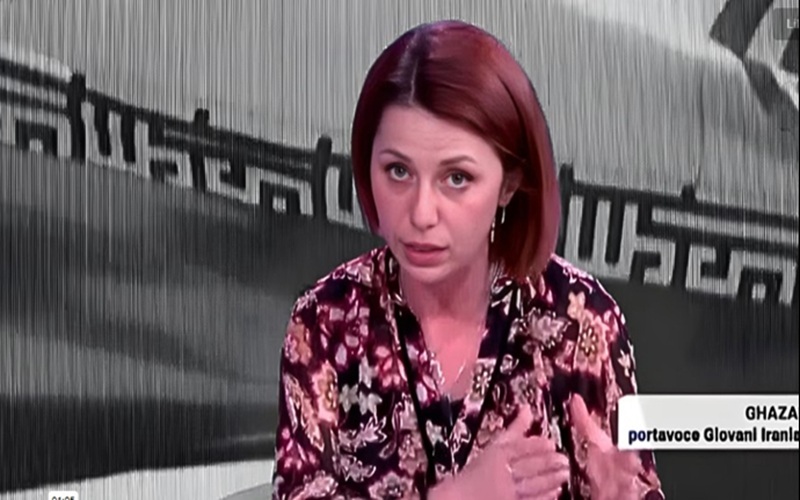

Interview highlights the role of resistance units and urges Europe to take decisive action against Tehran
In a revealing interview with Rai News, Ghazal Afshar, a supporter of the National Council of Resistance of Iran, outlined the growing role of organized resistance inside Iran and called on European governments to recognize a transitional political alternative to the current regime.
Afshar pointed to the Ten-Point Plan proposed by Maryam Rajavi as a comprehensive framework for transferring power to the Iranian people. She described the initiative as a structured roadmap aimed at ending decades of authoritarian rule—first under the monarchy and then under the current clerical establishment—and replacing it with a democratic system based on popular sovereignty.
Resistance Units and Internal Pressure on the Regime
A central theme of the interview was the expanding role of resistance units operating inside Iran. Afshar described these networks as increasingly active and capable of challenging the regime’s security apparatus through coordinated operations targeting key centers of power.
Paraphrasing her remarks, she argued that these forces have reached a level of organization that allows them to exert meaningful pressure on the ruling establishment. She cited a recent large-scale operation involving hundreds of activists targeting one of the regime’s most sensitive power centers, presenting it as evidence of both operational capacity and growing momentum within the resistance.
According to Afshar, such developments demonstrate that the organized opposition is not only active but also capable of independently driving political change without reliance on external military intervention.
Call for European Policy Shift
Afshar also delivered a clear message to European policymakers. She urged governments across Europe to move beyond dialogue and adopt a firmer stance toward Tehran.
Her recommendations included closing Iranian embassies, expelling regime-affiliated operatives, and halting diplomatic engagement with what she described as a system that continues to suppress its population and export instability.
She referenced recent steps taken within the European Union to increase pressure on the Islamic Revolutionary Guard Corps, suggesting that these measures should be followed by a more decisive political shift.
Recognition of a Transitional Alternative
A key demand raised in the interview was the formal recognition of a transitional government proposed by the NCRI. Afshar emphasized that such recognition would not only legitimize the opposition’s political vision but also provide a clear pathway for a stable transition after the fall of the current system.
She described the proposed interim administration as prepared to manage the country during a limited transition period, ensuring continuity of governance while paving the way for free and fair elections.
A Consistent Message from the Opposition
The interview reflects a broader and increasingly coordinated message from Iranian opposition figures: that the solution to Iran’s crisis lies neither in war nor in continued engagement with the current leadership, but in supporting an organized, domestic movement for democratic change.
By emphasizing both internal resistance capabilities and a structured political alternative, Afshar’s remarks reinforce the opposition’s effort to present itself as a credible and ready successor on the international stage.