



Mojtaba Khamenei’s rise marks the transformation of Iran’s theocracy into outright dynastic dictatorship
The death of Ali Khamenei, Iran regime’s pervious supreme leader on February 28, 2026, marks a historic inflection point for Iran. Yet instead of opening a path toward reform or structural change, the rapid elevation of Mojtaba Khamenei has reinforced what many critics describe as the regime’s fundamental instinct: survival through continuity, not transformation.
In one of the first major international reactions, the President of the European Parliament stated that Khamenei’s death should signal the end of dictatorship in Iran. That sentiment reflects a broader expectation—but not necessarily the reality now unfolding.
From Revolutionary Theocracy to Dynastic Power
The Iranian regime, born out of the 1979 revolution, established itself under the doctrine of velayat-e faqih—clerical rule justified through religious authority. Over nearly five decades, this system has systematically suppressed dissent, eliminated political opposition, and extended its influence beyond Iran’s borders through ideological and military means.
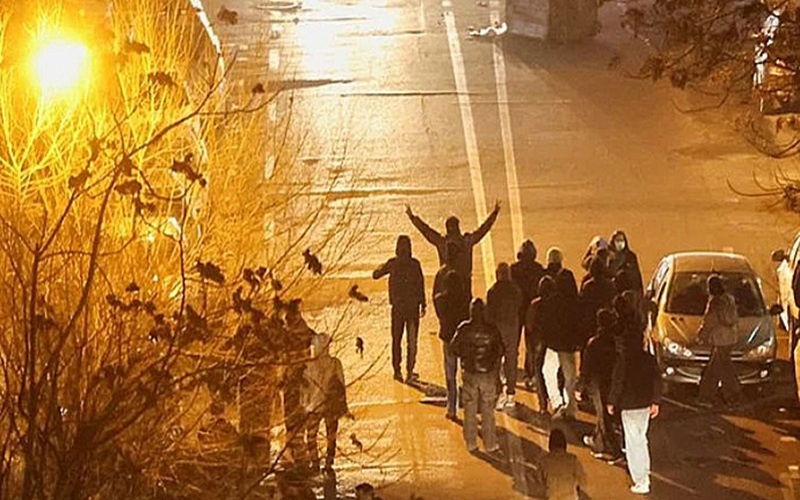
Under Khamenei, the system evolved into a highly centralized structure where ultimate authority rested in the office of the Supreme Leader. His tenure was marked by repeated crackdowns on protests, mass arrests, and the use of lethal force against civilians during uprisings in 2009, 2017, 2019, 2022, and most recently in 2026.
His legacy also includes controversial decisions with far-reaching consequences, including policies during the COVID-19 pandemic that restricted access to Western vaccines—moves widely criticized for exacerbating human loss.
Mojtaba Khamenei and the Consolidation of Power
The transfer of power to Mojtaba Khamenei has intensified concerns that the Iranian regime has crossed a new threshold—from ideological authoritarianism into something resembling hereditary rule.
Long known as a powerful figure within the Supreme Leader’s inner circle, Mojtaba has been associated with the regime’s security apparatus and its response to domestic unrest. His reported position during past protests—advocating extreme measures against demonstrators—has further fueled fears about the future trajectory of governance in Iran.
For critics, his appointment represents not just continuity, but escalation: a system doubling down on coercion while shedding even the appearance of republican legitimacy.
Opposition Response and the Democratic Alternative
The transition has drawn sharp criticism from opposition groups, particularly the National Council of Resistance of Iran. Its president-elect, Maryam Rajavi, has argued that the installation of Mojtaba Khamenei effectively transforms the Guardianship of the Jurist (velayat-e faqih) system into a form of dynastic rule.
She contends that this development underscores the regime’s lack of legitimacy and its continuing appropriation of popular sovereignty. In her view, the current moment exposes the incompatibility between the ruling structure and the democratic aspirations of the Iranian people.
Rajavi and the NCRI advocate for a democratic republic based on pluralism, separation of religion and state, gender equality, and universal suffrage—principles outlined in her ten-point plan.
“Neither Shah Nor Mullah”: A New Political Boundary
A central slogan emerging from recent protest movements—“neither Shah nor Mullah”—captures a growing rejection of both monarchy and theocratic rule.
This framing reflects a deeper transformation in Iranian political consciousness. The demand is no longer limited to reform within existing structures, but rather a fundamental redefinition of governance itself.
A democratic republic, as proposed by opposition platforms, would reject hereditary power—whether royal or clerical—and instead root legitimacy in the will of the people. It would also require institutional safeguards: separation of powers, protection of minority rights, and adherence to international human rights standards.
A Transitional Vision—and Its Challenges
The NCRI has outlined a framework for a transitional government tasked with organizing elections for a constituent assembly within six months of regime change. This body would be responsible for drafting a new constitution grounded in democratic norms.
While such proposals offer a structured alternative, their realization depends on developments inside Iran. Political change in exile frameworks remains hypothetical unless matched by shifts on the ground.
A Defining Moment for Iran’s Future
Iran now stands at a crossroads. The death of Ali Khamenei could have marked the beginning of systemic transformation. Instead, the rise of Mojtaba Khamenei suggests an attempt to preserve the existing order through dynastic succession.
Whether this strategy can withstand mounting public dissatisfaction is uncertain. Years of economic hardship, political repression, and social unrest have eroded the regime’s legitimacy.
Ultimately, the future of Iran will not be determined solely by elite power struggles, but by the capacity of its people to assert their will—and by whether alternative visions can translate into tangible political change.