
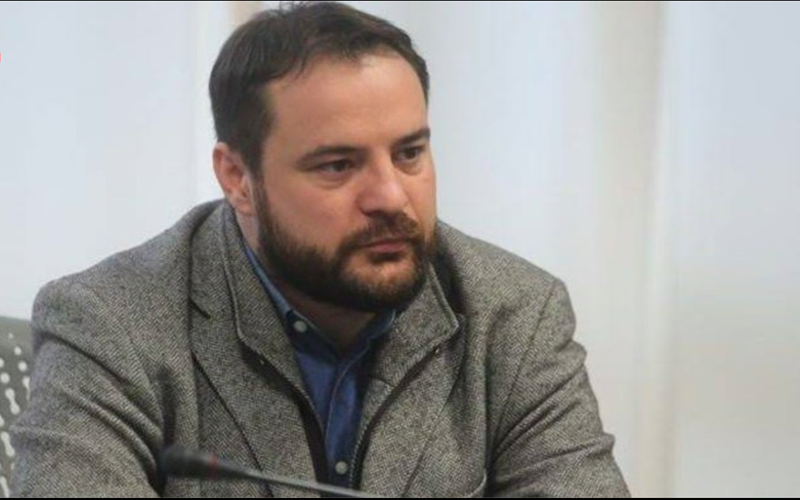

Speaking at a conference in Cuneo, Italy, Roberto Rampi condemned executions and the political exploitation of religion in Iran, warned against foreign military intervention, and called for international support for an organized democratic resistance.
Rampi, who served in Italy’s Chamber of Deputies from 2013 to 2018 and in the Senate from 2018 to 2022, addressed the gathering in a city known for its role in the Italian Resistance against fascism. He drew parallels between the historical struggle for freedom in Italy and the efforts of Iranians confronting dictatorship.
He praised Cuneo for maintaining its commitment to the Iranian cause, including its ties with Ashraf and its decision to grant honorary citizenship to Maryam Rajavi, president-elect of the National Council of Resistance of Iran (NCRI).
As a member of the National Association of Italian Partisans (ANPI), Rampi emphasized that Italy’s democratic Constitution emerged from struggle, sacrifice, and resistance. He argued that local institutions have responsibilities extending beyond everyday municipal services to defending universal principles of freedom and human dignity.
Iran’s System of Religious Rule and Executions
Drawing on his experience in human rights work and the Parliamentary Assembly of the Council of Europe, Rampi criticized Iran’s system of government for denying the people genuine democratic sovereignty.
He argued that the concentration of political and judicial authority in institutions claiming divine legitimacy undermines freedom of expression and makes dissent vulnerable to accusations of blasphemy or apostasy. In his view, the political use of religion has transformed religious authority into an instrument for suppressing opposition.
Rampi described Iran as an especially severe example of the abuse of religion for political purposes, a concern he has also pursued through international work opposing such practices.
He placed particular emphasis on the death penalty. Iran’s extensive use of executions, he said, serves not only as punishment but also as a public instrument of intimidation intended to deter dissent and prevent organized resistance. He condemned the execution of people who were minors at the time of their alleged offenses and called for sustained international efforts to abolish capital punishment.
For Rampi, confronting these practices requires more than expressions of concern. It demands organized action and a willingness to place human rights at the center of relations with Tehran.
No Military Intervention, No Appeasement
Rampi also addressed the consequences of foreign intervention in Iran and the wider Middle East. He recalled the position long advocated by the Iranian Resistance, which has called on Europe and the United States to refrain from military intervention, warning that external force would produce counterproductive results rather than democratic change.
He argued that Iran’s internal political future must not be reduced to military calculations or economic interests. The regime itself, he said, has diverted national wealth away from employment, social justice, and public welfare toward regional armed groups and destabilizing activities.
Rampi criticized Tehran’s involvement in the Palestinian arena, arguing that its support for fundamentalist groups had complicated the Palestinian struggle and contributed to its political isolation. He also pointed to the destabilizing effects of Iran’s influence in Lebanon and Iraq.
These regional policies, he maintained, have carried consequences for international security as well as for the Iranian population whose resources have been diverted from domestic needs.
“Any illusion of compromise and accommodation with this regime is a mirage,” was the central warning he conveyed. In his assessment, the regime’s ideological structure and regional conduct make a durable, peaceful coexistence with the international community exceptionally difficult.
He cautioned against allowing economic and commercial concerns to eclipse human rights. While the security of maritime routes and the uninterrupted movement of goods matter, he argued, they cannot become the sole measures of international policy while people inside Iran face torture, imprisonment, and execution.
The Iranian Resistance and a Democratic Alternative
Rampi praised the Iranian Resistance for maintaining an organized struggle for more than four decades. He highlighted the prominent participation of women at the highest levels of its leadership and decision-making, describing this as a practical example of gender equality and the sharing of political power.
He also pointed to the Resistance’s commitment to a democratic republic based on the separation of religion and state, equal rights for women and men, and the principles outlined in Maryam Rajavi’s Ten-Point Plan.
For Rampi, this vision challenges the assumption that religious belief is incompatible with secular democratic government. He emphasized that a society can respect religious conviction while preventing religious authorities from controlling the state and denying citizens equal rights.
He concluded by calling on democratic institutions and younger generations to take a more active role in defending universal freedoms. Young people increasingly recognize injustice across national borders, he said, and their determination to act recalls the spirit of those who resisted fascism in Italy.
The experience of the Iranian Resistance, in his view, offers lessons in political organization, perseverance, and equality. Supporting the Iranian people is therefore both a human rights responsibility and a matter of international concern.
Rampi ended by expressing his hope of one day visiting a free Iran, where the country’s rich cultural heritage could flourish without dictatorship or repression.