


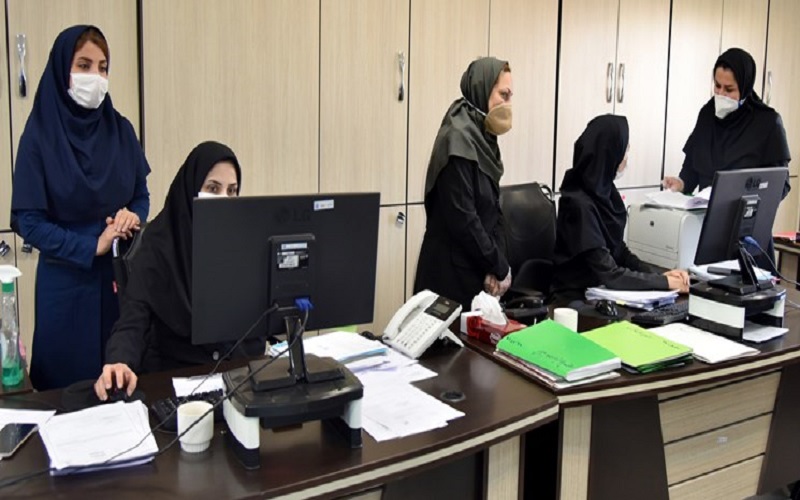

The data from Iran’s Statistics Center reveals that, in 2023, of the 24 million workers in the country, only 4.6 million were women, comprising a mere 16% of the total workforce. This statistic underscores the persistent challenges that women face in entering and remaining in the labor market in Iran.
Despite gradual societal changes, women’s participation in the workforce continues to be hindered by various obstacles rooted in traditional and conservative views. These barriers often manifest in both subtle and overt forms of discrimination, restricting women’s access to professional opportunities and career growth.
Cultural and Legal Barriers
One of the primary challenges women face stems from the deeply ingrained cultural norms that prioritize homemaking and motherhood over professional aspirations. Conservative attitudes often confine women to non-professional roles, making it difficult for them to pursue careers outside the home. These societal expectations remain among the most significant impediments to women’s presence in the workforce.
Although there are laws intended to protect women in the workplace, many of these regulations exist only on paper. The gap between legal protections and their enforcement is wide, leaving women vulnerable to discrimination and exploitation. For example, the state-run news agency ILNA highlighted this disparity in a report published on August 1. It pointed out that, while both men and women contribute equally to the social security fund during their employment, women do not receive equal benefits upon retirement. ILNA further noted that low wages and limited benefits disproportionately affect women, both during their working years and after retirement.
Simin Yagoubian, a women’s labor activist, emphasized that wage inequality extends even into retirement. Women, who already earn less than men in many sectors, continue to face financial disparities after leaving the workforce. In smaller workshops and informal employment settings, this wage gap is even more pronounced, as women often receive significantly lower pay for the same work.
Limited Access to Job Opportunities
Beyond wage inequality, limited access to job opportunities is another major barrier for women in Iran. Many women are forced to choose between work and family due to the lack of support systems that facilitate work-life balance. This situation is compounded by societal expectations that prioritize women’s roles as mothers and wives.
Iran regime’s Supreme Leader, Ali Khamenei, has reinforced these traditional views. In a speech on May 1, 2013, he remarked, “The most important role that a woman can play at any level of science, literacy, information, research, and spirituality is the role of a mother and wife; this is more important than all her other works.” Such statements from the highest levels of leadership further entrench the idea that a woman’s primary duty is within the home, not in the workplace.
Discrimination in Employment and Retirement
Even when women manage to enter the workforce, they often find themselves funneled into low-paying, part-time jobs, exacerbating the wage gap between men and women. This trend is not limited to women with lower levels of education. Women with higher education also face discriminatory practices, frequently being placed in lower-paying, lower-status jobs compared to men with similar qualifications. Women are also less likely to attain management positions or higher organizational ranks, further limiting their career prospects.
Additionally, women in informal jobs lack basic rights and legal protections, such as safeguards against workplace harassment. The absence of sufficient support systems leaves these women vulnerable, and the cultural stigma surrounding women in leadership or demanding professional roles makes it even harder for them to seek help or report abuse.
Informal Hiring Practices and Maternity Discrimination
Many employers in Iran have informal policies that discourage the hiring of women, particularly because of maternity leave laws. Employers often use maternity leave as an excuse to bypass hiring women altogether, contributing to the low participation of women in the labor market. A report from the state-run website Asr-e Iran on October 12 highlighted this issue, citing a female worker who was passed over for a management position due to her plans to have a child.
The report also pointed out that there is little support for women workers, particularly for those who are uninsured or work in the informal economy. When discussions about women’s employment or support for working women arise, they typically focus only on women in government jobs, neglecting the vast number of women in the private sector or informal work environments. From maternity laws to job security measures, these women are left without the protection they need to thrive in the workplace.
The Punishment of Motherhood
The situation is even more dire for working mothers. From the moment of pregnancy, women face stricter regulations and hostility from employers, with many being dismissed due to pregnancy or childbirth. The lack of childcare facilities in or near workplaces further complicates matters, often pushing women deeper into poverty as they struggle to balance work and motherhood. As a result, motherhood in Iran has become a punishment for many women who wish to continue their careers while raising a family.
Patriarchal Work Environments
Lastly, patriarchal work environments in Iran exert invisible pressures on women, often discouraging them from pursuing career advancement. Discriminatory practices, both subtle and overt, reduce women’s motivation and opportunities for professional growth. Moreover, societal and familial expectations continue to place the burden of traditional roles—such as motherhood and homemaking—on women, which significantly impacts their career decisions.
Conclusion
Women in Iran face significant challenges in the labor market, from wage inequality and lack of legal protections to cultural expectations and discriminatory hiring practices. The journey toward gender equality in the workforce is fraught with obstacles, and without substantial legal and societal changes, these barriers will persist. Addressing these challenges requires a shift in both policy and mindset, ensuring that women are afforded the same opportunities and protections as men in the workplace.