


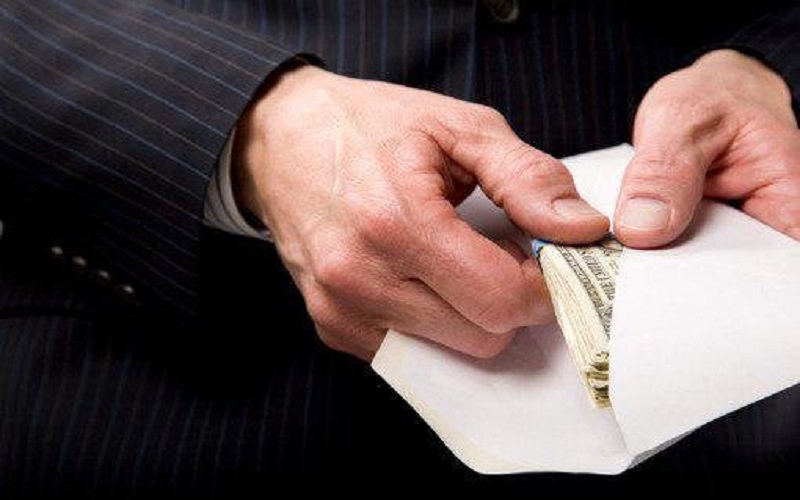

A recent report in Jahan Sanat newspaper, published on October 21, addresses the escalating problem of systematic and administrative corruption in Iran. In its introduction, the newspaper emphasizes the profound impact of both administrative corruption and the perception of corruption on public trust.
While distinct, these two factors collectively weaken social capital and erode public confidence in government institutions. Currently, one of the most pressing issues facing Iran’s 14th government is its battle against entrenched corruption and widespread embezzlement within state institutions. The report asserts that systematic corruption has now permeated all levels of the regime.
The article highlights how deeply corruption has taken root, noting that Iranian citizens have become all too familiar with terms such as “embezzlers,” “economic corruptors,” “king of coins,” “king of bitumen,” “king of dairy,” “the car mafia,” and “industrial rent-seekers.”
These terms refer to individuals and groups that have gained wealth and power through illegal means, often with the assistance of corrupt government officials. Names like these, along with scandals such as the “Chai Debsh case,” have become part of the public lexicon.
Yet, despite the exposure of these scandals, corruption continues to resurface in new forms. News about embezzlement, profiteering from legal positions, and the arrest of officials from customs, municipalities, and city councils repeatedly surfaces.
The persistence of this cycle, according to Jahan Sanat, points to flawed policies, an overgrown executive branch, and ineffective supervisory institutions.
Citing the International Transparency Organization, the report notes that Iran currently ranks 147th out of 180 countries on the “Corruption Perception Index” (CPI). This index, while not a direct measure of corruption—since corruption is often hidden and difficult to quantify—reflects public perceptions of its prevalence.
The CPI’s significance lies in its representation of how society views corruption, which can sometimes be exaggerated or understated. Nonetheless, Iran’s poor standing on the CPI is alarming, particularly given its comparative ranking in previous decades.
In the early 2000s, Iran was ranked 78th, but by the years 2009 to 2011, at the height of its oil revenues, the country’s position dropped drastically to 168th.
The report goes on to discuss the results of surveys indicating widespread concern among the public about the extent of corruption. According to data from the Iranian Students Polling Agency (ISPA), 76% of citizens are deeply worried about systematic corruption and embezzlement.
The public’s awareness of corruption, amplified by constant news coverage of embezzlement trials, economic offenders, and rent-seeking elites, leads many to perceive their own lives as entangled with these corrupt practices.
This perception, in turn, diminishes social capital and severely damages the relationship between the government and the public. As Jahan Sanat warns, this breakdown of trust is particularly troubling in the long term.
The newspaper concludes that addressing corruption will require serious, comprehensive efforts and a strong will to reform. Without structural changes and transparency in decision-making processes, there is little hope for improvement.
It should be noted that no meaningful change can occur while systematic corruption continues to plague all branches of government and society. The very structure of the current regime fosters corruption.
The only solution to Iran’s entrenched corruption is the overthrow of the regime itself. Only the establishment of a democratic and popular government can restore the well-being, livelihoods, and welfare of the Iranian people.
This stark portrayal of systematic corruption highlights the profound challenges Iran faces in overcoming entrenched institutional corruption. As public frustration grows, the need for transparency, accountability, and real political change becomes ever more urgent.