On November 21, 2024, the European Union delivered a statement during the IAEA Board of Governors meeting, reiterating its deep concerns about Iran’s nuclear activities in the context of United Nations Security Council Resolution 2231 (2015) and the Joint Comprehensive Plan of Action (JCPOA).
Commitment to Non-Proliferation
Speaking on behalf of the EU, the statement emphasized that preventing Iran from acquiring nuclear weapons remains a critical security priority. The EU urged all nations to support the implementation of Resolution 2231, which underpins the IAEA’s monitoring and verification of Iran’s nuclear program.
The EU expressed regret over Iran’s failure to return to its nuclear-related JCPOA commitments, which has led to significant nuclear advancements over the past five years. These actions, the EU noted, have heightened the risk of nuclear proliferation in the region.
Alarming Nuclear Developments
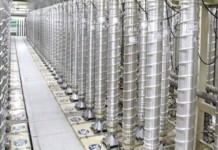
The EU highlighted its grave concerns about Iran’s nuclear trajectory, particularly its accumulation of high-enriched uranium and the installation of advanced centrifuges. According to the Director General’s report, Iran has sharply increased its stockpile of uranium enriched up to 60%, a level with significant proliferation risks and no credible civilian justification.
Adding to these concerns, Iranian officials have made statements alluding to the country’s capacity to assemble a nuclear weapon. This rhetoric, coupled with tangible nuclear advancements, has alarmed the international community.
Loss of Monitoring and Verification
The EU pointed out that Iran’s suspension of its JCPOA commitments has severely hampered the IAEA’s ability to monitor its nuclear program. For over three and a half years, the IAEA has been unable to carry out key verification activities. The removal of monitoring equipment has further compounded the issue, resulting in a loss of knowledge regarding the production and inventory of centrifuges, heavy water, and uranium concentrate.
Without this continuity of knowledge, the IAEA cannot provide assurances about the peaceful nature of Iran’s nuclear activities. This situation underscores the urgency for Iran to reverse its current course and restore international confidence.
EU’s Call for Action
The EU called on Iran to immediately:
- Reverse its nuclear trajectory: Halt the production and accumulation of highly enriched uranium.
- Cooperate with the IAEA: Restore surveillance and monitoring equipment and grant unhindered access to their data.
- Reimplement JCPOA measures: Resume the Additional Protocol provisionally, ratify it, and fully adhere to monitoring commitments.
Timely and full cooperation with the IAEA is essential for ensuring the exclusively peaceful nature of Iran’s nuclear program.
Support for Diplomatic Solutions
While expressing grave concerns, the EU reaffirmed its commitment to a diplomatic resolution. It pledged full support for the IAEA’s efforts to engage with Iran constructively and called on Tehran to cooperate without delay.
The EU’s statement underscores the broader international consensus on preventing nuclear proliferation and ensuring stability in the Middle East. Whether Iran will heed this call remains to be seen, but the EU’s message is clear: full transparency and adherence to international agreements are non-negotiable for global trust and security.