


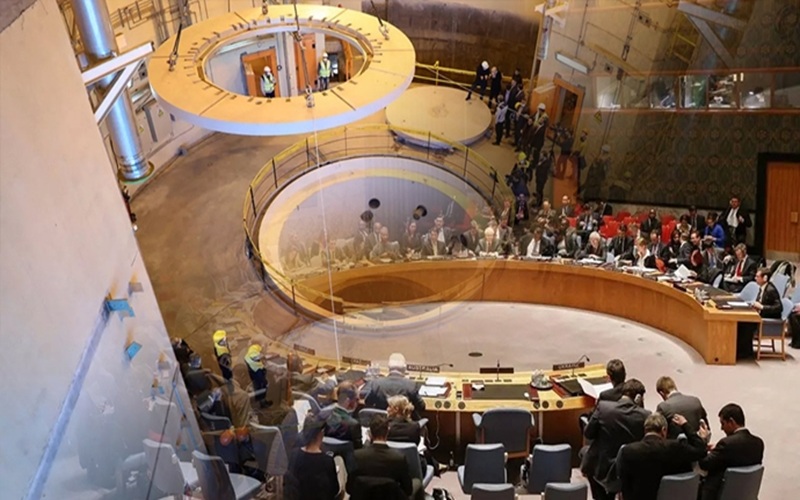

As Western powers edge closer to reimposing UN sanctions on Iran, Tehran escalates military rhetoric and blames the West for the breakdown in nuclear negotiations.
With the clock ticking toward the expiration of diplomatic avenues, the Iranian regime has launched a coordinated and aggressive response to growing Western pressure over its nuclear program. As European nations, supported by the United States, prepare to potentially invoke the “snapback” mechanism under UN Security Council Resolution 2231, Iranian officials are issuing a string of threats that suggest a renewed pivot away from diplomacy and toward military confrontation.
Western Push for Snapback Sanctions
On July 17, a group of influential U.S. senators led by Jim Risch (R-Idaho) sent a formal letter to their European counterparts, urging the immediate reactivation of snapback sanctions on Iran. The letter, addressed to the foreign ministers of France, Germany, and the United Kingdom, cited Iran’s expulsion of IAEA inspectors and consistent violations of the 2015 nuclear deal and the Nuclear Non-Proliferation Treaty (NPT) as proof that Iran’s nuclear ambitions are not peaceful.
“The Iranian nuclear program is not civilian; it is the pursuit of a bomb to destroy Israel and threaten U.S. national security interests in the region,” the letter states. It warns that failure to act would further embolden Tehran and allow the regime to fund its terrorist proxies. The senators emphasized that sanctions must be not only reimposed but also robustly enforced, especially against Iranian oil smuggling to China and other third countries.
Tehran’s Preemptive Counter-Offensive
In response, senior Iranian officials have launched a series of statements designed to deter the West from activating the mechanism. On July 15, former regime MP Mohammadreza Pour-Ebrahimi, speaking on state-run Channel 3, warned that snapback sanctions could ultimately lead to military conflict. “The end of the snapback mechanism is military action—and it has already happened,” he said, referring obliquely to previous attacks on Iranian nuclear sites. He called for Iran to avoid provoking the process but insisted that Tehran was ready to respond “stronger than before.”
Iran’s reaction has not been limited to former officials. Ebrahim Azizi, head of the National Security and Foreign Policy Commission in Iran’s parliament, described the potential snapback as “a hostile act against the Islamic Republic.” He declared that “retaliatory measures will follow,” measures he warned “may be intolerable for the Europeans.”
Iranian deputy foreign minister Rauf Sheibani doubled down on July 16, saying that Iran “will not retreat” in the face of snapback threats. He dismissed the military pressure exerted during the recent 12-day conflict in the region as ineffective, adding that any new pressure would likewise fail.
Aragchi Shifts Blame to the West
In a parallel effort to frame the narrative internationally, Iran regime’s foreign minister and chief nuclear negotiator Abbas Aragchi claimed that it was the United States—not Iran—that had abandoned diplomacy. In a video conference with European foreign ministers, Aragchi asserted: “It was the US that withdrew from the negotiated deal… and chose a military option instead.” He accused the EU of lacking the legal and moral grounds to invoke snapback sanctions and insisted that negotiations could only resume under a “fair, balanced, and mutually beneficial” framework.
However, European patience appears to be wearing thin. Reuters reported that France, Germany, and the UK warned Aragchi that unless a verifiable agreement is reached by the end of summer, snapback sanctions will be activated. Diplomats involved described the current situation—no inspectors on the ground, no active negotiations, and no tangible progress—as “unrealistic” for any meaningful deal by August.
A Regime Cornered
The convergence of U.S. and European pressure, Iran’s increasing non-compliance, and the regime’s internal instability may explain Tehran’s hostile tone. Pour-Ebrahimi’s remarks suggesting that “our people have stood firm even when facing war” point to regime fears of rising public discontent under further economic strain. Implicit in his comments is an acknowledgment that renewed sanctions could worsen Iran’s domestic crises and further isolate it internationally.
The regime’s coordinated threats signal both defiance and anxiety. While Tehran is posturing as unyielding, its urgent appeals against snapback sanctions—framed as illegitimate and ineffective—betray concern about their potential impact on an already fragile economy and volatile society.
Conclusion
As the summer deadline approaches, the gap between Iran and the West continues to widen. The international community, especially the U.S. and EU, now face a crucial decision: proceed with snapback sanctions and risk further escalation, or seek a last-ditch diplomatic opening with a regime that appears increasingly belligerent. Either way, Iran’s rhetoric and actions suggest that the Iranian regime is preparing for confrontation rather than compromise.