



G7 calls for diplomacy as Supreme Leader blocks negotiations, fueling sanctions, division, and looming conflict
The meeting of G7 foreign ministers on the sidelines of the United Nations General Assembly in New York underscored international concern over Iran’s nuclear program. In a joint statement, the G7 urged Tehran to fully comply with its obligations under the Treaty on the Non-Proliferation of Nuclear Weapons, cooperate with the International Atomic Energy Agency (IAEA), and engage in direct talks with the United States toward a durable nuclear agreement. The ministers also welcomed the European trio’s (E3) decision to trigger the “snapback” mechanism, restoring UN sanctions if Iran fails to comply.
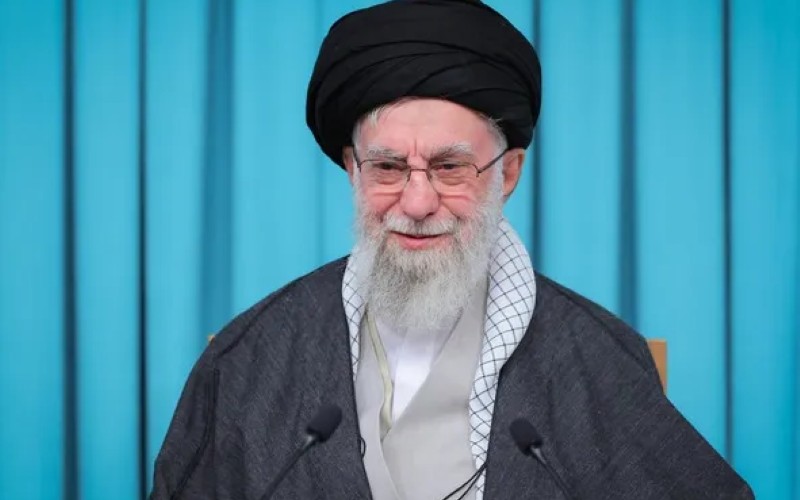
Yet, just days before the formal return of sanctions, Iran regime’s Supreme Leader Ali Khamenei openly rejected all proposals for direct and comprehensive negotiations with Washington. Declaring the situation between the regime and the U.S. a “complete deadlock,” Khamenei insisted that talks would not benefit the regime but rather harm it. His remarks confirm what the Iranian Resistance has long argued: the regime is trapped in a strategic impasse, unable to retreat from its nuclear ambitions without exposing its weakness, and equally unable to move forward without triggering international confrontation.
This uncompromising stance has immediate consequences. By refusing dialogue, Khamenei has effectively sealed off the path of diplomacy, accelerating the reimposition of UN sanctions and heightening the possibility of a second major conflict within a year. U.S. President Donald Trump, in his address to the UN General Assembly, emphasized that Washington had offered Iran a chance for talks, but Tehran refused, leaving the U.S. “no choice but to act.”
Khamenei’s timing undermined the regime President Masoud Pezeshkian’s visit to New York. Speculation had swirled about a possible meeting with Trump, but the Supreme Leader’s veto rendered Pezeshkian’s trip a hollow exercise, limited to another formulaic speech at the UN podium.
Most striking in Khamenei’s remarks was his insistence that “we will never stop uranium enrichment.” Since limiting enrichment is the cornerstone of any nuclear deal, his statement effectively closed the door on future agreements. In doing so, he not only assured the return of sanctions but also pushed Iran closer to international isolation and confrontation.
The implications extend beyond foreign policy. Khamenei accused Israel of attempting to incite the Iranian people during the recent twelve-day war, inadvertently acknowledging the deep discontent within Iran itself. This admission confirms what analysts and opposition voices have long said: beneath the surface, Iranian society is restless, and the potential for another nationwide uprising remains.
The regime’s inner circle is also showing cracks. While Khamenei shuts the door on negotiations, figures such as former presidents Hassan Rouhani and Mohammad Khatami, as well as former officials like Mahmoud Ahmadinejad, have publicly criticized his rejection of talks. Rouhani even admitted, “I wanted to meet with Trump and resolve the problem, but I was not allowed.” These statements expose a widening rift between the Supreme Leader and many within the establishment, who fear the consequences of total isolation.
At the same time, Iranian society has already moved beyond the regime’s dictates. The 2022 uprising, though brutally suppressed, shifted the balance of power on the streets. Today, Iranian women and youth openly defy compulsory hijab laws and censorship, transforming public spaces into arenas of resistance. The regime’s authority has eroded so significantly that, as many observers argue, it has already “fallen in the streets.” What remains are hollow state institutions and security apparatuses, detached from the will of the people.
This dual crisis—mounting international pressure and deepening domestic defiance—marks the beginning of the regime’s unraveling. Khamenei’s refusal to compromise is not a show of strength but of fear. He knows that any retreat on the nuclear program, any gesture of flexibility, would accelerate the collapse of his rule. But by refusing, he isolates Iran further, hastens economic collapse under sanctions, and increases the likelihood of war.
The G7’s call for diplomacy and compliance was an opportunity for Tehran to ease its isolation. Instead, Khamenei slammed the door shut. In doing so, he has not only set the regime on a collision course with the international community but also deepened the fractures within his own system. With the economy on the brink, sanctions poised to return, and public dissent unrelenting, the regime finds itself cornered—its survival prospects dimmer than ever.