


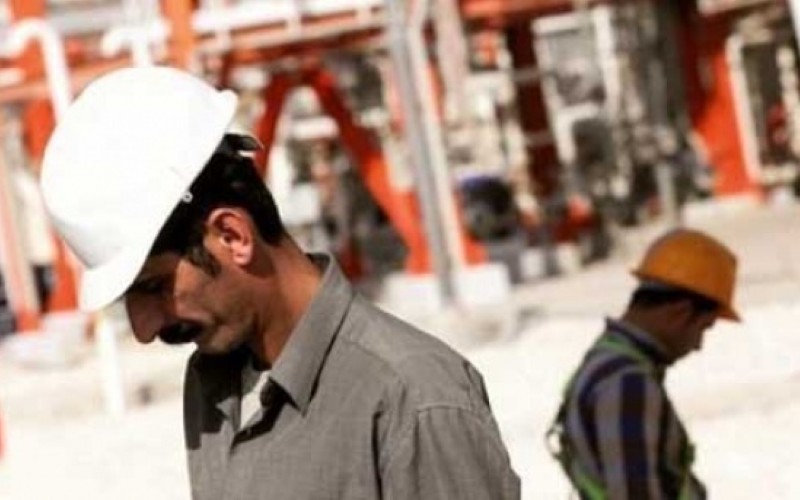

Wages far below the poverty line push most Iranians into multiple jobs while Tehran prioritizes its nuclear program over people’s survival
As Iran sinks deeper into economic turmoil, the regime’s policies of confrontation with the West are taking a devastating toll on the country’s workforce. Mounting data and testimonies show that millions of Iranian workers are being crushed under an unbearable cost-of-living crisis.
The poverty line in Iran has surpassed 55 million tomans, while the average salary of even senior workers and employees with benefits remains only around 17 million tomans. This staggering gap has left more than 70 percent of the population under severe financial pressure, forcing many to take on second or even third jobs just to survive.
The disparity is particularly stark in southern industrial regions, where contract workers endure the harshest conditions. Unlike official employees who at least receive some benefits and higher annual pay, contract workers scrape by on 15 to 20 million tomans a month without insurance, job security, or meaningful benefits. A worker in Bandar Abbas described his grueling reality to state media: “At night I’m a guard, in the day I work with my truck. I move four to five tons of mineral water, lifting 300 bottles of 10 kilos each. Rest time? Never.”
Experts warn that the impact of this crisis goes beyond empty wallets. Families are breaking under the strain, with reports of rising divorce rates among workers. Psychological exhaustion, despair, and even drug addiction are spreading as direct consequences of these crushing inequalities. The erosion of the middle class is now so complete that workers, employees, and pensioners alike have been reduced to the same level of poverty, with many lining up for subsidies and aid from relief organizations.
Labor activists point out that almost all workers and employees now require a second job. Household expenses outstrip incomes by a factor of four, while prices rise daily and wages remain stagnant year after year.
The timing of this crisis could not be worse. On September 27, European nations will activate the “snapback” mechanism, restoring full UN sanctions against Tehran in response to its nuclear defiance. Economists warn that these sanctions will choke Iran’s economy even further, shrinking household purchasing power and deepening the crisis. Already, the Iranian currency is collapsing. In just one week, the dollar surged by 10,000 tomans, reaching 106,000 tomans—driving up the cost of every essential commodity.
The social consequences are already visible. Over the past week alone, workers staged more than 100 protests across the country. Their demands centered on delayed wages, rock-bottom salaries, and unlivable conditions. Even regime-linked outlets now admit to the scale of the crisis. State-run Mehr News reported that the prices of essential goods—rice, meat, dairy, and eggs—have soared in recent months, “shrinking household tables and placing heavy pressure on people’s livelihoods.”
Despite this, the regime’s leadership shows no sign of concern. On the contrary, statements from officials and lawmakers in recent days point in the opposite direction: preparations for a nuclear arsenal and for another war. In this path of escalation, it is the Iranian people who pay the ultimate price.
While workers haul water bottles by day and guard warehouses by night, the regime diverts the nation’s wealth to nuclear enrichment and military adventures. As sanctions return, inflation spirals, and wages stagnate, the people of Iran face a stark reality: they are being sacrificed at the altar of a regime that prioritizes its survival and aggression over their very existence.