



Mounting crises at home and abroad force Tehran into humiliating concessions, while threats against Europe expose weakness rather than strength.
Snapback: From Legal Mechanism to Political Nightmare
The threat of “snapback,” or the automatic reimposition of sanctions, has become one of the gravest nightmares for Iran regime’s Supreme Leader Ali Khamenei, casting a heavy shadow over his foreign policy apparatus. The regime’s recent agreement with the International Atomic Energy Agency (IAEA) once again revealed Tehran’s fragile position and its inability to avoid humiliating concessions.
Empty Threats Against Europe
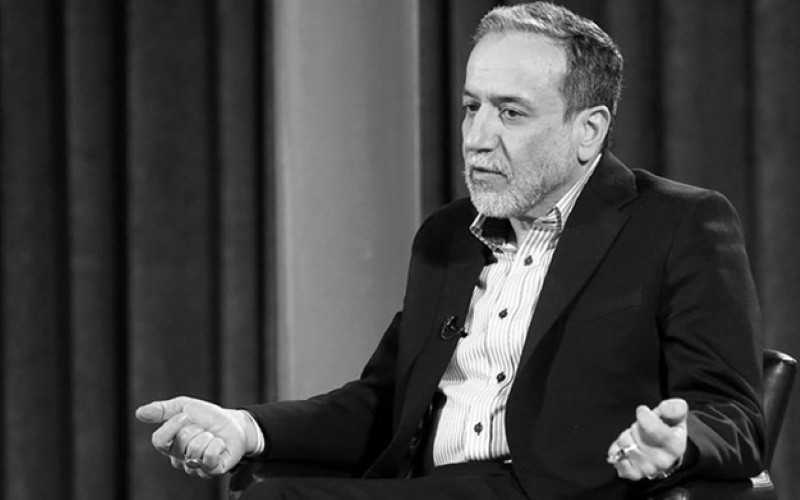
Regime’s Foreign Minister Abbas Araghchi recently attempted to mask Tehran’s vulnerabilities in a televised interview by issuing threats against Europe. He declared that “triggering snapback will eliminate Europe from nuclear negotiations,” a statement widely seen as political theater rather than a serious strategy.
Analysts emphasize that such remarks are less about deterring Europe or the United States and more an admission of weakness within the ruling elite. The snapback mechanism has the potential to cancel out all nuclear-related privileges Iran has secured, leaving Tehran increasingly cornered and reactive.
Desperate Moves to Appease Europe
The regime has also resorted to a series of measures aimed at currying favor with the European troika—particularly France—in a bid to escape or at least delay the activation of snapback. Among these maneuvers is the release of hostages.
Reuters reported on Friday that Jean-Noël Barrot, France’s Foreign Minister, told Radio France Inter that France demands the “immediate and unconditional release” of three French citizens imprisoned in Iran. According to Reuters, Barrot declined to comment on Araghchi’s remarks regarding a potential prisoner exchange deal.
This episode underscores Tehran’s reliance on hostage diplomacy, further exposing its weakness on the international stage.
Internal and External Pressures Converge
Alongside these international challenges, Khamenei’s regime faces severe internal crises. Popular protests, rising inflation, deep economic recession, structural corruption, and a worsening legitimacy crisis have created a combustible environment. In such conditions, any escalation on the international stage amplifies the existential threats facing the system.
The regime is caught in a paradox: retreat risks shattering its image of domestic authority, while defiance accelerates global pressure and the activation of snapback sanctions.
A Regime on the Defensive
According to observers, the regime’s threats carry little legal or practical weight, serving instead as reflexive responses to mounting international pressure. Tehran is now forced to rely on bluster and propaganda rather than practical solutions. The sharp decline of the rial and growing public discontent have compelled the leadership to consider concessions once unthinkable—such as expanded cooperation with the IAEA or restrictions on nuclear activities in exchange for limited sanctions relief.
Political Reality Behind the Rhetoric
Snapback sanctions have transformed into far more than a legal procedure. For Khamenei and his diplomatic corps, they represent a political nightmare. A convergence of domestic unrest and foreign pressure has driven the regime into unprecedented weakness, leaving state media threats unable to obscure the stark reality.