


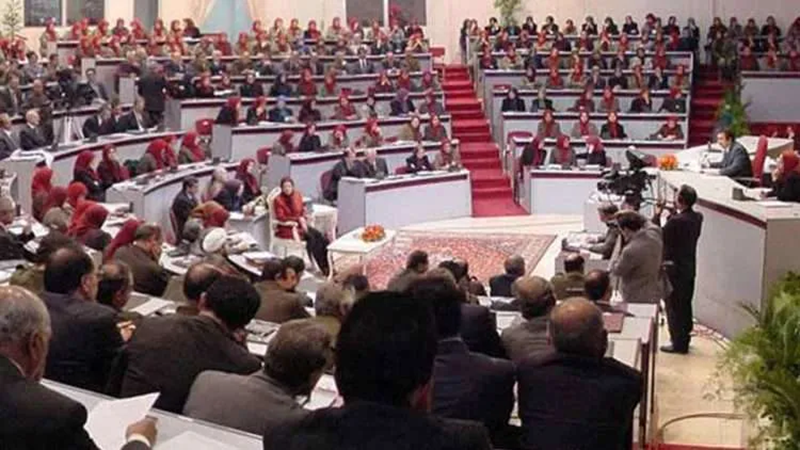

Opposition coalition outlines roadmap for democratic transition, pledging elections within six months of forming an interim administration
The National Council of Resistance of Iran has announced a detailed plan to establish a transitional government in the event of the fall of Iran’s mullahs regime, outlining a six-month roadmap to transfer power to the people through free elections.
A Defined Roadmap for Political Transition
According to the NCRI, the proposed transitional government would be formed immediately after the fall of the current authorities in Tehran. Its primary mandate would be strictly limited to organizing and facilitating free and fair elections within a maximum period of six months.
Officials emphasized that the interim administration would not function as a permanent power structure but rather as a mechanism to ensure a peaceful and democratic transfer of authority.
The council stated that sovereignty would ultimately be handed over to representatives elected by the Iranian people.
Framework Based on a Ten-Point Plan
The transitional government would operate under a political framework derived from a ten-point plan proposed by Maryam Rajavi, the NCRI’s president-elect.
This plan includes commitments to democratic governance, respect for human rights, gender equality, and the separation of religion from the state. NCRI officials described it as a comprehensive blueprint for managing the post-regime transition period.
They stressed that the plan is specifically designed for the interim phase and aims to lay the foundation for a pluralistic and secular political system.
Rejection of Alternative Political Scenarios
In its statement, the NCRI explicitly rejected two alternative scenarios for Iran’s political future.
The first is a return to monarchy, which the council described as a system historically associated with repression and political violence. The second is any continuation of the current ruling structure through figures linked to the existing establishment.
The council reiterated that it does not accept any form of governance that preserves elements of the present system.
Organizational Background and Internal Network
Founded in 1981, the NCRI emerged from the People’s Mojahedin Organization of Iran and presents itself as a coalition of opposition groups seeking political change in Iran.
In its latest statement, the council expressed to maintain an extensive network inside Iran, including organized supporters active across multiple cities. It also referred to “Resistance Units,” which it says are involved in mobilizing opposition activities.
The statement further highlighted the existence of internal information networks that, according to the NCRI, assist in gathering intelligence and coordinating activities among opposition supporters.
Additionally, the council referred to an armed wing known as the “Liberation Army,” saying it has operational capabilities in various regions, including areas under tight security control.
Broader Context: Public Discontent and Political Uncertainty
The NCRI’s announcement reflects broader efforts among the Iranian opposition to prepare for a potential post-regime scenario. Widespread public dissatisfaction—driven by economic hardship, systemic corruption, political repression, and human rights violations—continues to fuel periodic protests across the country.