


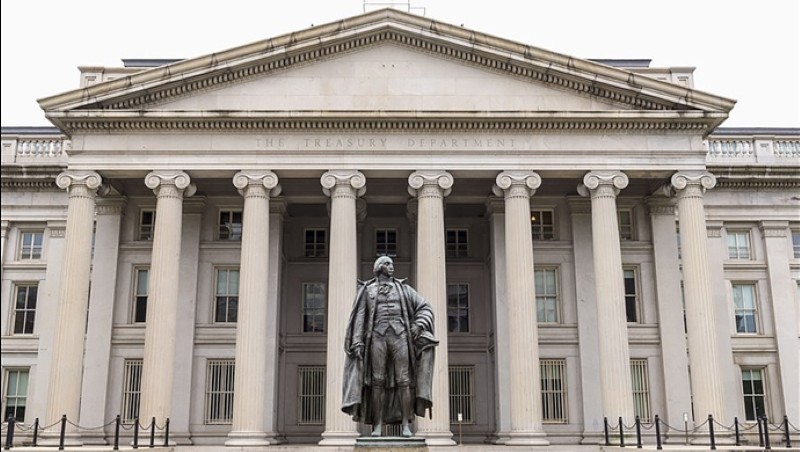

U.S. Treasury exposes Tehran’s vast network of illicit financial channels used to evade sanctions, fund terrorism, and support weapons programs.
The U.S. Department of the Treasury’s Financial Crimes Enforcement Network (FinCEN) has identified roughly $9 billion in Iranian regime shadow banking activities conducted through U.S. correspondent accounts during 2024, according to a Financial Trend Analysis (FTA) released on October 23, 2025.
The report, part of US President Donald Trump’s renewed maximum pressure campaign on Iran, sheds new light on the financial lifelines Tehran uses to bypass international sanctions, sustain its regional proxy forces, and finance its military and weapons programs. FinCEN’s findings underscore how Iran’s shadow banking networks have evolved into a global system of front companies and illicit intermediaries.
A Global Web of Front Companies
According to the Treasury’s analysis, Tehran’s shadow banking operations span continents, relying heavily on exchange houses and foreign firms based in the United Arab Emirates (UAE), Hong Kong, and Singapore. These entities—often disguised as oil, shipping, technology, or investment companies—facilitate billions of dollars in annual transactions for Iran’s sanctioned institutions.
Many of these firms are shell companies, existing only on paper and lacking real business activity. In 2024 alone, FinCEN estimates such shell entities handled approximately $5 billion in transactions, making them the backbone of Iran’s shadow banking network.
Meanwhile, Iran-linked oil companies operating largely out of the UAE and Singapore engaged in an additional $4 billion worth of transactions, much of it believed to involve illicit oil sales. These operations are designed to obscure the true origin of the crude and the final recipients of the proceeds—allowing Tehran to sustain its oil exports in violation of U.S. and international sanctions.
FinCEN also identified technology procurement companies potentially connected to Iran’s efforts to obtain export-controlled or dual-use technologies, with around $413 million in suspicious transactions reported during 2024.
Cutting the Financial Lifeline of Iran’s Regime
FinCEN Director Andrea Gacki emphasized the importance of exposing and disrupting these networks:
“Identifying Iran’s complex financial lifelines and shadow networks is an essential part of cutting off the funding for their military, weapons programs, and terrorist proxies,” Gacki said. “By issuing this public analysis, we hope to draw attention to Iran’s shadow banking activity and encourage financial institutions to be vigilant.”
The agency’s report calls on global banks to closely monitor cross-border transactions, especially those involving high-risk jurisdictions or companies tied to sectors such as oil, shipping, and technology procurement.
Part of Trump’s “Maximum Pressure” Campaign
This Financial Trend Analysis builds on earlier FinCEN advisories, including the June 2025 report that detailed Iran’s oil smuggling and weapons procurement efforts. It also complements the broader objectives of President Trump’s maximum pressure campaign, announced on February 4, 2025, which seeks to:
- Deny Iran access to nuclear weapons and intercontinental ballistic missiles.
- Counter the regime’s expansion of military capabilities.
- Disrupt Tehran’s regional aggression and its network of proxy militias.
- Degrade and deny the regime and its terrorist allies access to financial resources.
FinCEN’s latest findings confirm that despite years of sanctions, Iran continues to operate a sophisticated financial shadow system, using global trade and financial intermediaries to mask the movement of funds.
A Warning for the Global Financial System
The report concludes that foreign shell companies outside the United States remain the most critical enablers of Iran’s sanctions evasion. By using these entities, Tehran launders proceeds from oil sales, funds its military and intelligence networks, and sustains regional terrorist proxies such as Hezbollah and the Houthis.
FinCEN’s findings serve as a warning to global financial institutions: any lapse in due diligence can risk enabling a regime that thrives on deception, corruption, and violence.
As Washington intensifies its efforts to dismantle Tehran’s financial networks, the exposure of these $9 billion in illicit transactions underscores a broader truth—Iran’s regime depends on a shadow economy to survive, while its people continue to pay the price for its destructive ambitions.