


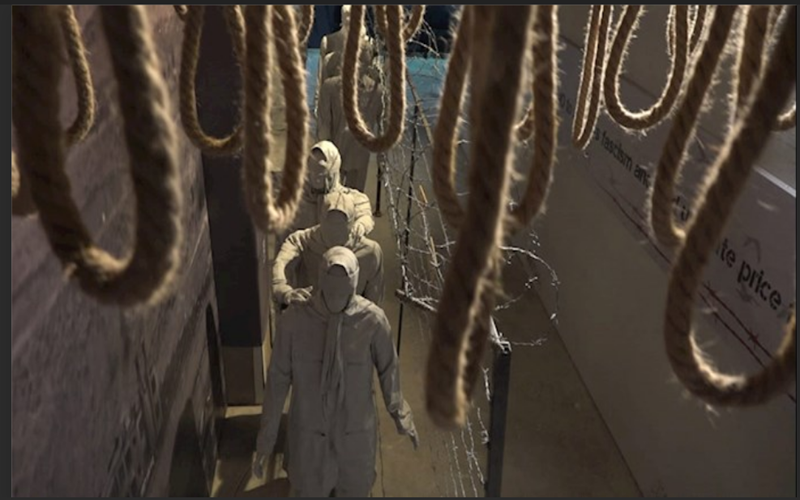

Long before the executions began in the summer of 1988, Iran’s prison system underwent systematic preparations that reveal the massacre was a carefully organized campaign—not a spontaneous wartime decision.
For nearly four decades, the 1988 massacre of political prisoners has remained one of the darkest chapters in Iran’s modern history. While much attention has focused on the executions carried out during the summer of 1988, growing evidence indicates that the killings were not an improvised response to wartime events but the culmination of a carefully orchestrated plan developed months in advance.
The gradual release of survivor testimonies, documentary evidence, and accounts from victims’ families has strengthened the case that the regime’s campaign was systematically prepared, involving coordinated prisoner transfers, renewed interrogations, and administrative measures designed to facilitate one of the largest mass executions of political prisoners in contemporary history.
The Preparations Began Long Before the Executions
Contrary to official narratives portraying the massacre as a wartime necessity, numerous accounts indicate that preparations began as early as the autumn and winter of 1987.
Across Iran’s prisons, inmates were quietly transferred between wards, separated into different groups, and subjected to renewed reviews of their case files. Prison authorities offered no clear explanations for these changes, responding to prisoners’ questions with silence or intimidation. At the time, few detainees imagined these administrative changes were laying the groundwork for a mass execution campaign.
Survivors later recalled prison officials repeatedly telling inmates that “the time has come to determine your fate”—remarks whose significance became tragically clear only months later.
Renewed Interrogations Signaled a Deadly Shift
During the spring of 1988, prisons experienced another noticeable change.
Political prisoners who had already spent years behind bars found themselves summoned for fresh interrogations. Officials revisited old case files and questioned detainees once again about their political beliefs and organizational affiliations. Phrases such as “final determination” and “last opportunity” became increasingly common in conversations with prison authorities.
For many survivors, these interviews represented the final stage of preparation before the executions began.
Warnings also began emerging from inside prisons. Inmates in facilities such as Dizel Abad Prison reportedly informed their families that they feared transfers to Tehran for execution. Few outside the prison walls believed that such an unprecedented mass killing was possible.
The End of the War Became the Beginning of a New Repression
The acceptance of United Nations Security Council Resolution 598, which ended the Iran-Iraq War, marked a major political turning point for the regime.
Rather than easing domestic repression after the ceasefire, the leadership intensified it. The conclusion of the war removed one of the regime’s principal justifications for maintaining extraordinary security measures while simultaneously allowing it to concentrate on eliminating organized political opposition.
The subsequent written fatwa issued by Ruhollah Khomeini ordered the execution of prisoners who remained steadfast in their political beliefs. That directive became the legal and ideological foundation for what followed.
Death Commissions Institutionalized Summary Executions
Following Khomeini’s decree, special tribunals—later known internationally as the Death Commissions—were established throughout the country.
These bodies questioned prisoners for only a few minutes before deciding whether they would live or die. Detainees were denied legal representation, meaningful opportunities to defend themselves, or any right to appeal the decisions.
In Tehran, the commission included judicial and intelligence officials whose roles in the massacre have since become well documented, while similar commissions operated in provinces across the country.
What masqueraded as legal proceedings was, in reality, a machinery of extrajudicial execution.
A Nationwide Operation Followed by Systematic Concealment
The massacre quickly spread beyond Tehran’s Evin and Gohardasht prisons.
Political prisoners from cities across Iran were transferred to central detention facilities before executions began, while intelligence teams coordinated operations nationwide. Because authorities concealed the killings and destroyed records, the full number of victims remains unknown, although many human rights organizations and witnesses estimate that more than 30,000 political prisoners were executed.
The secrecy did not end with the executions.
Families were denied information about the fate of their loved ones, burial sites were concealed, mourning ceremonies were restricted, and authorities reportedly attempted to destroy evidence by disturbing mass graves, including the cemetery at Khavaran Cemetery. These actions have reinforced allegations of an ongoing effort to obstruct truth and accountability.
Voices of Dissent—and Decades of Demands for Justice
One of the few senior officials who openly objected to the executions was Hossein Ali Montazeri, who warned members of the Death Commission in August 1988 that they were committing what would become one of the greatest crimes in Iran’s history.
His recorded remarks, released decades later, became one of the most significant pieces of evidence documenting internal opposition to the massacre. He famously declared:
“The greatest crime committed in the Islamic Republic, for which history will condemn us, has been committed by you.”
Nearly four decades later, many of the fundamental questions surrounding the massacre remain unanswered.
Thousands of families still do not know where their relatives were buried. Numerous official documents remain inaccessible, and no comprehensive accounting of the victims has ever been released. At the same time, survivors’ testimonies, human rights investigations, and international legal initiatives continue to strengthen calls for truth, accountability, and justice.
The passage of time has not diminished the significance of the 1988 massacre. Instead, mounting evidence increasingly points to a deliberate, centrally coordinated campaign of political extermination whose consequences continue to shape Iran’s human rights record today.