


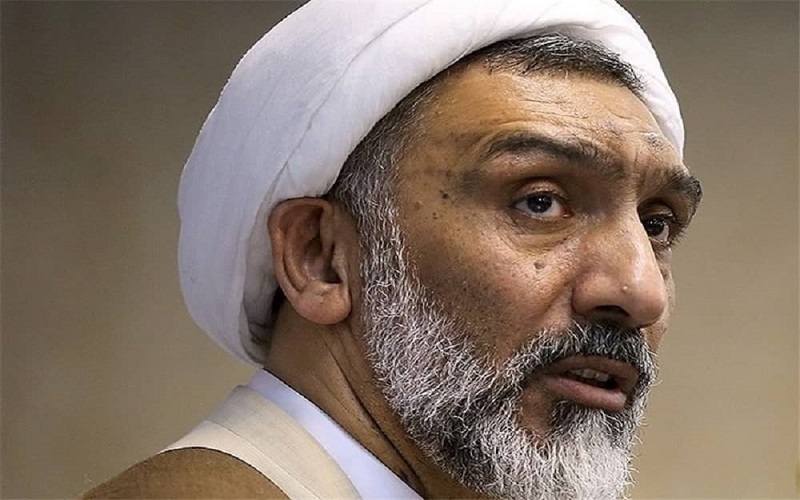

Mostafa Pourmohammadi, a significant figure in Iran’s political landscape, has announced his candidacy for the upcoming presidential elections despite his controversial past.
Pourmohammadi is infamously known as one of the principal perpetrators of the 1988 massacre of political prisoners in Iran.
Previously disqualified from the Assembly of Experts election in February 2023, Pourmohammadi has now set his sights on the presidency.
His close association with the regime’s demised president Ebrahim Raisi and his status as a confidant of the Supreme Leader underscore his influence within the regime.
Pourmohammadi’s involvement in the 1988 massacre, during which more than 30,000 political prisoners were executed, marks a dark chapter in his career.
As an advisor to the head of the judiciary and the general secretary of the Combatant Clergy Association, Pourmohammadi has long been a powerful figure within Iran’s political and judicial systems.
In the winter of 1980, Pourmohammadi, then a young revolutionary prosecutor, was sent to Khuzestan province, where he issued death sentences to over 300 prisoners, including teenagers.
By 1987, he joined the Ministry of Intelligence under Mohammad Rayshahri and later served as Deputy Minister of Foreign Affairs and Deputy Minister of Intelligence during Ali Fallahian’s presidency. During this period, he also became a member of the notorious death committee responsible for the 1988 executions.
Pourmohammadi’s role extended beyond Iran’s borders as he oversaw the assassination of numerous regime opponents abroad, including Dr. Abdulrahman Qasemlou, Dr. Kazem Rajavi, Fereydoun Farrokhzad, and Sadegh Sharafkandi. These assassinations were part of a list of 100 individuals whose elimination was sanctioned by Iran regime’s Supreme National Security Council.
A revealing moment came in July 2016 when Ayatollah Montazeri’s son released an audio tape in which Pourmohammadi and other death committee members sought Montazeri’s approval for executing the remaining political prisoners. Montazeri’s response condemned them, stating that history would remember them as criminals.
In August 1988, the regime’s founder, Ruhollah Khomeini, ordered a panel, known as the Death Committee, to re-examine the cases of political prisoners. Khomeini’s directive emphasized dealing with prisoners “with revolutionary anger and hatred” and executing those deemed to be “on the position of hypocrisy.” Pourmohammadi, representing the Ministry of Intelligence, played a central role in these brutal executions.
Pourmohammadi’s interrogation of prisoners often determined their fate based on their political or religious beliefs. Ayatollah Montazeri opposed these executions, particularly pointing out that Pourmohammadi cited Khomeini’s fatwa to justify the execution of female prisoners, specifically members and supporters of the People’s Mojahedin Organization of Iran (PMOI/MEK).
In a television interview, Pourmohammadi defended his actions during the 1988 massacre, referring to it as a “religious duty.” He condemned the release of the audio file of Montazeri’s meeting with the death committee as “treason.”
Throughout his career, Pourmohammadi has held numerous significant positions within Iran’s judicial and security apparatus, including:
- Prosecutor of the Revolutionary Courts in Khuzestan, Hormozgan, and Khorasan provinces (1979-1986)
- Military prosecutor of the revolutionary courts in western Iran (1986-1987)
- Advisor to the Minister of Intelligence (1987-1990)
- Deputy Minister of Intelligence (1990-1991)
- Head of Foreign Affairs of the Ministry of Intelligence (1990-1999)
- Lecturer of Political Science at Imam Sadiq University (2000-2005)
- Head of Political and Social Affairs for the Supreme Leader (2002-present)
- Head of the National Inspection Organization (2005-2008)
- Minister of Justice (2013-2017)
- Advisor to the head of the Judiciary (2017-present)
- Minister of Interior (2005-2008)
Pourmohammadi’s presidential candidacy reignites debates over his controversial past and the ongoing influence of hardliners in Iran’s political landscape.