


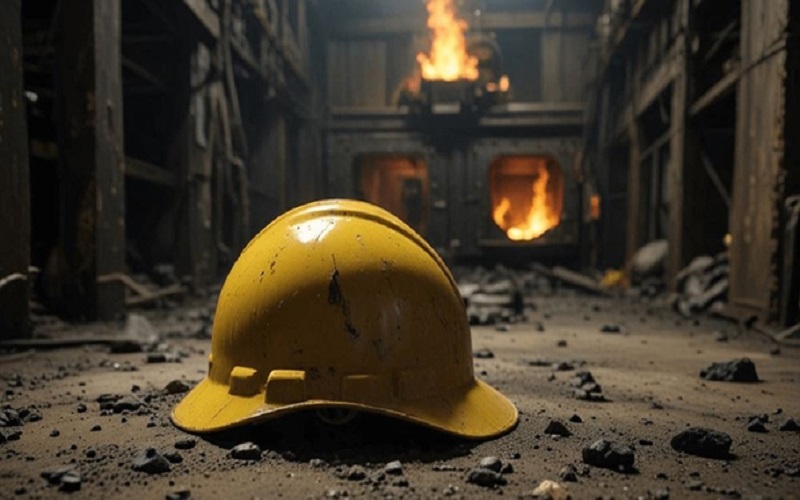

Forty days have passed since the Madanjo coal mine disaster in Tabas claimed the lives of 53 miners, leaving a devastating impact on workers and their families. Despite this tragedy, little has changed regarding safety and working conditions in the mine, prompting frustration and resignations among the workforce.
Worker Resignations and Fines
According to a Tehran-based newspaper, around 700 out of the 2,000 employees at the Madanjo mine have resigned since the accident. Workers from Block B who refused to return to work on September 23 were reportedly fined, highlighting the mine’s prioritization of production over safety. Promises of a modest wage increase of three million toman per month remain unfulfilled, further straining the morale of the workforce.
In an interview with Ham Mihan newspaper, a former worker described the stark changes in the mine’s operations: “Large workshops that once had 200 people are now operating with six or seven. Those who remain question daily whether they should stay or leave.”
Deteriorating Working Conditions
A resigned worker reflected on the constant risk faced by miners, sharing that they would often pray before each shift, fearing they might not return. Prior to the disaster, two miners would dig five meters every six hours. Now, even with a 12-hour shift, the surviving miners struggle to maintain the same pace due to physical and emotional exhaustion.
Promises from mine owners and officials to improve safety and equipment have gone unmet. One miner noted, “Nothing has changed in terms of safety, yet now we’re given one mask per shift, which we didn’t receive before.”
A witness to the tragic night described how the foreman had warned that the shift was dangerous and advised against entering. Despite these concerns, the foreman felt obligated to lead by example, saying, “If I, as the foreman, don’t go, how can I ask others to enter?” Tragically, his determination to support his team led them all into danger together.
No Safety Improvements
Reports from the ILNA news agency on October 25 indicated that mine operations had resumed with no significant changes to safety measures. Central sensors, monitoring systems, and adequate ventilation remain non-functional, leaving the threat of another fatal accident high.
Health Consequences for Survivors
The long-term health effects on survivors are dire. Shargh newspaper reported on October 31 that miners affected by the Tabas disaster now suffer from severe respiratory and lung issues. Many young survivors experience frequent headaches and are unable to perform basic tasks such as driving. After more than a month, some still struggle with low levels of consciousness and memory issues.
Impact on Families of the Victims
The tragedy has left families grieving and struggling financially, as many lost their primary breadwinners. However, mine officials have shown little empathy or accountability. Rather than addressing the disaster’s root causes, they have urged workers to resume operations. When employees raised concerns, authorities briefly closed the mine and advised workers to seek pensions through labor insurance.
This so-called “solution” placed miners in a dire predicament, forcing them to choose between dangerous work or financial ruin. Even if labor insurance were granted, it would cover less than half of the miners’ previous wages, far below the poverty line.
Corporate Ownership and Accountability
The Madanjo mine is a subsidiary of the Gol Gohar Mining and Industrial Company, an economic holding affiliated with Sepah Bank. The bank itself is owned by the Mostazafan Foundation, a major entity managed under the oversight of the regime’s supreme leader, Ali Khamenei, and predominantly led by IRGC officials.
According to sources within the regime, several other mines in Iran operate under conditions “hundreds of times worse” than the Tabas mine. Between 2017 and 2021, nearly 8,000 mining accidents were reported, underscoring the absence of effective oversight and worker safety measures across the industry.
A Call for Reform
The Tabas mine disaster serves as a stark reminder of the dangers Iranian miners face daily. While promises of change are common, substantive action to protect miners remains elusive. Addressing the risks in these workplaces and ensuring adequate support for victims and their families must be a priority for all parties involved. Only through genuine reform can future tragedies be prevented, and the dignity of Iran’s hardworking miners be preserved.