


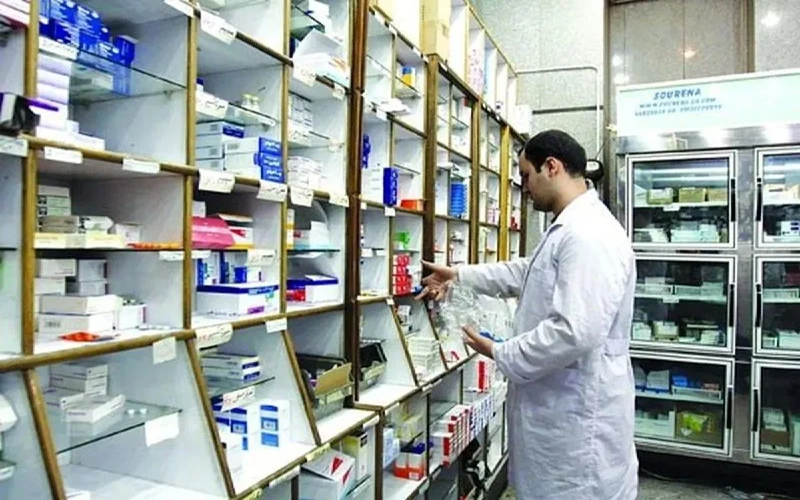

Iran’s healthcare crisis is deepening as medicine shortages, soaring treatment costs, and weak insurance coverage put growing pressure on patients. A senior Iranian lawmaker has warned that plans to eliminate subsidized foreign currency for medicines and medical equipment in 2027 could place the lives of patients who cannot afford treatment at serious risk.
Salman Es’haqi, spokesperson for the parliamentary Health and Medical Commission, said the government has been considering the removal of subsidized currency for medicines, medical equipment, and medical supplies since December 2025. Speaking to the state-run website Tabnak on August 8, he said the government apparently views the measure as a way to combat currency-related rent-seeking and corruption.
But Es’haqi warned that Iran’s healthcare system lacks the infrastructure needed to absorb such a change.
Drug shortages are already reaching a critical level
According to Es’haqi, around 43 medicines are currently classified as being in critical shortage, while nearly 1,000 medicines are facing shortages of varying degrees.
The situation is particularly dangerous for patients suffering from serious and chronic illnesses. Es’haqi said rising prices for chemotherapy drugs and medicines used to treat cancer, hemophilia, and thalassemia have already reduced consumption, with some patients forced to discontinue treatment because they can no longer afford it.
He described the abandonment of treatment because of high prices or shortages as effectively accepting death out of desperation.
The price increases have affected even essential medicines such as insulin. According to figures cited by Es’haqi, prices for some domestically produced insulin products had increased by as much as 212 percent, while imported versions had risen by up to 271 percent.
These increases are occurring in a country where millions of households are already struggling with declining purchasing power and rising living costs.
The failure of the Daruyar scheme
Es’haqi pointed to the experience of the government’s Daruyar medicine reform program as evidence that the necessary safeguards for removing subsidized currency are not in place.
The program was designed to eliminate subsidized currency while strengthening oversight of the pharmaceutical supply chain and transferring financial support to patients through insurance providers. In practice, however, insurance funds failed to adequately perform this role, leaving patients exposed to higher costs.
Es’haqi had already warned in April 2025 that eliminating subsidized currency for medicines could have deadly consequences for the population.
He now argues that repeating the same approach without fixing the underlying weaknesses in the insurance and distribution systems could dramatically worsen the crisis.
Patients are paying most of the cost
One of the most revealing indicators of the healthcare crisis is the growing share of medical expenses being paid directly by patients.
According to Es’haqi, official policy was supposed to ensure that patients paid approximately 30 percent of healthcare costs, while the government and insurance systems covered the remaining 70 percent.
The reality, he said, is almost the reverse: more than 70 percent of healthcare expenses are now being paid out of pocket by patients.
He also said the prices of more than 70 percent of medicines have increased.
The consequences extend beyond individual households. Some hospitals and pharmacies have reportedly refused to provide certain services or supply particular medicines because of delays or incomplete payments from insurance providers.
This combination of rising prices, shortages, and unpaid insurance claims is creating a system in which access to healthcare increasingly depends on a patient’s ability to pay.
Removing subsidies could intensify the crisis
Es’haqi warned that the consequences could become even more severe if subsidized currency for medicines and medical equipment is removed from the 2027 budget.
He pointed to approximately $3.2 billion allocated for essential goods in the 2026 budget and warned that eliminating subsidized currency for medicines next year could turn 2027 into what he called a “year of killing patients.”
His criticism goes beyond the question of whether subsidies should exist. Es’haqi argues that corruption cannot be solved simply by removing subsidized currency.
Instead, he called for comprehensive government and judicial oversight of the pharmaceutical supply chain—from the importation of raw materials and medicines to their distribution and final sale to patients.
He also questioned why, despite the allocation of foreign currency, the prices of some medicines had reportedly increased by 50 to 60 times, attributing the situation to weak oversight and the authorities’ inability to confront rent-seeking and corruption.
Pharmaceutical industry faces rising production costs
Iran’s pharmaceutical industry has also pointed to multiple factors behind the dramatic increase in medicine prices.
Industry representatives have cited the removal of preferential exchange rates, currency depreciation, rising raw-material and packaging costs, higher wages, increasing financial expenses, and disruptions to supply chains as major contributors to rising production costs.
The impact of the war on supply chains has added another layer of uncertainty and expense.
At the same time, years of price controls and economic instability have weakened the financial position of pharmaceutical producers, while inadequate support mechanisms have failed to protect either manufacturers or patients from the consequences.
The result is a healthcare system caught between rising production costs and a population whose ability to pay is steadily declining.
“We have no medicine for the economy minister”
The growing confrontation over medicine prices has also exposed the political tensions surrounding the crisis.
Es’haqi criticized Economy Minister Ali Madani-Zadeh after the minister said there were insufficient resources to compensate for the increase in medicine prices.
“Declaring that there are no resources is not enough for a manager,” Es’haqi said, arguing that government officials have a responsibility to find ways to secure the necessary funding.
In a striking protest, he said he had advised hospitals and pharmacies to put up a banner stating: “We refuse to give medicine to the economy minister. We have no medicine for the economy minister and his family.”
He also called for ministers who claim there are no resources to compensate for rising medicine prices to be denied medicines and healthcare services, arguing that this might make the reality of shortages “tangible” for officials themselves.
The remarks underscore the widening gap between decision-makers and ordinary Iranians struggling to obtain basic medical treatment.
A healthcare crisis rooted in systemic failure
The rise in medicine prices cannot be attributed solely to the removal of preferential exchange rates. Currency instability, higher production costs, years of price suppression, economic mismanagement, and ineffective support mechanisms have all contributed to the current situation.
Es’haqi also criticized the emergence of what he called a “class-based healthcare system.” He argued that officials who benefit from supplementary insurance are often unable to fully understand the problems faced by people who depend only on basic or rural insurance coverage.
This divide is becoming increasingly consequential. When access to medicine and treatment depends on income, insurance coverage, or personal connections, healthcare ceases to function as a basic public service and increasingly becomes a privilege.
Es’haqi stressed that responsibility for the country’s health crisis does not rest solely with the Health Ministry. The Economy Ministry, Central Bank, and Planning and Budget Organization also have responsibilities for securing foreign currency and financial resources.
Ultimately, the debate over subsidized currency is only one part of a much deeper crisis. If the government proceeds with removing support for medicines without first addressing shortages, insurance failures, corruption, supply-chain problems, and the collapse of household purchasing power, millions of Iranians could face even greater barriers to essential treatment.
In a country where patients are already being forced to choose between buying medicine and meeting other basic needs, further increases in healthcare costs could have consequences measured not only in economic hardship, but in preventable deaths.