



Through systematic documentation, interventions at the UN Human Rights Council in Geneva, meetings with diplomatic representatives, and international human rights conferences, the Iranian Resistance works to prevent the regime’s crimes from disappearing from international attention.
Documenting the Crimes: The Foundation of International Advocacy
The Iranian regime’s escalating human rights violations, particularly its growing use of executions and repression of political prisoners, have become a central focus of the Iranian Resistance’s international campaign. At the UN Human Rights Council in Geneva, this campaign extends beyond public statements. It involves documenting abuses, identifying victims, presenting evidence to international representatives, and pressing governments to pursue accountability.
The work is continuous. Resistance supporters and human rights activists collect information about executions, arrests, prison conditions, and the treatment of political prisoners. They record names and details of individual cases, building a body of documentation that can be presented to international institutions and diplomatic representatives.
This process is essential because the volume of global crises makes it difficult for governments and international organizations to follow every human rights violation in detail. Without sustained documentation and advocacy, abuses in Iran risk losing visibility as other international developments dominate the agenda.
The Resistance’s presence in Geneva is intended to keep these violations before the international community and ensure that the victims are not reduced to statistics or forgotten cases.
Geneva: Turning Documentation into International Pressure
The UN Human Rights Council meets three times a year in Geneva, creating recurring opportunities to raise the situation in Iran. During these sessions, representatives of the Iranian Resistance and human rights organizations pursue several complementary forms of advocacy.
One is the delivery of speeches during formal proceedings. Securing an opportunity to speak requires advance registration, preparation of a statement, and coordination with the relevant procedures. The available speaking time may be as short as 90 seconds, making the selection and presentation of evidence particularly important.
Despite these constraints, interventions have addressed the increase in executions, conditions in Iranian prisons, the persecution of political prisoners, and the situation of women political prisoners.
These interventions serve a specific purpose: to place documented cases and broader patterns of repression directly before international delegates. A short statement cannot encompass the full scale of the crisis, but it can draw attention to urgent cases and reinforce the demand for a coordinated international response.
The persistence of this work also matters. Repeated interventions across successive sessions help prevent the human rights situation in Iran from becoming a periodic subject of concern that disappears between international meetings.
Meetings with Diplomats: Pressing Governments to Act
Formal speeches are only one part of the campaign. Meetings with representatives of different countries provide another opportunity to present information and press for concrete action.
Arranging these meetings requires advance requests, follow-up, coordination, and preparation. During the meetings, Resistance representatives provide documentation and explain their principal demands, with particular emphasis on the escalation of executions and the deteriorating situation of political prisoners.
The objective is to encourage governments to move beyond general expressions of concern and give greater priority to the human rights crisis in Iran.
Diplomatic engagement is especially important because governments can raise individual cases, address the issue through bilateral contacts, support initiatives at international institutions, and help sustain pressure for accountability.
The effectiveness of such efforts depends on whether expressions of concern are translated into sustained diplomatic and legal measures. Continued engagement is therefore necessary to keep the issue active and press governments to use the instruments available to them.
International Conferences and the Demand to End Impunity
Another component of the campaign is the organization of meetings and conferences within the UN environment. These events require administrative approval, coordination with participants, invitations to international figures, and outreach to diplomatic representatives.
Their significance lies in bringing together different voices around a common concern: the need to address the regime’s human rights violations and prevent those responsible from escaping accountability.
Participants in these discussions have highlighted the rising number of executions, the violent suppression of protesters during the January 2026 uprising, and the circumstances of women political prisoners. The broader demand has been that international institutions and national governments respond more decisively to the pattern of repression.
A central theme is the need to end impunity for officials and individuals responsible for crimes against humanity. Advocates have called for mechanisms to investigate these crimes, establish responsibility, and refer cases to appropriate international judicial bodies.
Such demands reflect a distinction between condemning violations and pursuing accountability. Statements of concern can help establish international attention, but investigations, evidence preservation, and legal proceedings are needed to move toward justice.
The Resistance’s campaign seeks to keep this question at the center of international discussions: what concrete steps will governments take to ensure that serious human rights crimes do not go unanswered?
Executions and Political Prisoners Remain at the Center
The increase in executions has been a recurring concern raised by international speakers and human rights advocates. Particular attention has focused on young people arrested or prosecuted in connection with the January uprising, as well as political prisoners facing severe sentences.
Women political prisoners have also featured prominently in these discussions, drawing attention to the specific circumstances of women subjected to imprisonment and political persecution.
The campaign against executions is not limited to individual cases. It also seeks broader measures to halt the use of capital punishment. Calls have included demands for an immediate end to executions and the establishment of mechanisms capable of advancing their abolition.
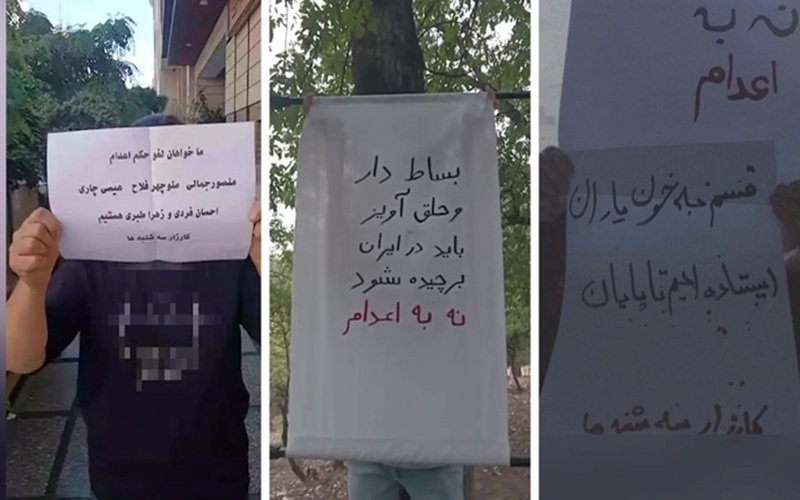
The No to Execution Tuesdays campaign, through which prisoners and supporters have protested against executions, has become one expression of resistance to the regime’s use of the death penalty. International acknowledgment of these protests helps communicate that prisoners are continuing to resist despite the risks they face.
Messages of solidarity from international legal and human rights figures also carry symbolic importance. By publicly recognizing prisoners’ protests, these figures challenge the isolation the regime seeks to impose on those behind bars.
Keeping the Voices of Prisoners Alive
The importance of sustained international advocacy extends beyond the proceedings in Geneva. Documentation preserves evidence; speeches bring cases before international audiences; diplomatic meetings press governments to respond; and conferences build support for accountability.
None of these activities alone can end the regime’s repression. Their value lies in maintaining a continuous record of violations, increasing the visibility of victims, and keeping demands for action before institutions capable of responding.
The underlying message of the Iranian Resistance’s campaign is that the passage of time must not erase responsibility. Executions, the suppression of protests, and abuses against political prisoners must remain subjects of international scrutiny rather than disappear from the agenda when another crisis emerges.
For prisoners inside Iran, international attention can also serve as a reminder that their resistance is being seen beyond prison walls. For governments and international institutions, the continuing flow of documentation presents a demand that cannot be met by statements alone.
The challenge is to turn sustained attention into effective action: preserving evidence, pursuing investigations, pressing for an end to executions, and establishing accountability for crimes against the Iranian people.