Widespread blackouts spark chants of “Death to the dictator” and “Water, electricity, life, our inalienable right”
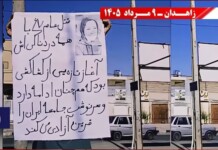
Iran is witnessing a new wave of public anger as widespread power and water outages continue to cripple daily life and devastate businesses. Over the past several days, protests have broken out in Tehran, Shiraz, Kazerun, Eslamshahr, and other cities, with residents chanting slogans against the regime and its supreme leader Ali Khamenei.
Videos shared on social media show people shouting from rooftops and windows in Tehran neighborhoods: “Death to the dictator,” “An Iranian dies, he will not accept humiliation,” “No Gaza, no Lebanon, I will sacrifice my life for Iran,” and “Water, electricity, life, our inalienable right.”
From Economic to Political Demands
In Kazerun, crowds gathered in front of government buildings, demanding accountability with chants of “Water, electricity, are our inalienable rights.” Similar scenes unfolded in Eslamshahr, where residents marched with the slogan: “We don’t want incompetent officials.”

In Shiraz, hundreds gathered outside the Fars governor’s office to denounce recurring outages. Although the rally began over water and electricity shortages, it quickly turned political as regime forces intervened. Protesters responded with chants of “Freedom, freedom, freedom” and “Shirazi, Iranians, shout for your rights,” while singing the anthem O Iran. Videos show people resisting regime forces for hours despite efforts to disperse the crowd.
Daily Life Paralyzed
The outages have severely disrupted both households and businesses. Many bakeries, workshops, and factories have been forced to shut down for hours, reporting devastating financial losses. Frequent blackouts have burned out home appliances, left people trapped in elevators, and endangered patients relying on medical devices in hospitals and homes.

Power cuts have also knocked out internet and mobile networks in several regions, further isolating communities.
Anger Over Mismanagement
Experts attribute the crisis to years of underinvestment, mismanagement, and the regime’s prioritization of regional ambitions over domestic infrastructure. This neglect has fueled recurring chants of “No Gaza, no Lebanon, I will sacrifice my life for Iran” in demonstrations across the country.
Not only has the regime failed to address the crisis, but officials have compounded public outrage by issuing inflated electricity bills.

The situation is especially dire in Khuzestan, where soaring summer temperatures exceed 50 degrees Celsius. With power out, many residents report opening refrigerators in an attempt to cool their homes. Local media describe conditions as “Khuzestan under siege by heat,” noting that gas air conditioners—once a lifeline—are now unaffordable luxuries. Poor families are left with outdated water coolers and fans, which are useless in the scorching heat.
Workers and Industries Hit Hard
The crisis extends beyond households. According to reports, factories that should operate six days a week now only manage two or three days of production due to electricity and gas shortages. Industries from steel and glass to cement and ceramics have seen output fall by 30 to 60 percent.
The newspaper Haft-e Sobh described workers as the “silent victims” of blackouts:
“When a factory loses power, it’s not just the machinery that stops moving; the lives of workers and the supply chain also come to a standstill.”
Many industrial workers now face hidden unemployment and worsening poverty as production grinds to a halt.

Looming Winter Crisis
As summer ends, experts warn the problem may soon worsen. With gas shortages looming in the colder months, regime officials have already begun hinting at widespread winter outages. The head of the National Gas Company recently announced that the state will prioritize household consumption, urging industries to “prepare themselves” for reduced supplies.
This looming threat has deepened public frustration, with many Iranians convinced that years of mismanagement and corruption have turned what should be basic rights—electricity, water, and heating—into persistent crises.