


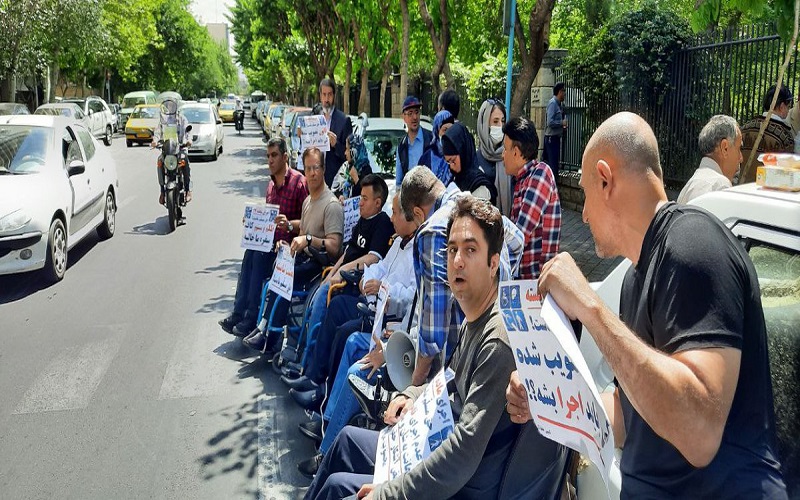

In a shocking development, approximately 13,000 welfare recipients in Iran, 60% of whom are disabled, have suddenly had their pensions terminated. This crisis, revealed by disability rights activist Behrouz Marovatti in an interview with state-run ILNA news agency, has plunged thousands of families into financial turmoil.
The crisis originated when pension payment responsibility was transferred to the Subsidy Targeting Organization at the beginning of 2024, as per Paragraph 2 of Note 8 of the Budget Law. This decision was implemented without considering its potentially devastating social and economic consequences. Despite assurances from the Court of Accounts to reinstate these individuals into the support system, the affected beneficiaries remain without their pensions, facing severe poverty and livelihood challenges.
This hasty decision has far-reaching implications beyond immediate financial hardship. It’s likely to result in numerous social issues, including an increase in child labor, divorce rates, and crime. Furthermore, it severely limits access to health, medical, and educational services for these vulnerable individuals, significantly reducing their quality of life and potentially escalating social discontent among a broader segment of the population.
Critics argue that at a time when government officials should be addressing the livelihood problems of the underprivileged, the Subsidy Targeting Organization has instead cut off the pensions of these clients and their families. This decision, apparently sanctioned by the Program and Budget Organization, has abruptly affected an estimated 20,000 to 30,000 people, with no explanation provided.
The disregard for the rights of disabled individuals and welfare seekers is likely to exacerbate the ongoing livelihood crisis in Iranian society. While there are calls for government officials to swiftly rectify this situation, some argue that this expectation may be unrealistic under the current regime.
Advocates for change suggest that the fundamental solution lies in replacing the government that creates these crises, particularly for vulnerable groups such as the physically disabled. They envision a future where citizens, especially those with disabilities, do not face such severe livelihood and medical challenges. However, they argue that this future can only be realized through significant political change, specifically by overthrowing what they describe as the oppressive regime of Velayat al-Faqih.