


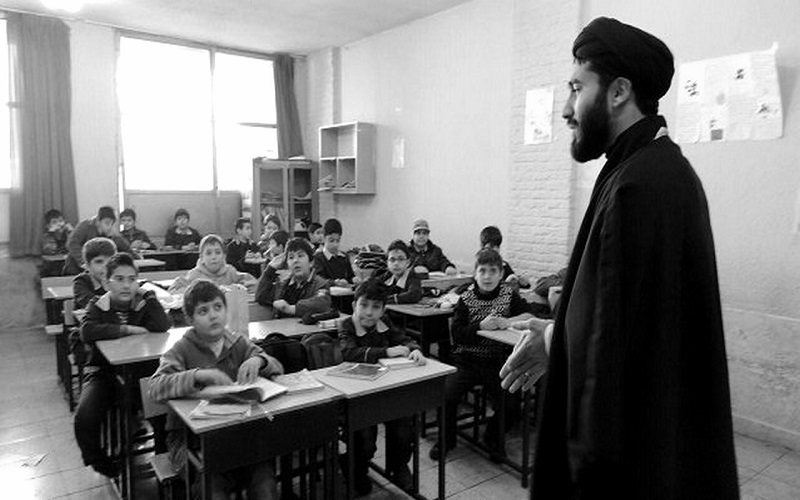

While claiming insufficient funds to modernize Tehran’s deteriorating transportation fleet, the Tehran Municipality has controversially allocated 550 billion tomans to a project aimed at sending clerics to schools and “connecting schools to mosques.” This initiative, called the “Arman Aliverdi” project, operates under the municipality’s Education Camp programs.
Arman Aliverdi was a member of the regime’s Basij forces who died during the nationwide protests of 2022 while participating in violent crackdowns against demonstrators. The project named after him is part of the regime’s broader efforts to ideologically influence youth through schools.
Questionable Budget Allocations
On Sunday, December 21, 2024, the Tehran City Council reviewed a supplementary budget of 33 trillion tomans for the municipality. This session, held behind closed doors without journalists present, revealed that much of this funding stems from “surplus income over the previous year’s expenses,” “receipt of claims from received documents,” and “sale of city and municipal assets.”
After the review, Nasser Amani, a Tehran City Council representative, disclosed that the municipality had deposited significant sums—100 to 200 million tomans—into individuals’ accounts without proper analysis. Regarding the “Arman Aliverdi” project, Amani noted that the initial budget of 400 billion tomans had been increased by 150 billion tomans, bringing the total to 550 billion tomans.
Amani criticized this expenditure, pointing out that it falls outside the municipality’s primary responsibilities and detracts from pressing needs. “The municipality claims it lacks funds to address the city’s dilapidated bus fleet but spends lavishly on such projects,” he remarked in an interview with Iran Didban.
Prioritizing Ideology Over Infrastructure
Amani highlighted the dire condition of schools in deprived areas of Tehran, describing collapsing roofs, unusable toilets, and hazardous grounds where children frequently injure themselves. He argued that funds should be directed toward rebuilding schools and improving educational infrastructure, rather than ideological programs.
Despite these concerns, the municipality has pressed ahead with the “Arman Aliverdi” project, deploying Basij students to schools as part of the regime’s broader “brainwashing” policies targeting children and teenagers. This initiative coincides with a severe teacher shortage in Iranian schools, where at least 20,000 seminary students have been employed over the past two years to fill the gap.
Deteriorating Education Standards
The ideological focus in Iranian schools has become increasingly troubling for students and parents alike. Official statistics reveal high dropout rates among secondary school students, attributed to poverty, inadequate educational facilities, and the inappropriate content of school curricula. Many students find the ideological indoctrination repellent, leading to widespread disillusionment with the education system.
According to Gholamhossein Mohammadi, Deputy Minister of Cooperatives, Labour, and Social Welfare, approximately 30% of Iranians aged 18 to 24 lack a high school diploma, with nearly half of students failing to complete their education. He acknowledged that many young people see little connection between education and achieving their economic and social goals.
A Divided Youth
High school students in Tehran and other major cities increasingly fall into two groups. One group views life in Iran as oppressive and prepares to emigrate, while the other, unable to leave, remains in a state of mental distress. Both groups share a common dissatisfaction with their prospects under the current system.
The Ministry of Education exacerbates these issues by annually increasing the ideological content of textbooks, further alienating students. A statistical report by the state-run Donya-e Eghtesad newspaper identified the mismatch between educational content and the needs of modern children as a significant factor driving students away from school.
The Broader Impact
The disconnection between students and the education system is evident in their aspirations. Many young Iranians compare themselves with peers abroad, whom they encounter through social media, and yearn for similar freedoms. Surveys suggest that at least 50% of students dream of building their futures outside Iran, driven by the stark contrast between their circumstances and the opportunities they see elsewhere.
In light of these challenges, the Tehran Municipality’s decision to allocate significant public funds to ideological projects like the “Arman Aliverdi” initiative raises serious questions about its priorities. Critics argue that addressing the city’s urgent infrastructure and educational needs should take precedence over advancing political agendas.