



For years, the concept of social fault lines has been a topic of discussion in Iran’s political and social spheres. As the country grapples with various societal issues, a pressing question emerges: What is the primary social fault in contemporary Iranian society?
The absence of a popular government invariably leads to far-reaching consequences within a nation. As time progresses, these complications tend to multiply and intensify. In Iran’s case, the unpopularity of the current regime has made it virtually impossible to bridge or reconcile existing social divides, as the root causes of these faults remain firmly in place.
Official narratives in Iran often speak of ten primary social fault lines. However, unofficial accounts suggest a much more complex and extensive set of issues. This discrepancy is particularly pronounced in a country where the publication of negative parameters and components is heavily restricted.
According to experts and regime officials, the ten main social fault lines in Iranian society can be categorized as follows:
- The gap between the state and the nation
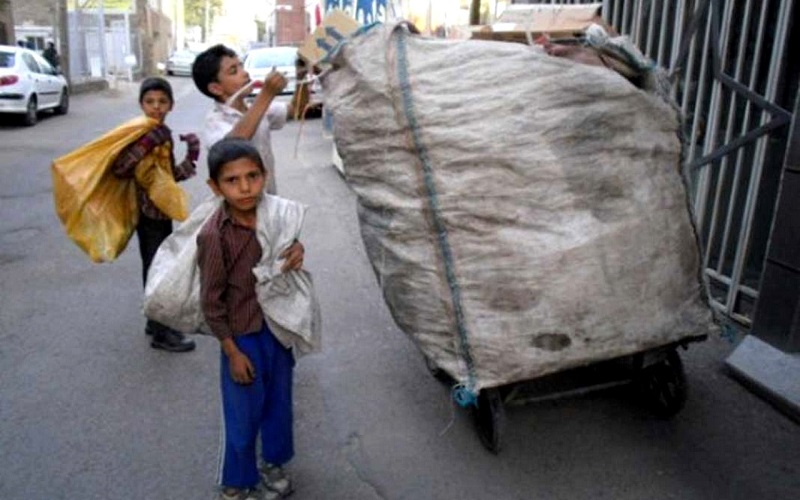
- Poverty and class disparity
- Unemployment
- Rampant corruption
- Political and structural faults
- Marginalization
- Social damage
- Ethnic and sectarian divisions
- Water crisis, drought, and environmental issues
- Despair and lack of hope for the future
In 2020, a book titled “Social Gaps in Iran” was published, addressing additional issues such as the generation gap, health disparities, educational inequalities, and class divisions. Notably, Iran’s political and social sciences often shy away from discussing poverty and inequality in depth.
Since the establishment of clerical rule, these social fault lines have remained largely unaddressed, with little to no effective action taken to resolve them. The accumulation of these issues has created a critical situation for Iranians, one that is perceived as even more threatening than external conflicts.
The widening class gap, uneven distribution of income and wealth, and the increasing population living below the poverty line are all indicators of deteriorating social welfare. The Gini coefficient, a measure of income inequality, has reportedly reached over 40% in Iran, signaling a significant disparity in wealth distribution.
According to the Legatum Prosperity Index, Iran ranks 126th out of 167 countries in terms of overall prosperity, a notably poor standing. This inequality has led to a breakdown in social cohesion, with the affluent class’s conspicuous consumption setting unrealistic expectations for the rest of society.
The struggle against economic corruption is crucial in reducing class disparities. However, this issue has not been a priority for regime officials, many of whom are implicated in corruption cases and constitute the upper echelons of society. While some instances of corruption have been reported in domestic media, allegations involving the highest levels of Iran’s regime are scarce and often only appear on exile and foreign websites. Iran’s ranking of 149th out of 180 countries in a global corruption perception index further underscores this issue.
The depth and breadth of these social fault lines have been exacerbated by numerous misguided and non-strategic social, political, and economic policies. Addressing these issues comprehensively would require decades of concerted effort and the rebuilding of social capital.
In conclusion, the fundamental social fault line in Iran appears to be the chasm between the people and the government. Until this divide is bridged through significant governmental change, attempts to address other social issues may prove futile. The path to resolving Iran’s complex social challenges lies in addressing this core disconnect between the nation’s leadership and its populace.