


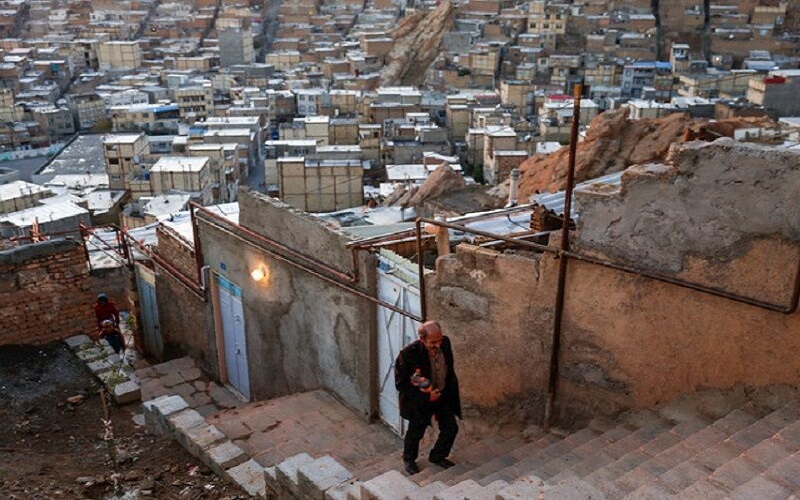

The Deputy Minister of the Iranian regime’s Ministry of Roads and Urban Development has sounded the alarm over the critical state of slums in major cities, including Tehran, Mashhad, Bandar Abbas, and urban centers in the provinces of Sistan and Baluchestan and Khuzestan.
According to Abdolreza Golpaygani, CEO of the Urban Regeneration Company, slums have become a serious and widespread issue in Iran, with an estimated 6.5 to 7 percent of the population living on the outskirts of cities. However, some sociologists argue that the actual number is much higher.
Golpaygani highlighted that various factors contribute to the formation of slums. He warned that informal settlements in certain provinces have created a particularly dire situation, with Khorasan Razavi (primarily Mashhad), Sistan and Baluchestan, Hormozgan (Bandar Abbas), Khuzestan, and Tehran experiencing the most severe crises.
The Expansion of Informal Settlements
One of the most pressing issues Golpaygani identified is the growing number of informal settlements within Tehran itself. These settlements have expanded into areas such as the Islamabad Valley, Farahzad Valley, Oghaf neighborhood, Khak Sefid, southeast Tehran, and parts of District 19.
The main drivers of this trend are persistent droughts and the lack of basic living conditions in rural and small-town areas. These hardships have forced internal migration toward large cities and provincial capitals, where skyrocketing housing costs have further fueled the marginalization crisis.
Alarming Growth in Marginalized Populations
Former Ministry of Energy official Mohammad Ali Mostafavi, who worked on groundwater restoration and balancing projects, has reported a dramatic rise in Iran’s marginalized population. Over the past 35 years, this number has surged from 600,000 to more than 25 million.
In eastern Iran, drought and environmental degradation have played a significant role in the displacement of people, while in Tehran and other large cities, the housing crisis and lack of job opportunities have contributed heavily to the problem.
Environmental and Social Consequences
In recent years, land subsidence and other environmental challenges have further exacerbated the crisis. Many residents of central Iran have been forced to relocate, worsening social instability.
The lack of proper educational and healthcare infrastructure, as well as employment opportunities outside major metropolitan areas, has left many Iranians with no choice but to migrate to urban centers. This inequality in access to resources, combined with unplanned urban expansion, has significantly increased the number of people living in slums.
Rising Crime and Social Decay
The concentration of marginalized populations in poorly developed areas has led to an uptick in crime rates. Slums have become hotspots for illicit activities such as smuggling, theft, and drug trafficking due to their high population density and lack of adequate oversight. Cultural differences, weak social ties, and limited law enforcement presence have further contributed to escalating crime levels.
The Ongoing Cycle of Poverty
Marginalization is now one of Iran’s most pressing social issues, becoming more pronounced each year as inflation rises and poverty spreads. The individuals who end up in these informal settlements are often those deprived of even the most basic necessities.
Efforts to reduce the marginalized population have largely failed due to Iran’s worsening economic conditions, persistent poverty, and chronic housing shortages. The idea of reversing migration trends seems implausible, as environmental crises and economic hardships continue to push more people toward urban slums.
The Abandonment of Rural Areas
The depopulation of rural Iran further illustrates the regime’s failure to provide basic services and job opportunities outside major cities. In November 2024, the deputy to the regime’s president for rural development and deprived areas revealed that out of Iran’s 69,000 villages, only 38,000 remain inhabited, while 31,000 have been abandoned.
Since 1996, Iran has experienced a dramatic demographic shift. Whereas 70 percent of the population once lived in villages and 30 percent in cities, these numbers have now been reversed. The regime’s failure to distribute essential resources—such as water, electricity, healthcare, and education—has driven millions from rural areas into overcrowded urban centers.
Public Health and Safety Risks
The increasing density of slums in major cities has led to heightened risks, including greater vulnerability to natural disasters such as earthquakes and floods due to substandard construction. The lack of sufficient medical and educational services has resulted in rising disease rates and a growing number of children unable to attend school.
According to the latest statistics, around 900,000 children aged 6 to 18 in Iran are currently out of school. This trend corresponds with the rise in child labor and unofficial employment, further illustrating the deepening social crisis among marginalized populations. Additionally, rising crime rates, drug addiction, and juvenile delinquency underscore the severe consequences of unchecked urban marginalization.
A Crisis with No End in Sight
With Iran’s economy in decline and poverty levels on the rise, the regime has shown little ability or willingness to address the marginalization crisis. Unless systemic changes are made to improve rural infrastructure, create sustainable job opportunities, and provide affordable housing, the situation is likely to worsen, leaving millions trapped in a cycle of poverty and social exclusion.