


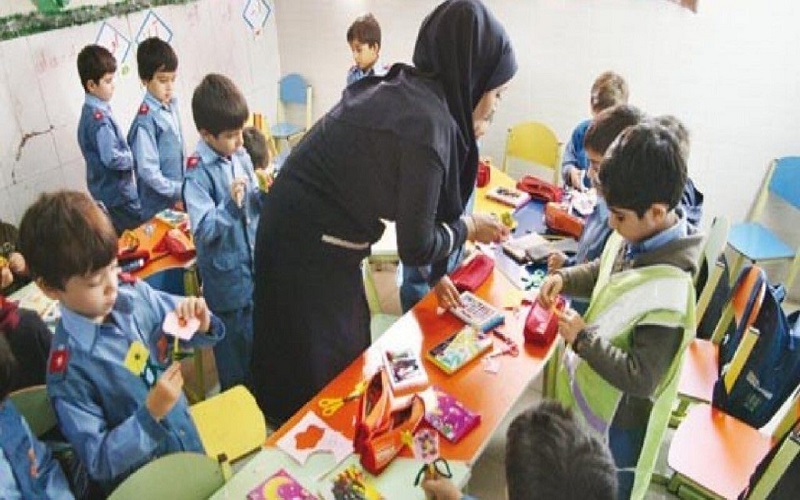

Rezvan Hakimzadeh, Iran’s Deputy Minister of Primary Education, revealed alarming statistics about school dropouts in the country, highlighting deep-rooted challenges within the education system. Speaking on Wednesday, February 5, Hakimzadeh stated that nearly 169,000 Iranian children have dropped out of primary school.
According to the state-run IRNA news agency, Hakimzadeh reported that 168,881 students left school before completing the sixth grade, while 71,061 first-grade students also failed to continue their education. He further noted that in primary school alone, 76,175 students had been identified as dropouts, out of which only 24,849 have been reintegrated into the education system since the beginning of the academic year.
Over a six-year period, the government has managed to identify and re-enroll just 15,680 students, reflecting the limited impact of state interventions. Meanwhile, more than 9.22 million students have been registered in primary schools for the new academic year, among whom approximately 438,000—around five percent—are foreign nationals.
Adding to concerns over classroom overcrowding, Hakimzadeh disclosed that 6,047 classes across the country hold more than 40 students each, an issue that significantly impacts the quality of education.
Street Children and the Education Crisis
Ali Rabiei, a senior advisor to the Iranian regime president, echoed similar concerns, revealing that nearly 49 percent of Iran’s working and street children are out of school. According to state-run news agency IRNA, Rabiei also pointed out that 21 percent of these children suffer from malnutrition and are at high risk of both infectious and non-infectious diseases later in life.
Rabiei criticized the government’s failure to address the crisis, attributing it to bureaucratic inefficiencies and a lack of coordination between institutions. He described the situation as a product of “structural harassment, bureaucratic neglect, and short-sighted policies,” which have led to ineffective solutions and further alienation of vulnerable children from the education system.
Poverty: The Root Cause of School Dropouts
A major driver of the dropout crisis is economic hardship. For many families in the lower income brackets, child labor has become a necessity for survival. The state-run newspaper Khorasan acknowledged this reality in an August 1, 2024 report, stating: “The pain of livelihood and poverty are the most important factors for dropping out of school.”
With inflation soaring and economic conditions worsening, families struggling to make ends meet often prioritize immediate income over education, pushing children into labor markets instead of classrooms. The failure of government policies to address these socio-economic challenges continues to exacerbate the dropout crisis, leaving tens of thousands of children without access to education and a brighter future.
Unless systemic reforms and targeted economic relief measures are introduced, Iran’s growing population of out-of-school children will only increase, further widening the gap between privileged and underprivileged communities and deepening the cycle of poverty for generations to come.