



The January 2026 nationwide uprising exposed erosion within the security apparatus and prompted a risky escalation by the ruling system.
The nationwide uprising of January 2026, marked by its unprecedented geographic spread and explicitly anti-system slogans, placed the regime’s in a clear survival scenario. The scale and persistence of the protests strained the regime’s conventional repression mechanisms, revealing signs of fatigue and uncertainty within its domestic security apparatus.
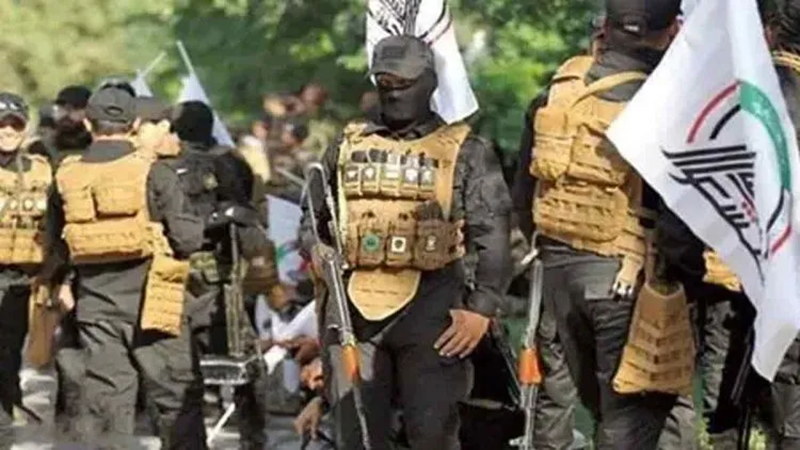
Field reports suggest that, amid concerns over declining compliance and potential defections among internal forces, the regime has resorted to an unusually dangerous measure: the reported deployment of foreign-linked proxy elements and non-native paramilitary units for direct confrontation with protesters inside Iran.
According to multiple accounts, these deployments have focused on regions that became focal points of the uprising, including Chaharmahal and Bakhtiari Province, Khuzestan—particularly Abadan—Isfahan, Lorestan, and Mashhad.
Witness testimonies from areas such as Shiraz’s Zand Boulevard and the streets of Abadan describe security personnel speaking with pronounced non-local Arabic accents, distinct from the dialects of Iranian Arab communities.
Observers noted behavioral patterns and operational methods differing from those of regular local forces. In Mashhad, reports indicated the presence of a roughly 150-member unit equipped with specialized combat gear, suggesting centralized coordination rather than ad hoc reinforcement.
If substantiated, the internal use of proxy or externally trained forces represents a significant departure from the regime’s traditional repression model. It would indicate a strategic shift driven by distrust toward segments of domestic security forces and concerns about their willingness to continue enforcing lethal measures against fellow citizens.
For units shaped by years of ideological indoctrination outside Iran, the use of extreme force against protesters is framed not as internal repression but as neutralizing a constructed enemy—raising the likelihood of escalated violence.
This approach also serves a secondary function: signaling to domestic police and security personnel that alternative enforcement mechanisms are available. By demonstrating its capacity to import force, the regime seeks to deter hesitation, prevent sympathy with protesters, and block pathways toward noncompliance or internal fragmentation.
Evidence further suggests that the logistical infrastructure enabling rapid transfer of such forces has been developed over years rather than improvised in response to the current crisis.
The appointment of senior Islamic Revolutionary Guard Corps (IRGC) commanders to ambassadorial roles—such as in Iraq—has effectively transformed diplomatic facilities into logistical hubs. This underscores the extent to which Iran’s foreign policy apparatus operates in coordination with its security and military objectives.
The National Council of Resistance of Iran has publicly warned that personnel previously organized under the label of “shrine defenders” for external operations are now being redirected to suppress dissent at home—repurposed to defend the political core of the system rather than national security.
The reported use of proxy forces during the January 2026 uprising further undermines the regime’s longstanding claims of popular legitimacy and institutional cohesion. Rather than projecting strength, such measures point to vulnerability: a state increasingly reliant on externalized coercion to maintain control over its own population.
In political terms, this escalation suggests that the ruling establishment views the country less as a polity governed through consent—even coerced consent—and more as a territory requiring containment.
The willingness to rely on non-native or proxy forces against domestic protesters marks a critical inflection point, signaling both the depth of the regime’s crisis and the narrowing range of options available to it.