Washington press conference exposes unprecedented details of the Iranian regime’s state-sponsored terrorism network, showing Khamenei as the ultimate decision-maker.
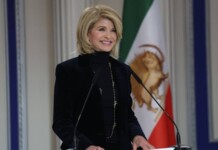
On August 6, 2025, the Washington office of the National Council of Resistance of Iran (NCRI) held a press conference revealing unprecedented details about the organized terrorist apparatus of Iran’s ruling theocracy. The revelations provided clear evidence of the direct link between the regime’s highest authority, Ali Khamenei, and terrorist operations abroad.
According to the findings, Khamenei is not a concealed supporter of such actions but the final decision-maker in their planning and execution. The command structure operates through an entity known as the “Qassem Soleimani Headquarters,” placed under the deputy minister of intelligence, working in coordination with the Ministry of Intelligence and Security (MOIS), the IRGC Intelligence Organization, and the IRGC Quds Force.
Terrorism as a Foreign Policy Tool
The NCRI’s intelligence findings confirm that terrorism is a core pillar of the regime’s foreign policy. This strategy operates under three main models:
- Direct execution by Iranian operatives.
- Hybrid operations involving both domestic agents and foreign mercenaries.
- Full outsourcing of attacks to organized criminal networks.
The third model was employed in the November 2023 assassination attempt on Professor Alejo Vidal-Quadras, former Vice-President of the European Parliament, using the “Makro Mafia,” a criminal network with direct ties to the IRGC Quds Force.
Role of MOIS and the Diplomatic Network
In this apparatus, the MOIS Counter-Terrorism Directorate — headed by Seyed Yahya Hosseini Panjkahi (alias Seyed Yahya Hamidi) — oversees operational planning. Meanwhile, the MOIS Foreign Intelligence Directorate, led by Hossein Safdari, provides logistical and security cover through intelligence stations embedded in regime embassies.
This integration has effectively turned the regime’s diplomatic missions into operational bases for assassination, terrorism, and espionage.
Documented Operations
The 2018 foiled bombing of the NCRI’s “Free Iran” gathering in Villepinte, near Paris — which targeted NCRI President-elect Maryam Rajavi and prominent American and European figures — exemplifies this structure in action. Although the operation was planned by MOIS officials, execution was outsourced to Turkish and Balkan criminal groups.
The same blueprint was used in the Vidal-Quadras plot, combining intelligence command with mafia execution. Figures such as Reza Amiri Moghaddam and Gholamhossein Mohammadiya, later appointed to official diplomatic roles, illustrate the complete overlap between the regime’s formal representatives and its covert operatives.
Terrorism as a Response to Crisis
The NCRI emphasized that the regime’s expansion of terrorist activities in Europe and the United States reflects internal structural weakness and declining regional influence. This shift in targeting — from Iranian dissidents to Western political leaders — is not a sign of strength, but a reaction to deepening legitimacy and strategic crises.
Links to Global Criminal Networks
The regime’s partnerships with international drug cartels such as Naji Sharifi Zindashti’s network and the Makro Mafia are not merely for concealment. These organizations act as operational arms, enabling high-risk attacks without leaving a direct trace to official Iranian operatives. This fusion of state terrorism and organized crime has created a hybrid threat that demands a coordinated international response.
Proposed International Measures
The NCRI concluded its presentation by outlining urgent steps to counter the regime’s terrorist apparatus:
- Close all regime embassies and cultural/religious centers abroad.
- Designate the MOIS and IRGC as terrorist organizations.
- Expel and prosecute all regime agents and lobbyists in Western countries.
- Impose comprehensive UN Security Council and national sanctions targeting Khamenei and the core institutions of the regime’s terrorism machinery.
This exposé serves as a clear call to redefine the free world’s relationship with a regime that has embedded terrorism into its structure of survival and foreign policy. The pressing question for Western governments is whether they will use this evidence to abandon policies of appeasement and false hope in “behavior change,” and instead adopt a strategy based on accountability and decisive action.