


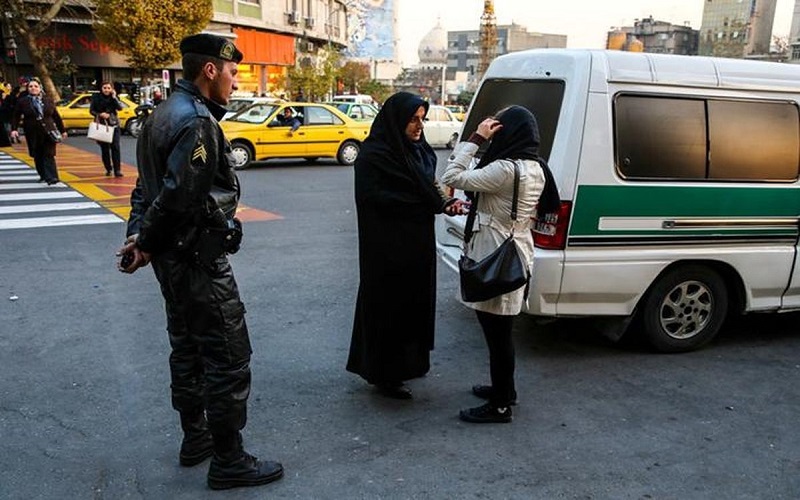

The Iranian regime’s Ministry of Culture and Islamic Guidance is spearheading a project known as “Tooba” to enforce the mandatory hijab on women in public spaces. This initiative complements the Noor Project of the Police Force, aiming to bolster the regime’s repressive forces under the guise of popular organizations. These groups, funded by public budgets, are part of the regime’s efforts to enforce moral codes.
Background and Implementation
The Tooba project came to public attention in mid-May when it began in Khorasan Razavi. However, its origins trace back to 2023, following the nationwide uprising after Mahsa Amini’s death, which left the government in a state of desperation. Approved by the Ministry of Culture and Islamic Guidance, the project was initially implemented in Khorasan Razavi province and has since spread to other regions. Naimeh Eslamlou, director of the Khaybar institution, recently announced the registration of training courses in Karaj.
Training and Execution
Under the Toobi plan, regime supporters participate in training courses, equipping them to act as “people’s forces” or “voluntary organizations” that target women opposing the mandatory hijab. Mahtab Raziei, secretary of the Family Stability and Popular Culture Center, has affirmed that Toobi supports the regime’s moral enforcement efforts. This indicates the regime’s struggle to maintain control, highlighting a shortage of manpower within its repressive forces. Consequently, financial incentives are being used to attract more participants, with significant public funds allocated to the project. Saeed Emami, secretary of the Council of Public Culture, described it as “the most comprehensive plan for promoting a chaste life.”
Educational Content and Grassroots Involvement
Mohammad Hosseinzadeh, Director General of Culture and Islamic Guidance in Khorasan Razavi, shared that the educational content of the Tooba project includes teachings from the Quran, the hadiths of the Ahl al-Bayt, and other religious, historical, and cultural texts about the hijab. These materials are presented in book form to volunteers interested in understanding the philosophy and history behind the hijab.
Despite claims of grassroots involvement, specifics about these organizations remain undisclosed. Hosseinzadeh asserts that hundreds of independent organizations operate in Khorasan Razavi, with the Ministry merely providing platforms for their activities. However, past incidents, such as the employment of hijab observers in Tehran, suggest a deeper governmental involvement.
Funding and Expansion
Official claims deny that Toobi trainers and trainees receive ministry funds, asserting that the Ministry only provides venues for training. Yet, the plan’s approval and communication to provinces imply a dedicated budget. The first conference of Toobi’s three-stage plan indicated that at least 1,500 people would be trained nationwide to enforce the regime’s dress code. Khaybar institution managers, some of whom are Basijis, oversee these courses. The key department for staffing these efforts is the “Fatemi Mujahideens.”
Broader Enforcement Measures
As Toobi activities expand across Iran, the regime’s Traffic Police (RAHVAR) have also intensified hijab enforcement on the streets. Taymur Hassani, head of RAHVAR police, announced that the plan for chastity and hijab has been communicated to all specialized units and officers.
The Tooba project represents a significant effort by the Iranian regime to reinforce its moral codes through public and organizational channels, raising questions about personal freedoms and state control.