
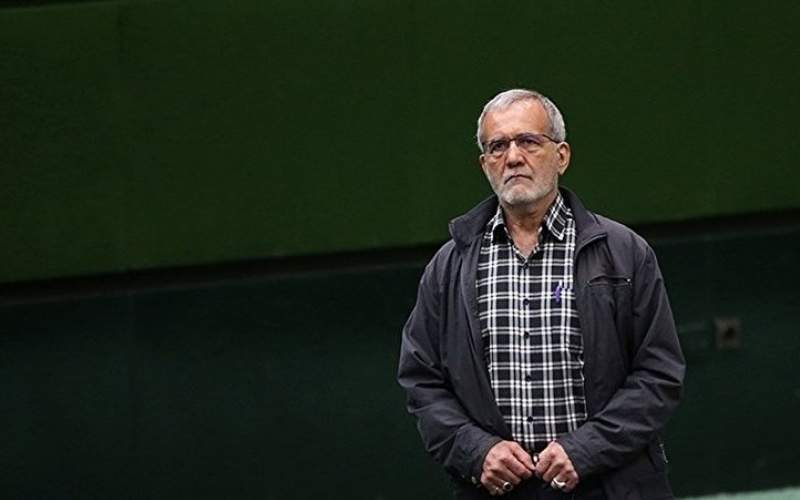

In a recent development that underscores the unchanging nature of Iran’s theocratic governance, newly appointed President Masoud Pezeshkian has made startling revelations about the formation of his cabinet. Pezeshkian’s statements have shed light on the extent of Supreme Leader Ali Khamenei’s influence in shaping the country’s executive branch.
On Wednesday, August 21, Iran’s parliament granted a vote of confidence to Pezeshkian’s proposed ministers, officially forming the 14th government of the Islamic Republic. However, Pezeshkian’s subsequent comments have raised eyebrows and confirmed suspicions about the true nature of power dynamics within the Iranian political system.
Pezeshkian openly admitted that he had secured approval from the “highest levels of the system” for all his ministerial nominees. He went further to clarify that his government’s agenda is essentially to implement and follow up on the “general policies of the system” as dictated by Khamenei.
In a surprising moment of candor, Pezeshkian revealed the depth of involvement of Iran’s security apparatus in the cabinet formation process. He stated that the final list of ministers was the result of agreements reached with the Ministry of Intelligence, the Revolutionary Guards, and other intelligence institutions.
The president’s revelations extended to specific ministerial appointments. He disclosed that Abbas Salehi, the nominee for Minister of Culture and Islamic Guidance, was directly ordered by Khamenei to take the position. Similarly, Farzaneh Sadegh Malvajerdi, the sole female nominee and candidate for the Ministry of Roads and Urban Development, was reportedly handpicked by the Supreme Leader.
Pezeshkian’s admissions have effectively confirmed what many observers have long suspected: that key ministerial positions, particularly in sensitive areas such as intelligence, defense, and foreign affairs, require the Supreme Leader’s explicit approval.
The president’s statements align with his earlier declaration that he assumed office due to perceiving the regime to be in danger, with his primary objective being the implementation of Khamenei’s policies.
This development serves as a stark reminder that despite changes in presidential leadership, the fundamental power structure in Iran remains unchanged. The Supreme Leader continues to wield significant influence over the formation and direction of the government, raising questions about the extent of genuine democratic processes within the Islamic Republic.
Approved Cabinet Members of the 14th Government of Iran
To provide a comprehensive overview, below is the full list of ministers approved by the Iranian regime parliament and reportedly sanctioned by Supreme Leader Ali Khamenei:
- Cultural Heritage, Tourism and Handicrafts: Mohammad Reza Salehi Amiri
- Health: Mohammad Reza Zafarghandi
- Labor: Ahmad Meydari
- Economic Affairs and Finance: Abdolnaser Hemmati
- Education: Alireza Kazemi
- Communications: Sattar Hashemi
- Intelligence: Esmail Khatib
- Foreign Affairs: Abbas Araghchi
- Agriculture: Gholamreza Nouri Ghezeljeh
- Justice: Amin Hossein Rahimi
- Defense: Aziz Nasirzadeh
- Roads and Urban Development: Farzaneh Sadegh Malvajerdi
- Industry, Mines and Trade: Mohammad Atabak
- Science, Research and Technology: Hossein Simaei Sarraf
- Culture and Islamic Guidance: Abbas Saleh Shariati
- Interior: Eskandar Momeni
- Petroleum: Mohsen Paknejad
- Energy: Abbas Aliabadi
- Sport and Youth: Ahmad Donyamali