


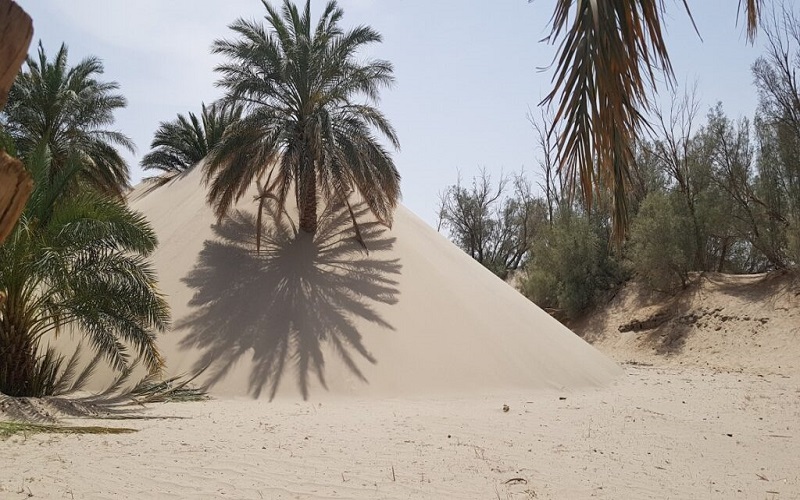

Iran is facing a severe environmental crisis as desertification and wind erosion continue to ravage large swaths of the country. Recent research data paints a grim picture of the situation, highlighting the urgent need for comprehensive action to address this escalating problem.
According to current statistics, 22 out of Iran’s 31 provinces are affected by wind erosion, with 233 regions becoming supercritical centers. These areas have transformed into significant sources of dust production, causing extensive damage to surrounding environments. The consequences range from endangering public health to destroying agricultural lands and industrial facilities.
Vahid Jafarian, the former Director General of the Office of Desert Affairs of the Natural Resources and Watershed Organization, reports that crisis centers in Iran currently cover an area of 14 million hectares. Alarmingly, this figure is estimated to increase by one million hectares annually due to wind erosion.
Certain provinces, including Sistan and Baluchistan, Khuzestan, Kerman, South Khorasan, and Razavi Khorasan, are experiencing particularly severe conditions. Jafarian attributes part of the problem to government institutions’ refusal to allocate water rights to flood plains downstream of dams, leading to significant vegetation reduction in vast desert areas. The drying of wetlands has further exacerbated soil vulnerability to wind erosion.
The Payam-e Ma newspaper highlighted on August 21 that Iran’s deserts have expanded to over 32 million hectares in the last four decades, with this trend accelerating. In contrast, de-desertification efforts cover less than 300,000 hectares per year, falling far short of the required scale.
Desertification, or land degradation, is a process resulting in the drying of natural areas and loss of biodiversity in dry, semi-arid, humid, and semi-humid lands. This process leads to forest destruction and the transformation of water bodies into dust centers.
Iran now ranks among the top five countries globally in terms of soil erosion rates, with up to 80% of its land at risk of desertification. Over the past four decades, soil erosion in Iran has reached a staggering two billion tons per year, while forest areas have significantly decreased. Moreover, Iran leads the world in desertification due to human intervention, with an estimated 30 square meters of land turning into desert every minute.
The situation is equally dire for Iran’s water resources. More than 70% of the country’s plains have dried up or face imminent complete dryness, with the remaining half in critical condition. Water areas are under threat of complete dryness, and declining underground water levels have increased the risk of land subsidence across much of the Iranian plateau.
Data from the Natural Resources Organization further underscores the severity of the situation, revealing that soil erosion in Iran is three times the average of Asian countries and 20 times the global average.