
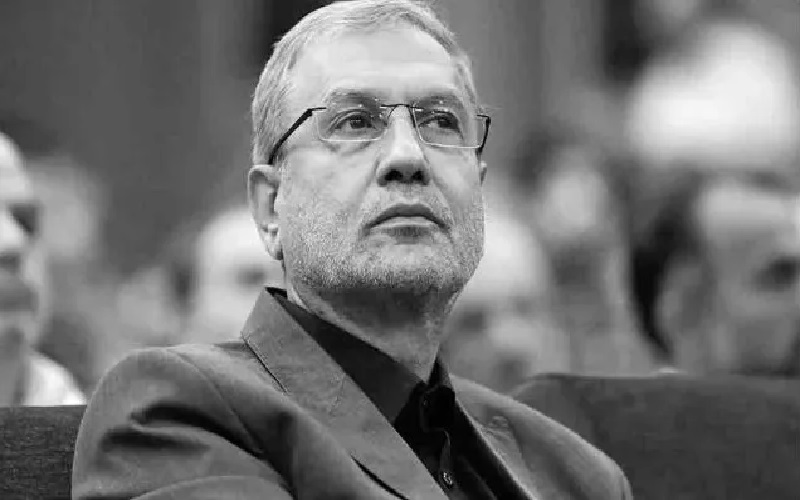

In a move that has reignited concerns over the Iranian regime’s hardline policies, President Masoud Pezeshkian recently appointed Ali Rabiei as his social assistant. Rabiei, a figure infamous for his repressive tactics in the 1980s and his tenure as the deputy of the Ministry of Intelligence, has a long history of suppressing labor movements and supporting the regime’s authoritarian policies.
Ali Rabiei’s appointment signals Pezeshkian’s alignment with the regime’s continued internal repression, despite any claims of reform. Rabiei’s career has been closely tied to the upper echelons of the regime, particularly under the direction of the Supreme Leader. His role in overseeing labor crackdowns and enforcing state policies further reinforces this narrative.
A History of Oppression
Rabiei’s political career took off when he served as the deputy minister of the Ministry of Intelligence from 1987 to 1993. His work under Hassan Rouhani, the then-Secretary of the Supreme Security Council, placed him at the center of internal security policies. He was not only involved in implementing these policies but also played a key role in crafting them as the head of both the policy committee and the internal security committee of the Council.
Rabiei’s involvement with the Islamic Republican Party positioned him as the head of the labor branch of this party, a party notorious for quashing dissent and curbing freedoms in the early days of the Islamic Republic. The party earned the nickname “Hooligan Party” due to its aggressive tactics in silencing opposition, a reputation to which Rabiei contributed significantly.
One of the darkest chapters in Rabiei’s career came during the early 1980s when he, along with Alireza Mahjoub and others, seized control of the Workers’ House in Tehran. From 1980 to 1981, they systematically dismantled labor unions and councils, extinguishing any hope of worker representation or rights. His involvement in these actions exemplifies his commitment to safeguarding the regime’s interests over those of the labor force.
Suppressing Labor Under Khatami’s Presidency
Even during the supposedly reformist presidency of Mohammad Khatami, Rabiei continued his anti-labor activities. As Khatami’s advisor on social affairs, Rabiei was instrumental in pushing forward decisions that further undermined workers’ rights. One of the most significant measures during this time was the government’s decision in 2002 to exempt workshops with fewer than 10 workers from labor law protections. This move, which excluded thousands of workers from legal protections, demonstrated Rabiei’s relentless prioritization of regime interests over social welfare.
Academic and Political Rise
Despite his questionable role in government repression, Rabiei managed to advance academically and politically, largely through his ties to the regime. After serving in the Islamic Revolutionary Guard Corps during the Iran-Iraq War, he secured a doctorate in strategic management, leveraging his government connections and bypassing typical academic hurdles. His rise from the Revolutionary Guards to high-ranking positions in the Ministry of Intelligence further exemplifies his deep-rooted influence within the regime.
A Brutal Reputation
Rabiei’s brutal methods have earned him a reputation even among his peers. Ruhollah Hosseinian, a figure notorious for his own role in regime repression, described Rabiei as one of the regime’s most violent enforcers. Hosseinian recalled clashing with Rabiei over his harsh treatment of detainees, stating that even Gholam-Hossein Mohseni-Eje’i, another prominent regime figure, resigned due to Rabiei’s violent tactics.
Further allegations have emerged about Rabiei’s role in the infamous “chain murders” of the 1980s and 1990s, where numerous regime opponents were systematically eliminated. According to Abdollah Shahbazi, a former colleague, Rabiei played a direct role in the horrific deaths of 18 Azerbaijani political prisoners, who were suffocated in coffins under his orders.
Dismissal and Continued Influence
Rabiei’s policies eventually caught up with him, leading to his impeachment and dismissal in 2018. He faced three impeachment proceedings within a year, accused of enacting policies that led to mass unemployment and undermined labor rights. However, despite his formal removal from office, Rabiei’s continued influence within the regime remains evident through his recent appointment as Pezeshkian’s social assistant.
Conclusion
The appointment of Ali Rabiei, a figure long associated with violence and repression, reflects the Iranian regime’s enduring commitment to its authoritarian roots. Despite public claims of reform or moderation, this decision sends a clear message: the regime’s leadership is determined to maintain its grip on power, even at the expense of civil rights and labor protections. Rabiei’s presence in such a high-ranking position is a stark reminder that the forces of repression continue to shape Iran’s political landscape.