


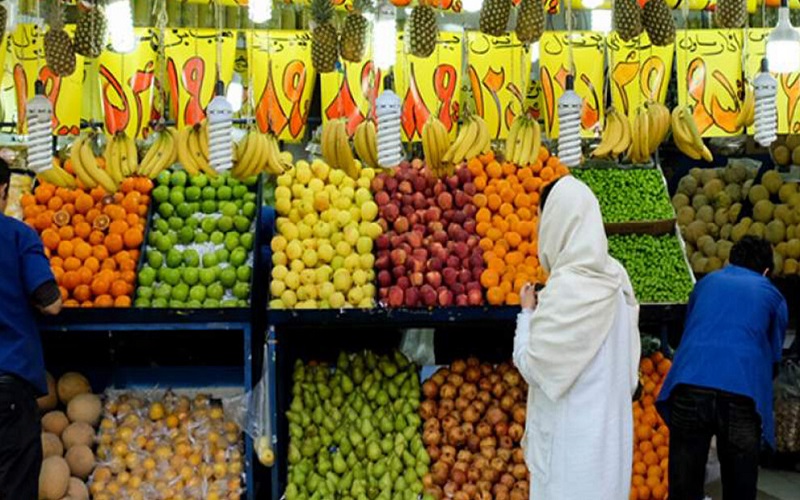

In recent years, one of the most pressing economic challenges facing the Iranian people has been the sharp decline in purchasing power. This issue, driven by escalating inflation, rising prices of basic goods, and a widening gap between income growth and living costs, has placed immense pressure on the daily lives of countless households.
The Roots of Inflation
Economic experts point to Iran’s chronic inflation, particularly in the last decade, as a key factor driving the surge in the prices of goods and services. According to the Iranian Statistics Center, annual inflation in recent years has ranged between 40% and 50%, significantly impacting the cost of essential items such as food and housing.
This persistent rise in prices has left many families struggling to meet even their basic needs. Beyond day-to-day concerns over food and necessities, the burden of soaring housing and energy costs further exacerbates the situation. The financial strain has led to psychological and social consequences, intensifying stress, family tensions, and widespread public dissatisfaction.
The Wage-Inflation Gap
A major cause of the decline in purchasing power is the mismatch between inflation rates and wage increases. While prices continue to rise each year, wage growth often lags far behind. For instance, in 2024, the Iranian government approved a mere 25% salary increase for employees, despite official inflation surpassing 40%. This policy disconnect has led to a decrease in real income, further eroding people’s ability to afford everyday goods and services.
Shrinking Livelihoods
The shrinking of household budgets is perhaps the most visible consequence of declining purchasing power. Iranian families are being forced to cut back on daily expenses, leading to reduced consumption of staple goods like rice, oil, chicken, and meat. In some cases, these items have been entirely eliminated from household diets. This reduction not only lowers the quality of life but also poses long-term risks to public health, potentially giving rise to more severe social and economic crises.
The Need for Comprehensive Reform
Improving living conditions in Iran will require the implementation of comprehensive economic and social policies, including measures to control inflation, increase wages, support vulnerable populations, and restructure the economy. However, the current government appears incapable of enacting meaningful change due to a lack of structural reforms and pervasive corruption.
Corruption—deeply embedded in the country’s administrative and economic systems—has blocked any path to reform. Rent-seeking behavior and a lack of transparency in the distribution of public funds have exacerbated the hardships faced by ordinary citizens.
As long as the current regime remains in power, Iran’s economy is unlikely to recover. The only viable solution to improving the nation’s economic outlook and raising living standards is a fundamental change in governance. With its abundant natural resources and talented population, Iran has the potential to flourish. However, realizing this potential will require a shift towards a democratic, accountable government that prioritizes the well-being of its citizens.