


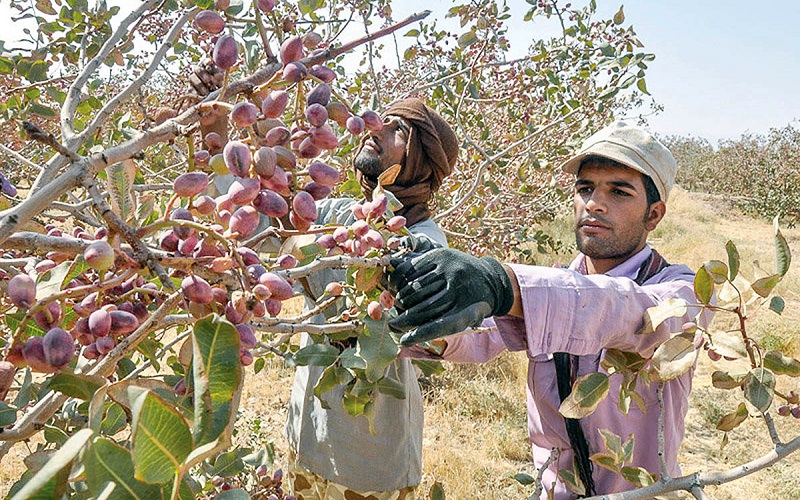

The Deputy Minister of Planning and Economic Affairs of Iran’s Ministry of Agriculture, Akbar Fathi, has highlighted a significant $11 billion trade imbalance in the country’s agricultural sector. He revealed that approximately 80% of Iran’s livestock feed inputs are reliant on imports, signaling a troubling dependency that has steadily grown alongside the nation’s rising demand for meat.
In an interview with ILNA news agency on Sunday, November 10, Fathi explained that the country’s increased meat consumption has led not only to higher imports of agricultural products but also a surge in livestock-related imports. According to Iranian customs data, Iran imported $17.4 billion in agricultural products last year while exporting only $6.2 billion—indicating a substantial shortfall. Key imports include soy, corn, barley, and other essential livestock feed ingredients.
This dependency has been exacerbated by factors such as recurrent droughts and environmental challenges that have worsened agricultural productivity. Data from the Food and Agriculture Organization (FAO) indicates that employment in Iran’s agricultural sector has declined from 22.7% of the total workforce in 2000 to roughly 16% in recent years, underscoring the sector’s decreasing capacity to sustain livelihoods. The per capita availability of arable land has also dropped, shrinking from 2,500 square meters per person in 2000 to approximately 2,000 square meters today.
One government intervention meant to curb food prices—the allocation of subsidized foreign currency for importing agricultural products—has inadvertently hurt domestic farmers. With cheaper imported products flooding the market, local farmers struggle to compete, diminishing their share in the market.
Adding to the challenges, Iran’s agricultural exports largely consist of raw, low-value products, including fruits and vegetables, rather than processed goods that could fetch higher revenues. Moreover, Iranian produce has repeatedly faced rejection in foreign markets due to the use of non-standard pesticides, affecting products like potatoes, kiwis, and bell peppers. These products have been returned by markets in Central Asia, Russia, India, and Iraq, damaging the country’s agricultural export reputation.
Deputy Minister Fathi acknowledged the issues surrounding the export of raw materials, noting that while Iran exports significant volumes of agricultural goods, these exports bring little added value due to minimal processing. Iran’s agricultural exports reached just over $6 billion last year, a stark contrast to neighboring Turkey, which exported over $35 billion in agricultural products, with only about 10% of that consisting of fresh fruit and raw vegetables.
Turkey’s rise serves as a striking comparison; its agricultural exports, which were under $4 billion around 20 years ago, surged to $16 billion a decade ago and surpassed $35 billion last year. Iran’s agricultural sector, by comparison, faces urgent challenges in enhancing productivity, value addition, and market competitiveness to close its widening trade deficit and reduce its dependence on imports.