


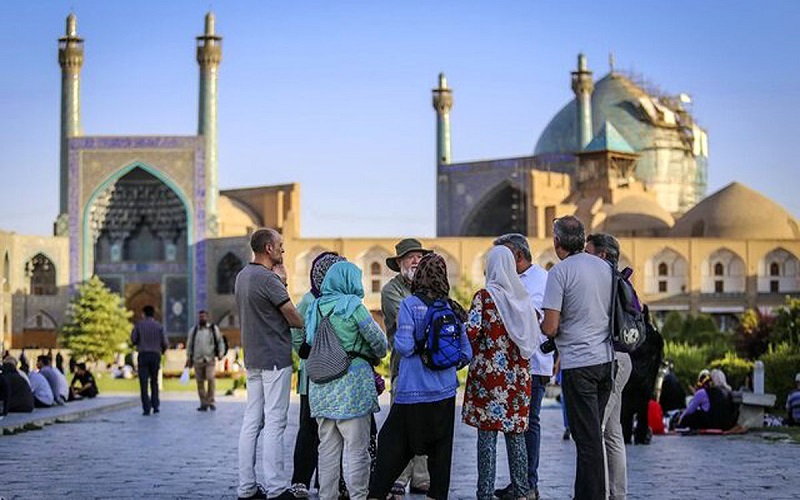

Iran’s tourism industry has suffered a devastating blow, with over half of its travel agencies shutting down and a dramatic decrease in foreign visitors. According to a recent research report, the stagnation in foreign tourist arrivals has resulted in the closure of 3,000 out of 5,000 travel agencies in the country. Over the past nine months, 16 countries, including France, Germany, the United States, Canada, Japan, and the United Kingdom, have issued travel warnings advising their citizens to avoid traveling to Iran or to leave the country entirely.
Reasons Behind Travel Warnings
Etemad newspaper reports that these warnings cite regional tensions, the risk of dual nationals being arrested, and participation in protest rallies as primary concerns. Additionally, legal and religious restrictions in Iran, coupled with advisories about local laws, avoiding unauthorized photography, and endemic diseases, have contributed to the heightened caution. Many of these warnings are listed with high alert levels (red) on the official websites of these countries’ foreign ministries and are expected to remain in effect until at least the end of 2024.
The Roots of the Crisis
Tourism industry activists trace the downturn to the second half of 2019, pointing to key events that damaged Iran’s reputation as a travel destination. The November 2019 protests and the downing of the Ukrainian passenger plane by the Islamic Revolutionary Guard Corps (IRGC) marked the beginning of the stagnation. The COVID-19 pandemic further exacerbated the decline. Following the death of Mahsa Amini on September 16, 2022, and the ensuing nationwide protests, the situation worsened dramatically.
Over the past five years, the consequences have been severe: more than half of Iran’s travel agencies have shut down, and the tourism industry has been paralyzed. Experts believe successive governments have failed to address the crisis effectively. While the 13th government failed to revive the industry, critics argue that the current administration has not made serious efforts to resolve the challenges. Activists in the sector highlight the Ministry of Foreign Affairs’ ineffectiveness in addressing the root causes, describing the phenomenon as “fear of Iran turning into a flight from Iran.”
Voices from the Industry
Amirhossein Habibzadeh, a tour guide and university professor, underscores the stark decline in foreign tourist arrivals since 2019. “Before 2019, European tourists frequently attended cultural events like Yalda Night and Nowruz celebrations. Now, foreign tourist arrivals have dwindled to nearly zero,” he explained. Habibzadeh shared a personal anecdote, recalling how in 2016, he guided 28 Dutch tourists to a Yalda Night festival. This year, his only Yalda tour consisted of just two Iranian tourists in the Lut Desert.
Another tourism agency director lamented the decline in both foreign and domestic tourism. “The incompatibility of tour prices with people’s financial capabilities has led to a significant drop in agency revenues,” he said. Many professionals in the field have been forced to leave their jobs due to financial difficulties. One agency owner painted an even bleaker picture, stating that “Iran’s tourism has reached the stage of destruction.” Hotels once bustling with foreign guests are now being sold off, and the Ministry of Cultural Heritage has begun counting pilgrims and transit drivers as “cultural tourists.”
Broader Implications
The five-year advisories from European countries warning against travel to Iran due to the risk of arrest have been a major factor in deterring foreign tourists. Before 2019, Iran was a popular destination for elderly tourists interested in its historical sites. However, international concerns and internal developments have severely impacted this demographic’s travel plans.
Additionally, the loss of younger, income-generating tourists due to security threats and social restrictions has compounded the industry’s challenges. Over 2,500 travel agencies have closed their doors, many being replaced by online platforms. This shift has further disrupted traditional tourism practices, leaving many industry veterans without a livelihood.