


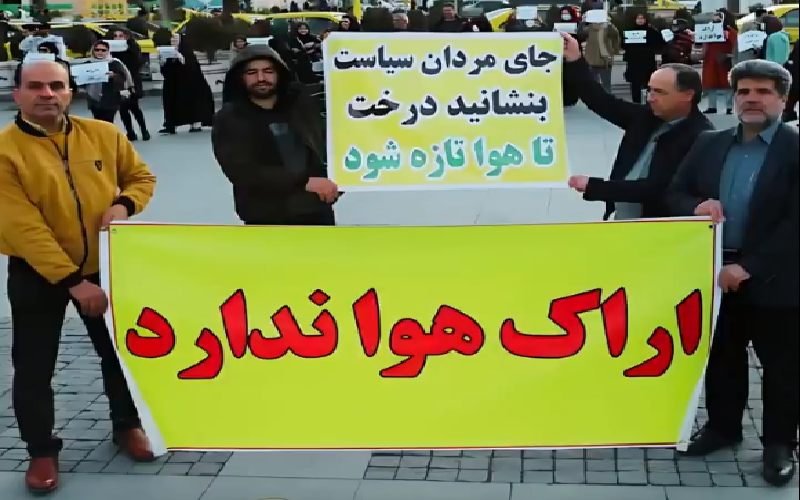

Despite years of warnings about the severe health risks associated with burning mazut in Iranian power plants, Somayeh Rafiei, spokesperson for the Parliament’s Agriculture Commission, has confirmed that all thermal power plants in the country have switched to using this highly polluting fuel.
Government Inaction Amid Rising Concerns
On Saturday, February 1, Rafiei called for strict oversight from the governorate and the Tehran Province Environment Department to ensure compliance with decisions made by the Air Pollution Emergency Committee. Speaking to reporters, she highlighted the alarming air pollution levels in Tehran and confirmed that the “Montazer Ghaem” and “Shahid Rajaee” power plants—both major contributors to Tehran’s air pollution—are burning mazut.
Public concern over air pollution has been growing, with frequent protests and demonstrations in various cities condemning the continued use of mazut. Despite this outcry, government agencies and subordinate organizations have failed to adhere to the emergency measures set forth by the Air Pollution Emergency Committee, Rafiei noted in her statement.
Health Risks and Expert Warnings Ignored
Mazut combustion releases high levels of sulfur dioxide, which has severe consequences for human health. Exposure to this pollutant is linked to airway constriction, asthma, bronchial spasms, persistent coughing, eye and respiratory irritation, reduced lung function, increased cardiovascular complications, and even psychological and digestive disorders.
Experts and officials have repeatedly warned about the dire health implications. On December 13, 2024, Mohammad Jamalian, a parliamentary representative from Arak, stated that respiratory illnesses and child hospitalizations surge whenever mazut is burned. He went as far as to describe the directive to resume mazut combustion as a “death sentence” for the people.
Jamalian further emphasized that Arak, one of Iran’s oldest cities, is suffering greatly from the effects of air pollution. “By burning mazut, we are driving them to death,” he lamented.
Calls for Action from Experts and Academics
The resumption of mazut burning is not only opposed by lawmakers but also by the academic community. In December 2023, faculty members, professors, and researchers from Arak University of Technology issued a statement warning that the restart of mazut combustion at the Shazand Power Plant poses a grave threat to the health of over a million citizens.
Despite mounting evidence and widespread opposition, Iranian authorities continue to disregard expert recommendations and public outcry. As pollution levels soar and health risks escalate, citizens are left grappling with the devastating consequences of unchecked environmental policies.
Conclusion
The Iranian regime’s decision to continue burning mazut despite its well-documented dangers highlights a persistent disregard for public health and environmental sustainability. With increasing hospitalizations, widespread protests, and expert warnings being ignored, the crisis demands immediate intervention before the damage becomes irreversible.