


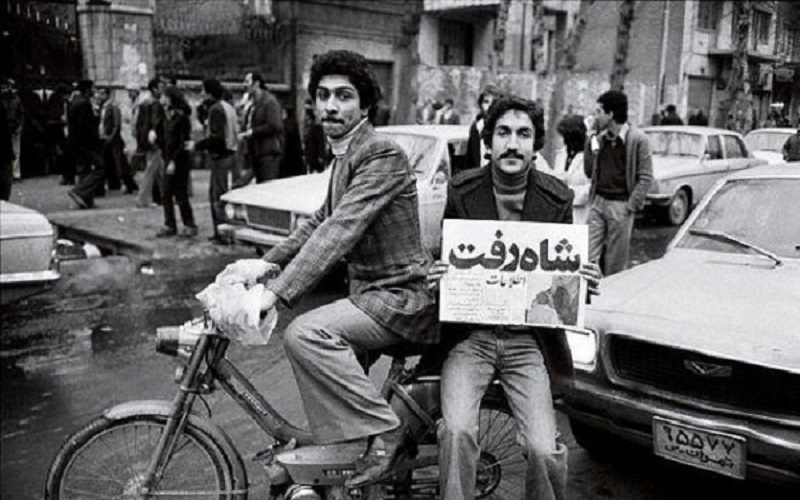

As Iran marks another anniversary of the 1979 revolution against the Shah’s dictatorship, the ruling clerical regime seizes the opportunity to promote its so-called achievements. However, the harsh reality of Iran’s current condition tells a different story—one of widespread destruction across all aspects of life.
A Nation Held Back
There is no doubt that the mullahs have dragged Iran far below its true potential. Had a democratic government replaced the Shah’s dictatorship instead of theocratic rule, the country’s trajectory would have been dramatically different. After 46 years of clerical rule, the results require no speculation or complex analysis—the evidence speaks for itself. The regime’s most significant accomplishment is not progress, but a relentless pattern of lies and deception.
The Regime’s Own Admission
Even the state-run newspaper Etemad, on February 1, reluctantly acknowledged a glimpse of this reality. In an article titled “A Record for the Revolution,” it stated:
“If all the statistics that officials have reported on their successes each year during the Fajr decade over the past 40 years were compiled, Iran should be among the most advanced and successful countries in the world. But beyond this annual propaganda, we, the people, find ourselves regretting each passing year more than the last.”
This statement is an indirect admission that the regime has lost its social base. For 46 years, the Iranian people have been subjected to endless lies—lies about economic progress, lies about national power, and lies about fabricated enemies meant to justify the government’s failures.
A Nation in Decline
The same Etemad article continues:
“What we remember from the early days of the revolution was a vision of the future—honest and untainted officials, the eradication of poverty. Crimes would decrease, and prisons would empty. Freedom of thought would flourish, and the media would serve as a platform for diverse opinions.
“But today, with each passing year, we drift further away from that vision. For 45 years, officials have declared victory while blaming failures on enemies. But why has every step we’ve taken led to regression instead of progress? Why do people, despite the country’s vast natural resources and exceptional human talent, feel increasingly dissatisfied? The greatest obstacle has been an obsession with empty slogans. Our governance has relied on concealment and cover-ups instead of transparency.”
These words, though carefully sanitized, reveal a deeper truth: the Iranian regime is failing on all fronts. When we consider its mounting internal and external crises, particularly in the past year, it is clear that it is on a rapid path toward collapse. Such admissions in state media are not an act of transparency—they are an expression of fear. The regime knows that Iranian society is at a breaking point, deprived of both freedom and the right to a dignified life.
The Clerical Regime’s True Legacy
After 46 years of clerical rule, Iran is left with a devastated economy, widespread corruption, and growing public resentment. The government’s reliance on propaganda and repression is no longer enough to conceal the deepening crisis. The Iranian people have endured decades of deception, but reality cannot be hidden forever. The country’s vast potential remains shackled by a ruling elite more interested in preserving its own power than in serving its people.
Now unfortunately, the anniversary of the 1979 revolution serves as a reminder—not of progress, but of lost opportunities and a nation held hostage by its rulers. The question now is not whether the regime will fall, but how soon the people of Iran will break free from the chains of its deception and failure.